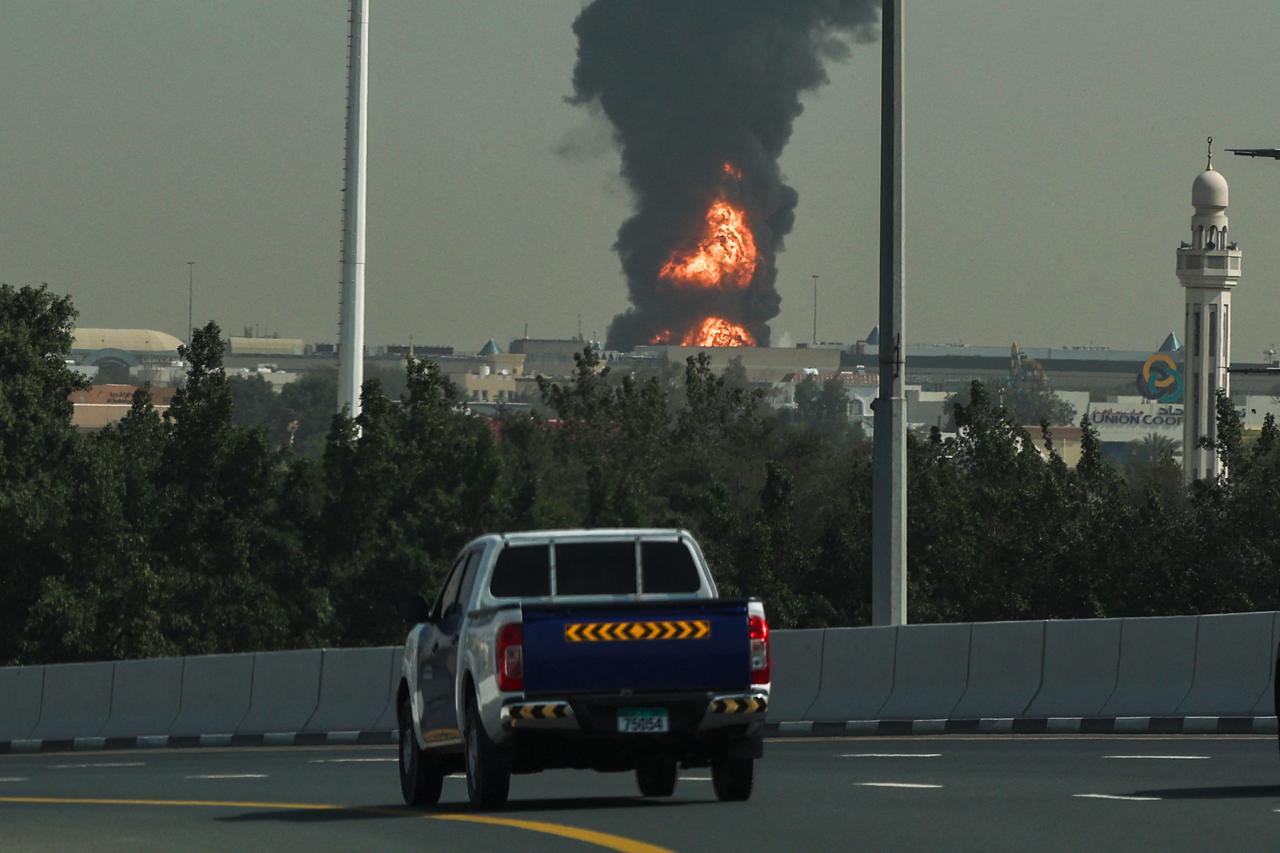
Escalation in the Gulf: South Pars Infrastructure Targeted
In a significant expansion of the ongoing Middle East conflict, Israeli forces conducted precision strikes on Iran’s South Pars gas field and nearby Asaluyeh on March 18, 2026, marking the first direct assault on the region’s critical energy infrastructure since hostilities began nearly three weeks ago. The South Pars field, which Iran shares with Qatar (where it is known as the North Field), represents the world’s largest natural gas deposit. Reports from the region indicate that the strikes targeted petrochemical facilities, gas storage tanks, and refinery components, leading to large-scale fires that required extensive containment efforts. An Israeli official confirmed that the operation was coordinated with the United States administration.
The strike on South Pars has introduced a new level of volatility to a conflict that was already reeling from the assassination of Supreme Leader Ali Khamenei on February 28, 2026. As the war enters its twentieth day on March 19, the focus has shifted from military and leadership targets to the economic arteries that sustain both the Iranian regime and the global energy market. On March 19, reports from the region indicated that the IDF continued its campaign against Iranian infrastructure, with operations aimed at further degrading the "terrorist regime's" assets. These latest actions follow recent successful strikes against IRGC Quds Force commanders who served as primary links between Tehran and Hezbollah.
Iranian Retaliation and Regional Fallout
Tehran’s response to the South Pars strikes was immediate and multi-pronged. Following the Israeli operation, Iranian-backed forces launched retaliatory strikes against energy installations in the United Arab Emirates (UAE) and Saudi Arabia, while continuing to target maritime traffic near the Strait of Hormuz. The escalation has pushed regional tensions to a breaking point, prompting Qatar to expel Iran’s security and military attaches. Qatari officials declared the diplomats persona non grata and issued a 24-hour deadline for them to leave the country on March 19, a move triggered by an Iranian strike on Qatar's Ras Laffan facility on March 18. This development underscores the fraying diplomatic ties within the Gulf Cooperation Council (states) as the conflict spills over into shared economic zones.
The retaliatory actions have also put Western assets in the region on high alert. In Riyadh, Saudi Arabia, U.S. military bases transitioned to a state of maximum readiness after drones and missiles were detected in the surrounding airspace between March 18 and March 19. While no direct hits on U.S. personnel in Riyadh have been confirmed in this latest wave, the proximity of the projectiles has heightened fears of a broader regional conflagration involving direct U.S. combat engagement beyond the initial "Operation Epic Fury" airstrikes.
The Strait of Hormuz Crisis and Maritime Disruptions
The maritime dimension of the conflict remains the most significant bottleneck for global trade. Since Iran officially closed the Strait of Hormuz on March 2, 2026, the IRGC has utilized drones and anti-ship missiles to paralyze one of the world’s most vital shipping lanes, which historically handles approximately 21% of global seaborne oil trade. The impact on the shipping industry has been catastrophic. The following table outlines the key maritime disruptions that have contributed to the current energy crisis:
| Date | Vessel/Asset | Incident Details | Status/Impact |
|---|---|---|---|
| Feb 28 | Stena Imperative | U.S.-flagged tanker hit by IRGC drone | Significant damage; trade halted |
| Mar 2 | Strait of Hormuz | Official closure by Iranian military | 21% of seaborne oil trade blocked |
| Mar 7 | Athe Nova & Prima | Missile strikes on commercial tankers | Vessels disabled; environmental concerns |
| Mar 18 | South Pars Field | Israeli airstrikes on gas refineries | Threat to 20% of global LNG supply |
The closure of the Strait has effectively trapped millions of barrels of oil and significant quantities of Liquefied Natural Gas (LNG) within the Persian Gulf. With the South Pars field now under direct fire, the risk to Qatari LNG exports—which utilize the same geological reservoir—has sent shockwaves through European and Asian energy markets. Analysts note that the continued maritime instability has deterred commercial insurers from covering any vessels attempting to transit the region, even with naval escorts.
Global Gas Prices and Economic Shockwaves
The economic repercussions of the March 18-19 escalations have been felt instantly at fuel pumps across the globe. In the United States, the average price of gasoline has surged to levels not seen since 2023, triggering widespread public frustration. On social media, the hashtags #GasPrices and #TrumpsWar have trended, as domestic critics link the administration's foreign policy directly to the "pocketbook pain" of American consumers. Market data indicates that Dubai/Oman crude has jumped to record highs of over $155 per barrel, while Brent Crude futures have surpassed the $111 threshold, with some analysts warning of a potential climb toward $200 if the South Pars facility remains offline for an extended period.
The situation in Europe is equally dire. The Title Transfer Facility (TTF) gas price, the European benchmark, has spiked to €55/MWh following the news of the South Pars strikes. Because South Pars and the North Field (Qatar) are interconnected, any physical damage to the Iranian side of the infrastructure raises technical and safety concerns for Qatari extraction. This has led to a "doomer" sentiment among market speculators, who fear that a prolonged conflict will lead to energy rationing in major industrial economies.
Political and Humanitarian Consequences
Domestically, the conflict has placed President Donald Trump in a complex political position. While the administration supported the "Operation Epic Fury" strikes that dismantled the Iranian leadership on February 28, the President’s recent activity has been closely watched. U.S. forces stationed in the region continue to provide logistical and intelligence support to the IDF, though the administration has faced questions regarding the extent of its prior knowledge of the latest energy infrastructure targets.
The humanitarian toll of the war continues to mount. Since the initial strikes across 26 Iranian provinces, civilian casualties have risen steadily. A particularly tragic incident occurred on February 28 in Minab, where a U.S. strike on the Shajareh Tayyebeh Elementary School resulted in the deaths of 168 people, including 110 children, the majority of whom were young girls. Human rights organizations, including Amnesty International, have raised urgent concerns regarding the rules of engagement being employed, suggesting that the targeting of dual-use infrastructure may violate international humanitarian law. Despite these concerns, UN Security Council Resolution 2817, passed on March 11, remains the primary international framework, condemning Iranian aggression and the closure of the Strait of Hormuz.
Strategic Outlook: A Conflict Without an Exit?
Expert analysis suggests that despite the heavy damage to Iran’s military and economic assets, the prospect of immediate regime change remains low. Regional observers noted on March 19 that the likelihood of a domestic uprising toppling the remaining Iranian power structure is "very slim" without the presence of international ground troops. While the Israeli and U.S. governments have called for the Iranian people to rise up against the remnants of the IRGC, the population is currently grappling with a severe internal crisis and the military's crackdown on dissent.
The conflict now stands at a critical juncture. The continuation of strikes on March 19 suggests that the military objective has shifted from decapitation of leadership to the total neutralization of Iran's industrial capacity. However, as long as the Strait of Hormuz remains closed and energy fields like South Pars are within the line of fire, the global economy remains a hostage to the tactical decisions made in Tel Aviv and Tehran. With Hezbollah continuing its rocket strikes from Lebanon and U.S. bases in Saudi Arabia remaining on high alert, the "convergence of chaos" predicted by regional observers appears to have arrived.
- Military Status: IDF continuing infrastructure strikes; US bases in Riyadh on high alert.
- Economic Status: Brent Crude at $111+; Dubai Crude at $155+; South Pars field partially offline.
- Diplomatic Status: Qatar expels Iranian attaches; UN Resolution 2817 remains the primary international framework.
- Maritime Status: Strait of Hormuz remains closed; multiple tankers disabled since March 2.
As the sun sets over the Persian Gulf on March 19, the fires at South Pars serve as a beacon of the new reality in the Middle East: a war where energy is both the primary weapon and the ultimate victim. For the global consumer, the "immediate pain" at the pump is likely only the beginning of a long-term shift in the geopolitical and economic landscape of the 21st century.
Comments (0)
No comments yet. Be the first to share your thoughts!