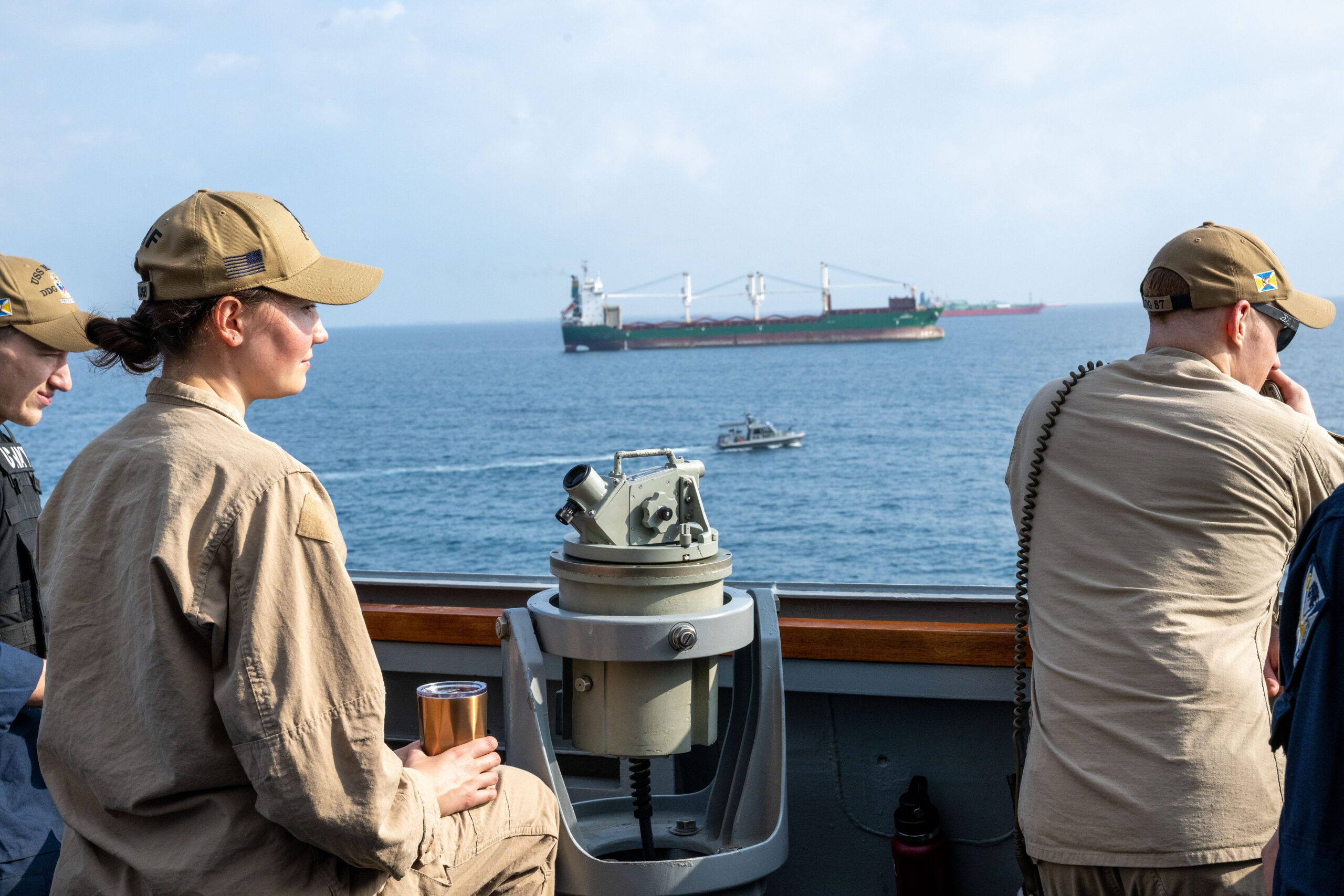
Washington Halts 'Project Freedom' Amid Diplomatic Push
In a swift recalibration of U.S. maritime policy, President Donald Trump announced on Tuesday, May 5, 2026, the immediate suspension of "Project Freedom," a high-stakes military operation designed to provide armed escorts for commercial vessels traversing the Strait of Hormuz. The suspension comes after just one day of operation following the initiative's official launch on Sunday, May 4, signaling a pivot toward intense diplomatic negotiations. The decision to pause the operation follows direct requests from international mediators, most notably Pakistan and Saudi Arabia, as the administration seeks what the President has termed a "Final Agreement" with the Iranian government.
The suspension marks a critical juncture in the ongoing friction within the Persian Gulf, which saw a significant military escalation earlier this year. While the escort mission is currently on hold, President Trump clarified via Truth Social that the existing maritime blockades would remain in full force. The administration maintains that these economic and physical pressures are essential leverage to ensure Iran remains at the negotiating table. This "pause for diplomacy" approach aims to resolve a conflict that has seen both U.S. and Iranian forces engage in direct hostilities over the past several months.
The Conclusion of 'Operation Epic Fury'
Coinciding with the President’s announcement, Secretary of State Marco Rubio provided further clarity on the status of U.S. military objectives in the region. Speaking on Tuesday, May 5, Rubio declared that the United States had concluded its primary offensive operations against Iranian targets. He specifically referenced "Operation Epic Fury," the military campaign that defined the initial stages of the conflict following the outbreak of hostilities on February 28, 2026.
"We are done with this stage of it," Rubio stated, suggesting that the White House believes the necessary military pressure has been applied to facilitate a diplomatic breakthrough. The Secretary’s comments indicate a transition from active combat and offensive strikes to a posture of containment and negotiated settlement. However, Rubio was quick to temper expectations of an immediate resolution, reiterating that the U.S. would not accept a partial deal that ignores the core issues that led to the conflict in the first place.
The Nuclear Standoff: Rejection of the Iranian Proposal
At the heart of the current diplomatic impasse is a proposal recently submitted by Tehran. Iranian officials have suggested a plan to reopen the Strait of Hormuz to international shipping and formally end the state of war, contingent on the United States and its allies agreeing to defer discussions regarding Iran’s nuclear program to a later date. This proposal was intended to alleviate the immediate economic pressure caused by the dual blockade of the waterway, which has severely impacted global trade routes.
However, the Trump administration has firmly rejected this "decoupling" strategy. President Trump reportedly views the proposal as a "bad faith" negotiation tactic. The U.S. position remains that the Iranian nuclear program was a primary justification for the joint U.S.-Israeli military actions initiated on February 28. Secretary Rubio echoed this sentiment, indicating that the administration would not agree to a delay of nuclear discussions. The administration’s stance is clear: any final agreement must address both the freedom of navigation in the Strait of Hormuz and the permanent dismantling or strict limitation of Iran’s nuclear capabilities simultaneously.
Timeline of Significant Events (2026)
| Date | Event | Description |
|---|---|---|
| February 28, 2026 | Conflict Initiation | U.S. and Israel launch military actions against Iranian strategic targets. |
| April 8, 2026 | Initial Ceasefire | A temporary two-week cessation of hostilities is announced and subsequently extended. |
| Sunday, May 4, 2026 | Project Freedom Launch | U.S. military begins escorting commercial ships through the Strait of Hormuz. |
| Tuesday, May 5, 2026 | Project Freedom Suspension | President Trump pauses the escort operation after one day following mediator requests. |
| May 7, 2026 | Current Status | Diplomatic "Conclave" continues as blockades remain active. |
The Role of International Mediators
The suspension of "Project Freedom" was not a unilateral decision made in a vacuum. Reports indicate that the government of Pakistan has emerged as a central mediator in the conflict, facilitating communication between Washington and Tehran. Pakistani officials, along with representatives from Saudi Arabia and other neutral nations, reportedly urged the Trump administration to halt the escort mission to prevent a potential miscalculation that could shatter the fragile ceasefire currently in place.
The diplomatic "conclave" currently underway involves high-level communications aimed at finding a middle ground between Iran’s desire for immediate sanctions relief and the U.S. demand for nuclear concessions. While the physical escorting of ships has stopped, the diplomatic machinery is moving at an accelerated pace. The involvement of Pakistan is seen as a strategic necessity, given its historical ties to both the West and its neighbor, Iran.
Military and Economic Impact of the Dual Blockade
The Strait of Hormuz remains one of the world's most volatile maritime chokepoints. The "dual blockade"—consisting of Iranian attempts to restrict passage and U.S. efforts to intercept illicit cargo—has created a complex environment for global shipping. Despite the ceasefire and the pause in "Project Freedom," the presence of naval assets in the region remains high.
The military cost of the conflict has already been significant. Official reports confirm that during operations on May 4, six Iranian vessels were sunk by U.S. forces. These engagements underscored the risks associated with the "Project Freedom" escort mission, as any attempt to force passage through contested waters carries the inherent danger of renewed naval combat. The decision to pause the mission is, in part, a recognition of these risks and an attempt to see if the threat of renewed force is as effective as the application of force itself.
The Path to a 'Final Agreement'
President Trump’s focus on a "Final Agreement" suggests a desire for a comprehensive treaty rather than a series of incremental steps. The administration’s refusal to shelf the nuclear issue indicates that they are seeking a "grand bargain" that would redefine the security architecture of the Middle East. For the Trump White House, the Strait of Hormuz is not just a shipping lane, but a lever to be used in achieving broader geopolitical objectives.
The "Conclave" of diplomats now faces the daunting task of bridging the gap between two deeply entrenched positions. Iran seeks the restoration of its economy and an end to the blockade without sacrificing its long-term nuclear ambitions. The United States seeks a permanent end to the nuclear threat and guaranteed security for international waters. As of May 7, 2026, the situation remains a tense stalemate, with the world’s attention fixed on the diplomatic efforts in the wake of "Operation Epic Fury."
Key Strategic Factors in the Ongoing Negotiations
- The Nuclear Prerequisite: The U.S. maintains that no maritime concessions will be granted without a verifiable framework for Iran’s nuclear program.
- Blockade Persistence: Until a deal is signed, the U.S. and Iranian blockades continue to disrupt traditional trade patterns, maintaining economic pressure on all parties involved.
- Regional Stability: Mediators like Pakistan and Saudi Arabia are working to ensure that the ceasefire announced on April 8 does not collapse during the transition from military to diplomatic phases.
- Maritime Security: The sinking of six Iranian vessels on May 4 serves as a deterrent, but also a point of contention that Tehran is using to fuel its domestic narrative of "U.S. aggression."
As the international community watches the developments in the Strait of Hormuz, the shift from "Project Freedom" to the negotiating table represents a high-stakes gamble by the Trump administration. By pausing military escorts while maintaining the blockade, Washington is betting that the economic strain on Tehran will eventually outweigh its reluctance to discuss its nuclear program. Whether this "conclave" of diplomatic efforts will result in the "Final Agreement" envisioned by the President remains to be seen, but for now, the guns in the Strait are silent, replaced by the quiet intensity of high-level diplomacy.
Comments (0)
No comments yet. Be the first to share your thoughts!