Historic Milestones Achieved in Deep Space and Collegiate Athletics
On April 6, 2026, the United States witnessed a rare convergence of historic achievements across the disparate fields of deep-space exploration and national collegiate sports. As the four-person crew of the Artemis II mission shattered a 56-year-old distance record during a high-stakes lunar flyby, the Michigan Wolverines secured their second-ever NCAA Men’s Basketball National Championship in a hard-fought victory over the University of Connecticut (UConn). These two events, occurring within hours of each other, have dominated the national discourse, marking a day of significant technical triumph and athletic excellence.
In the vacuum of space, NASA astronauts Reid Wiseman, Victor Glover, and Christina Koch, alongside Canadian Space Agency (CSA) astronaut Jeremy Hansen, reached the farthest point from Earth ever achieved by human beings. Meanwhile, on the hardwood, the Michigan Wolverines ended a 37-year drought, claiming the 2026 national title and solidifying their place in the rafters alongside the legendary 1989 championship team. This report provides a comprehensive analysis of the technical execution of the Artemis II Flight Day 6 operations and the strategic conclusion of the NCAA tournament.
Artemis II: Flight Day 6 and the New Human Distance Record
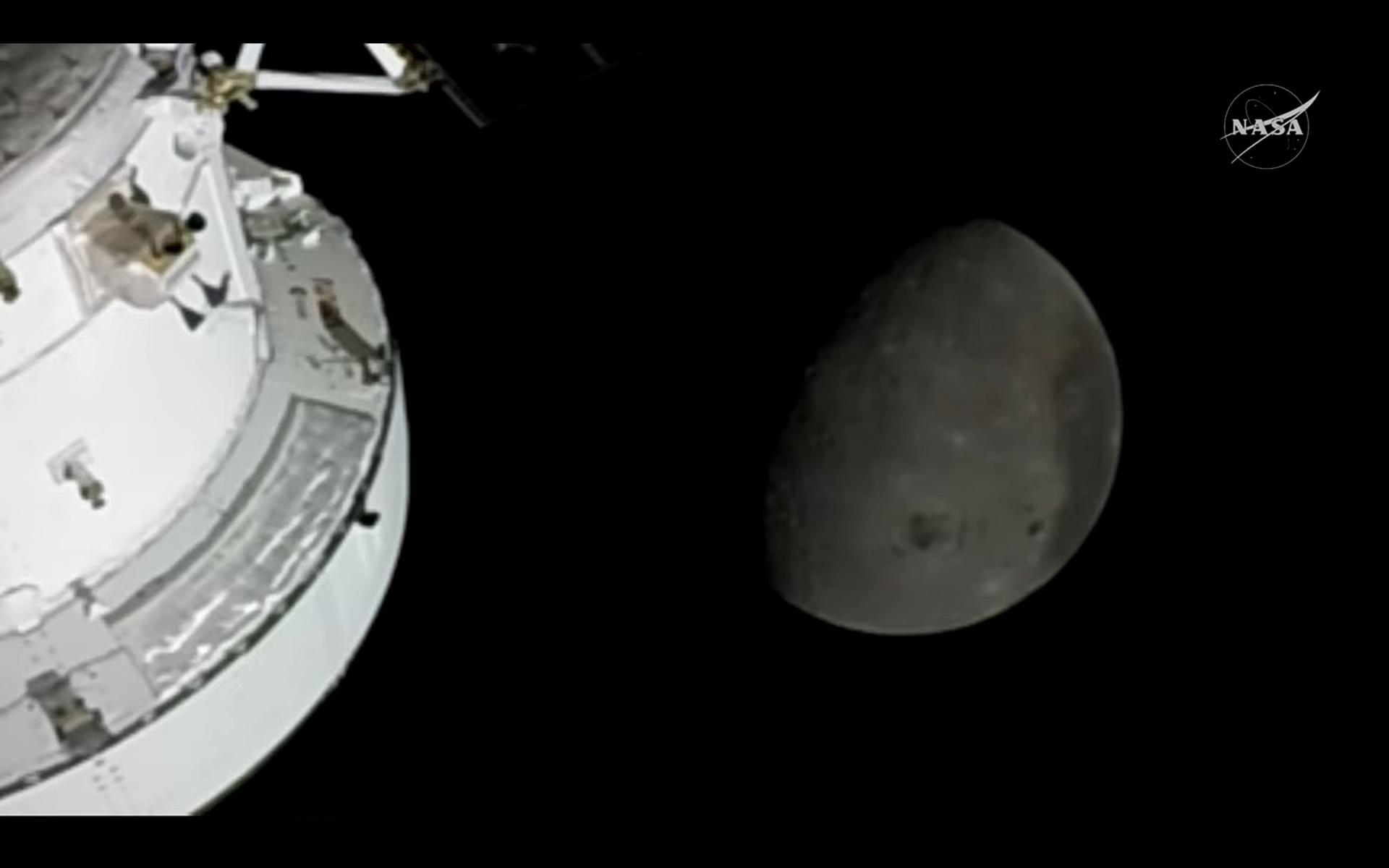
The Artemis II mission, the first crewed flight of NASA’s Moon-to-Mars program, entered its most critical phase on April 6, 2026. Following a successful launch and initial orbital maneuvers, the Orion spacecraft executed a lunar flyby that pushed the boundaries of human reach. The crew conducted a series of systems checks before engaging in a briefing with Mission Control in Houston at 1:30 p.m. ET to discuss science goals for the flyby.
The pivotal moment occurred between 1:56 p.m. and 2:10 p.m. ET, when the Orion spacecraft officially surpassed the distance record set by the Apollo 13 mission in April 1970. The previous record of 248,655 miles, held for over half a century by Jim Lovell, Fred Haise, and Jack Swigert, was eclipsed as Orion continued its trajectory. During this window, the spacecraft reached its maximum distance from Earth, totaling 252,756 miles—surpassing the Apollo 13 milestone by 4,101 miles.
Later that evening, Orion performed its closest approach to the lunar surface. At 7:02 p.m. ET, the spacecraft passed within 4,070 miles of the Moon. This proximity allowed the crew to observe the lunar far side, providing a perspective that only a handful of humans have ever experienced. Following the far-side pass, Mission Control reacquired the spacecraft's signal at 7:25 p.m. ET as Orion emerged from behind the Moon.
Technical Specifications of the Artemis II Lunar Flyby
The success of Flight Day 6 was predicated on the precision of the Orion spacecraft’s propulsion and navigation systems. The following table illustrates the key trajectory data compared to the historic Apollo 13 mission:
| Metric | Apollo 13 (1970) | Artemis II (2026) | Difference |
|---|---|---|---|
| Maximum Distance from Earth | 248,655 miles | 252,756 miles | +4,101 miles |
| Closest Lunar Approach | Not Specified | 4,070 miles | N/A |
| Crew Size | 3 | 4 | +1 |
| Mission Objective | Lunar Landing (Aborted) | Lunar Flyby/Systems Test | N/A |
Beyond the distance record, the crew utilized their unique position to conduct scientific observations of the lunar environment. These lunar observations concluded at 9:20 p.m. ET, after which the crew focused on the return leg of their journey. The data gathered during this phase is expected to be vital for future missions under the Artemis program.
The Crew of Artemis II: Profiles in Leadership
The success of the mission rests on the expertise of a diverse and highly trained crew. Each member brings a specific set of skills necessary for the long-duration transit to the Moon and back.
- Reid Wiseman (Commander): As the commander of Artemis II, Wiseman provides the leadership and flight experience required to manage the Orion’s complex systems during the first crewed test flight.
- Victor Glover (Pilot): Glover is the first person of color to participate in a lunar mission and the first Black man to travel to the moon's vicinity. His role involves the manual piloting of Orion during critical maneuvers.
- Christina Koch (Mission Specialist): Koch makes history as the first woman to journey around the moon. Her expertise in flight engineering is vital for the troubleshooting of life support and power systems.
- Jeremy Hansen (Mission Specialist): Representing the Canadian Space Agency, Hansen is the first Canadian to travel to the lunar vicinity, highlighting the international cooperation inherent in the Artemis program.
NCAA Championship: Michigan Wolverines Ascend to the Top
While the Artemis II crew looked back at Earth from a quarter-million miles away, the focus of the sporting world was centered on the NCAA Men’s Basketball National Championship. In a season defined by parity and the rise of international talent, the Michigan Wolverines secured the 2026 title by defeating the UConn Huskies 69-63. The victory marks Michigan’s second national championship in program history, their first since 1989.
The matchup featured a clash of styles: Michigan’s disciplined defensive schemes against UConn’s high-tempo offense. UConn, seeking to establish a modern dynasty, mounted a late-game surge to tighten the score in the final minutes. However, Michigan’s resilience proved to be the deciding factor. The Wolverines managed to neutralize UConn's scoring threats in the final moments, sealing the victory and ending their 37-year title drought.
For Michigan fans and alumni, the victory is a moment of profound significance. The 2026 squad will now be immortalized alongside the 1989 team, which featured stars like Glen Rice and Rumeal Robinson. Congratulations have poured in from across the country for the new champions as the "Go Blue" spirit takes hold of the sports world.
The Cultural Impact of Concurrent Achievements
The simultaneous nature of the Artemis II flyby and the NCAA championship has created a unique cultural moment. The dual events sparked significant national interest and social media engagement, with the public following both the progress of the Orion spacecraft and the final brackets of the tournament. While the Artemis mission represents the pinnacle of human scientific endeavor, the NCAA tournament remains a core pillar of American cultural tradition.
Public sentiment regarding the Artemis II mission has been characterized by awe as the crew shared their experiences witnessing the lunar far side. Conversely, the NCAA narrative has been one of celebration for Michigan supporters and a hard-fought conclusion for a UConn fan base that has grown accustomed to deep tournament runs.
Immediate Aftermath and Next Steps
As of April 7, 2026, the following updates have been confirmed:
- Artemis II Status: The Orion spacecraft is currently in its return trajectory after concluding its lunar observation period. The crew is expected to return to Earth with a Pacific splashdown on Friday, April 10.
- NCAA Celebrations: The Michigan campus and the city of Ann Arbor are celebrating the program's first national title in nearly four decades, marking a new era for the Wolverines.
- Mission Data: NASA engineers are beginning the preliminary analysis of the data collected during the lunar flyby. This information will inform the mission profiles for future Artemis missions as NASA continues its Moon-to-Mars objective.
Technical Resilience and International Cooperation
The path to the Flight Day 6 record involved meticulous planning and execution. During the transit, the mission team utilized trajectory adjustments to refine the spacecraft’s approach to the Moon, ensuring Orion remained on its intended path for the record-breaking flyby. These maneuvers demonstrated the high precision of the Orion’s orbital systems.
The Canadian Space Agency’s involvement has also been highlighted as a major success. Jeremy Hansen’s participation marks a shift in lunar exploration toward a more collaborative international framework. The CSA’s contributions to the Artemis program highlight Canada's growing role in deep-space exploration and the importance of global partnerships in reaching the Moon.
Conclusion: A Day for the History Books
April 6, 2026, will be remembered as a day when the boundaries of the possible were expanded both in the heavens and on Earth. The Artemis II mission has successfully demonstrated that the Orion spacecraft and its crew are capable of operating at distances far beyond any previous human endeavor, paving the way for the return of humans to the lunar surface. Simultaneously, the Michigan Wolverines have demonstrated the height of athletic achievement, overcoming a formidable UConn team to claim their place in history.
As the Orion spacecraft makes its way back to Earth and the Michigan campus celebrates its new champions, the dual success of these events serves as a testament to the power of meticulous planning, technical expertise, and the pursuit of excellence. The data gathered during the Artemis II flyby will provide the foundation for the next decade of space exploration, while the 2026 NCAA championship will be remembered as a defining moment in the storied history of collegiate basketball.
Comments (0)
No comments yet. Be the first to share your thoughts!