Washington and Tehran at a Crossroads: Fiscal Relief Meets Geopolitical Peril
In a period of intense geopolitical and domestic turbulence, the United States government has narrowly averted a prolonged fiscal crisis while simultaneously navigating a high-stakes military standoff in the Persian Gulf. On February 3, 2026, President Donald Trump signed H.R. 7148, the $1.2 trillion Consolidated Appropriations Act of 2026, ending a four-day partial government shutdown that had paralyzed key federal agencies since January 31. However, the domestic relief remains fragile as the White House oversees a significant naval buildup in the Middle East. These twin developments, occurring within a narrow window, have sent ripples through global financial markets, with analysts warning of potential volatility in second-quarter economic projections.
The resolution of the shutdown, triggered by a bitter dispute over Department of Homeland Security (DHS) funding and Immigration and Customs Enforcement (ICE) reforms, has provided a temporary reprieve for federal workers. Yet, the underlying partisan divisions remain unresolved, particularly following a series of fatal shootings by federal agents in Minneapolis. On January 7, 2026, an ICE agent killed resident Renee Good, followed on January 24 by the fatal shooting of 37-year-old nurse Alex Jeffrey Pretti by Border Patrol and CBP officers. These incidents, occurring during a federal initiative known as "Operation Metro Surge," galvanized Democratic demands for increased accountability and reform. As the U.S. domestic landscape stabilizes, the focus has shifted to the Persian Gulf, where reports of "Absolute Digital Isolation" within Iran have raised the specter of a broader regional conflict.
The Four-Day Shutdown: A Legislative Tug-of-War
The partial government shutdown was primarily fueled by a deadlock over the operational mandate of ICE and Customs and Border Protection (CBP). Congressional Democrats had pushed for significant "course corrections" in immigration enforcement, including new judicial warrant requirements, following the high-profile deaths in Minneapolis earlier in the month. House Republicans, facing internal pressure from fiscal hawks and immigration hardliners, initially struggled to pass a package of bills to reopen the government, leading to a period of administrative uncertainty.
The $1.2 trillion bill signed by President Trump ended the immediate freeze for most agencies through September 30, 2026. However, the legislation specifically extends DHS funding only until midnight on February 13, 2026, setting a tight deadline for further negotiations on immigration protocols. Political analysts and prediction markets suggest that risks of a repeat shutdown remain elevated if a permanent agreement on DHS protocols is not reached by mid-month.
Military Standoff and Diplomatic Pressure
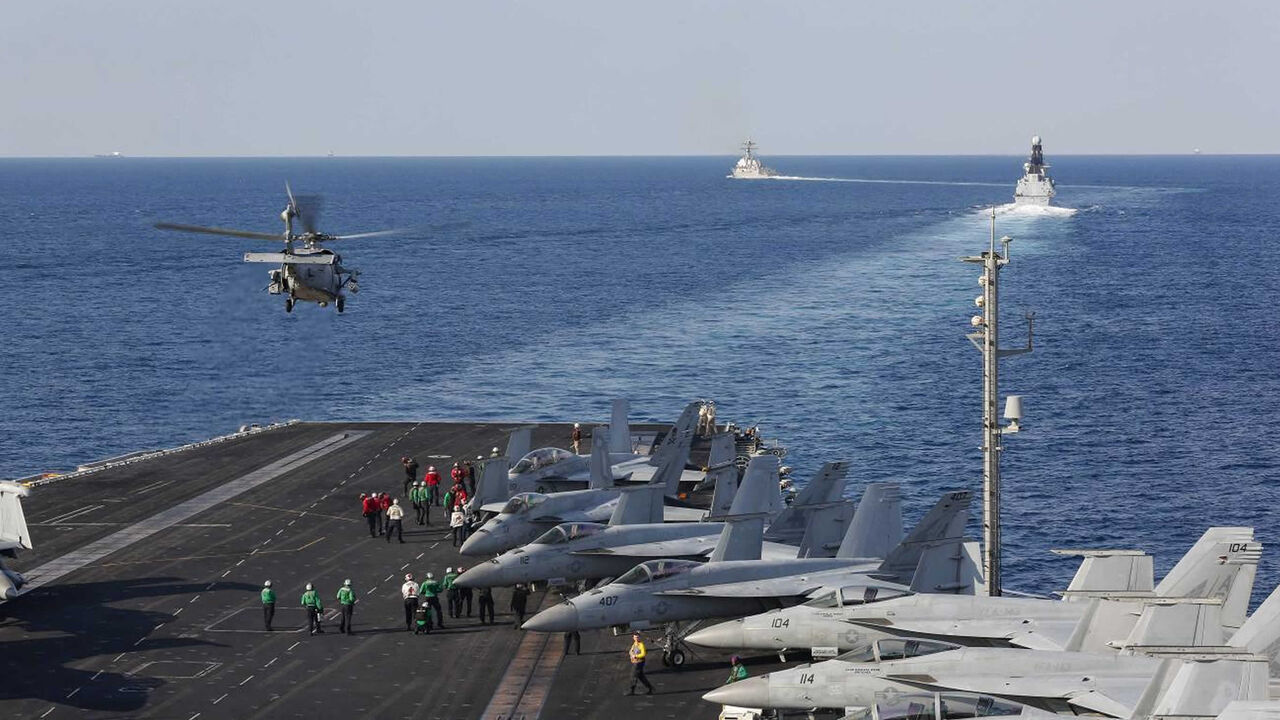
Parallel to the legislative drama in Washington, tensions in the Persian Gulf have escalated following a substantial increase in U.S. naval presence. The USS Abraham Lincoln carrier strike group is currently operating in the region as part of what the administration describes as a "confluence of pressure" designed to bring Tehran to the negotiating table. While the White House has alluded to the possibility of high-level meetings, officials have warned that time is running out for a new comprehensive deal.
Direct military friction has already been recorded. On February 3, a U.S. Marine F-35C Lightning II operating from the USS Abraham Lincoln shot down an Iranian Shahed-139 "one-way attack" drone in the Arabian Sea after it aggressively approached the carrier. This kinetic engagement follows other recent points of friction, including the harassment of the commercial vessel M/V Stena Imperative by Iranian forces on the same day. The White House maintains that U.S. naval assets are positioned to ensure the freedom of navigation in the Strait of Hormuz amid the ongoing diplomatic and military standoff.
Iran’s "Absolute Digital Isolation" and Internal Unrest
The military tensions are unfolding against a backdrop of severe internal instability within Iran. Since early January 2026, the Iranian government has maintained a near-total internet blackout, a move described by international observers as a strategy of "Absolute Digital Isolation." This blackout is linked to ongoing domestic protests and subsequent government crackdowns. Iranian officials, including Mohammad Amin Aghamiri, Secretary of the Supreme Council of Cyberspace, are reportedly coordinating with Chinese technology firms such as Huawei to implement a permanent national intranet known as "Barracks Internet."
The infrastructure project, estimated to cost between $700 million and $1 billion, involves a Huawei-based platform and a data center in Pardis IT Town designed to effectively sever Iran’s connection to the global web. The crackdown has extended to sophisticated digital countermeasures, with reports that Iranian authorities are utilizing Deep Packet Inspection (DPI) to identify and block Starlink satellite traffic, attempting to prevent citizens from bypassing the state-controlled network. U.S. officials have characterized the plan for permanent digital isolation as a grave development that would stifle internal dissent and complicate international efforts to monitor human rights conditions.
Global Market Impact and Economic Data
The convergence of the U.S. fiscal resolution and the Middle Eastern escalation has created a volatile environment for investors. While the reopening of the U.S. government provided a brief sentiment boost, the geopolitical risks associated with the U.S.-Iran standoff have tempered gains. Market data from early February indicates a pivot toward safe-haven assets as investors weigh the potential for supply chain disruptions in the Strait of Hormuz.
Economic analysts have signaled a phase of high anxiety in certain sectors. The delay in U.S. fiscal spending due to the shutdown is expected to cause a "bunching" effect in the second quarter, potentially distorting GDP figures. Furthermore, the Iranian internet blackout and the threat of regional conflict pose a risk to global energy supply chains. Broader equity markets remain focused on the February 13 DHS funding deadline as the next major domestic hurdle.
Diplomatic Efforts and Future Projections
Despite the military posturing, diplomatic channels remain partially open. Nuclear talks are scheduled to take place in Muscat, Oman, on February 6, 2026, following a venue change from Istanbul at the request of Iranian officials. The U.S. delegation is led by Steve Witkoff, Special Envoy for the Middle East, while Foreign Minister Abbas Araghchi is expected to lead the Iranian side.
Significant friction remains regarding the scope of these negotiations. The United States is reportedly demanding a comprehensive deal, while Tehran is pushing for a narrow focus limited strictly to nuclear issues. Distrust remains high among regional allies who view any potential deal with skepticism, and the ongoing digital isolation of the Iranian populace remains a major hurdle to international oversight. The next ten days are considered critical for both the stability of the U.S. federal budget and the prevention of a full-scale military confrontation in the Persian Gulf.
Summary of Key Events
- Government Shutdown: Ended on February 3, 2026, after a four-day partial closure; funding lapse began on January 31.
- DHS Funding: The current bill only funds the Department of Homeland Security through February 13, 2026.
- Naval Tensions: The USS Abraham Lincoln carrier strike group is deployed to the region. On February 3, the U.S. military shot down an Iranian Shahed-139 drone.
- Digital Isolation: Iran continues its internet blackout (since early January) with plans for a $700M–$1B "Barracks Internet" intranet; authorities are utilizing Deep Packet Inspection to block satellite-based connections like Starlink.
- Diplomacy: Nuclear talks led by Steve Witkoff and Abbas Araghchi are scheduled for February 6 in Muscat, Oman.
The international community continues to monitor these developing stories closely. The interplay between U.S. domestic policy, Middle Eastern military strategy, and global financial health has created a complex geopolitical landscape. Journalists and analysts alike are watching for the next move from the White House and Tehran, as the margin for error in both fiscal and military diplomacy grows increasingly thin.
Comments (0)
No comments yet. Be the first to share your thoughts!