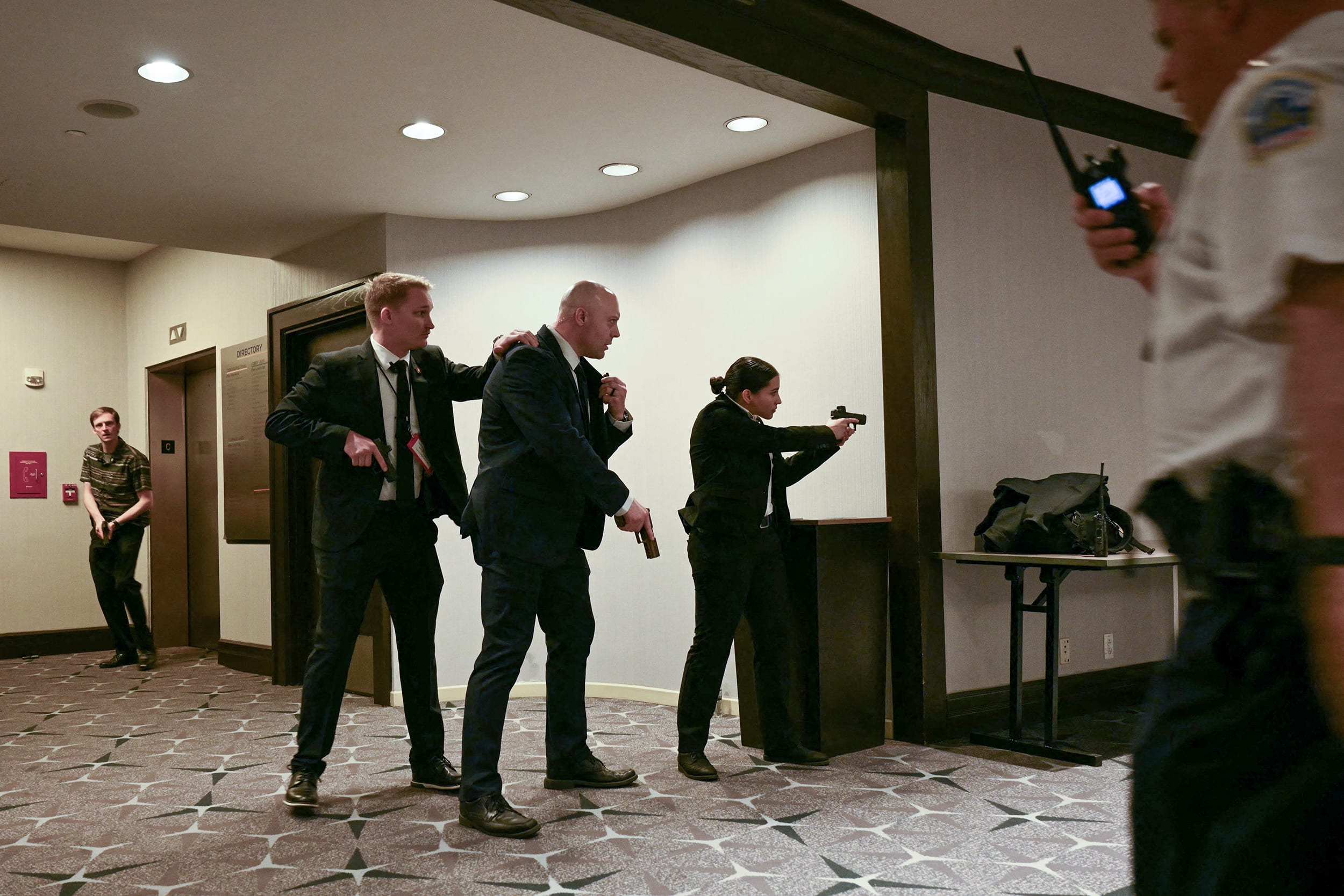
National Security Emergency Follows White House Correspondents' Dinner Shooting
On April 28, 2026, the United States government faces a dual-front crisis involving a direct threat to the presidency and a complex diplomatic maneuver from Tehran. Following the shooting incident that disrupted the White House Correspondents' Dinner (WHCD) at the Washington Hilton on the evening of April 25, federal authorities have moved forward with criminal proceedings against the primary suspect. The incident, which forced the immediate evacuation of President Donald Trump, First Lady Melania Trump, Vice President JD Vance, and several high-ranking administration officials, has transitioned from a localized security breach into a focal point of American national security policy.
On April 27, 2026, federal prosecutors officially charged Cole Tomas Allen, a 31-year-old from Torrance, California, with the attempted assassination of the President. The filing comes as investigators continue to probe the motives behind the attack. Despite the gravity of the attempt on his life, President Trump issued a public statement on the morning of April 28, asserting that the assassination attempt would not deter the United States from its current military and diplomatic trajectory regarding the conflict with Iran. The President is scheduled to meet with his top national security advisors later today to determine the administration's next steps in both the criminal investigation and the broader regional conflict.
The WHCD Incident: Timeline and Legal Proceedings
The security breach occurred during one of Washington D.C.'s most high-profile social events, the annual White House Correspondents' Dinner. At approximately 8:34 p.m. EDT on April 25, gunfire erupted near the magnetometer screening area, leading to a chaotic scene where Secret Service agents performed emergency extraction maneuvers for the President and the First Lady. The suspect, identified as Cole Tomas Allen, was apprehended at the scene. On April 27, 2026, Allen appeared in federal court for his arraignment, where he was formally charged with the attempted assassination of the President, discharging a firearm during a crime of violence, and transporting a firearm across state lines. He is currently being detained pending a hearing on April 30.
| Date | Event Milestone | Details |
|---|---|---|
| April 25, 2026 | WHCD Security Breach | Gunfire reported at Washington Hilton; President Trump and officials evacuated. |
| April 26, 2026 | Initial Investigation | Federal agencies secure the perimeter and begin suspect profiling. |
| April 27, 2026 | Formal Charges Filed | Cole Tomas Allen charged with attempted assassination in federal court. |
| April 28, 2026 | Presidential Response | Trump asserts attack will not change U.S. policy toward Iran. |
While the investigation into Allen’s background is ongoing, President Trump has publicly expressed skepticism regarding any direct links between the shooter and the Iranian government. However, the timing of the attack—occurring amidst an active war—has heightened sensitivities within the intelligence community. The White House has not yet released a formal motive, but the legal proceedings against Allen are expected to be expedited given the nature of the charges.
Iran's Diplomatic Proposal: Reopening the Strait of Hormuz
Parallel to the domestic security crisis, the Iranian government has presented a significant diplomatic proposal aimed at altering the course of the ongoing war. According to reports emerging on April 27 and 28, Tehran has offered, through Pakistani mediators, a "two-stage" proposal to end its control of the Strait of Hormuz—a vital maritime artery for global energy—and bring an end to active hostilities. In exchange, Iran is demanding a comprehensive ceasefire and the immediate cessation of the U.S.-led naval blockade.
A critical component of this proposal is the exclusion of Iran's nuclear program from the immediate negotiations. Iranian state media has indicated that Tehran is "tabling" American nuclear demands for the time being, focusing instead on the cessation of military operations and the restoration of maritime traffic. This position stands in direct opposition to a primary U.S. demand. President Trump and administration officials have consistently maintained that any resolution to the conflict must include enforceable guarantees that Iran will not develop nuclear weapons.
The Strategic Stalemate in the Strait of Hormuz
The Strait of Hormuz remains a central flashpoint in the conflict. Currently, maritime traffic through the Strait is stalled, a situation that has persisted since the de facto closure began around February 28, 2026. The impact on global energy markets has been immediate and sustained, with oil prices remaining at skyrocketing highs as of April 28. The Iranian proposal seeks to leverage this economic pressure to force a U.S. concession on the blockade without addressing the underlying nuclear concerns.
- Iranian Red Lines: Tehran has communicated its "red lines" to Washington through diplomatic channels in Pakistan, emphasizing that the nuclear program is not currently up for discussion.
- The Russian Connection: On April 27, 2026, Iran's Foreign Minister Abbas Araghchi held a high-level meeting with Russian President Vladimir Putin in St. Petersburg. Analysts suggest this meeting was intended to coordinate strategy and solidify international support for Iran's proposal.
- Counter-Blockade Status: The U.S. naval blockade continues to restrict Iranian exports, a tactic the Trump administration believes will eventually force Tehran to the negotiating table on nuclear terms.
Domestic Political Reaction: The Jeffries Critique
The administration's handling of the conflict has drawn sharp criticism from domestic political opponents. On April 23, 2026, House Democratic Leader Hakeem Jeffries issued a blistering statement characterizing the conflict as a "reckless war of choice." Jeffries argued that the administration's strategy has failed to enhance U.S. security and has instead resulted in several negative outcomes for the American public.
Jeffries highlighted three primary areas of concern:
- Economic Impact: The Democratic leader pointed to the skyrocketing gas prices resulting from the stalemate in the Strait of Hormuz, arguing that American consumers are bearing the brunt of the administration's foreign policy.
- Strategic Failure: Jeffries claimed that the war has inadvertently strengthened Iran's regional position, resulting in Iran gaining more control over the Strait of Hormuz.
- Fiscal Cost: The House leader criticized the "billions of dollars" spent on the conflict, suggesting these resources have been wasted without achieving a definitive end to Iran's nuclear ambitions.
International Perspectives and Allied Concerns
The international community is also showing signs of strain. European leaders have expressed growing concern regarding the stability of global energy markets and the potential for the conflict to spill over into other regions. The sentiment in Europe suggests a fear that the conflict could devolve into a prolonged war of attrition with no clear diplomatic resolution.
The meeting between the Iranian Foreign Minister and President Putin on April 27 further complicates the diplomatic landscape, as it suggests a hardening of the Tehran-Moscow axis in opposition to U.S. demands. U.S. allies are reportedly monitoring the situation closely, seeking a clear strategy for de-escalation that secures maritime trade routes without compromising long-term regional security.
Analysis of the Iranian Proposal: Leverage and Limits
Geopolitical analysts characterize the Iranian proposal as a calculated bid to eliminate U.S. leverage. By offering to reopen the Strait of Hormuz, Iran is attempting to address the primary economic concern of the international community while simultaneously protecting its nuclear assets from diplomatic scrutiny. The "deal" appears designed to peel away international support for the U.S. blockade by presenting Iran as the party seeking a "peaceful" reopening of trade routes.
President Trump, however, remains firm. In his communications on April 28, he asserted that the war will end "very soon" and that the ultimate goal remains the prevention of Iran obtaining nuclear weapons. The administration's current dilemma lies in whether to accept a partial peace that restores oil flow but leaves the nuclear issue unresolved, or to maintain the blockade at the risk of further economic volatility and allied dissent.
Current Status of Global Energy Markets
The ongoing stalemate in the Strait of Hormuz has created a period of sustained volatility in the energy sector. The following table illustrates the market conditions as of the morning of April 28, 2026.
| Market Indicator | Status as of April 28 | Trend |
|---|---|---|
| Crude Oil Prices | Sustained Highs | Increasing/Stable |
| Strait of Hormuz Traffic | Stalled (2 Months Duration) | Stationary |
| Global Shipping Insurance | Premium Surcharges Applied | Increasing |
| U.S. Strategic Reserve Usage | Under Review by White House | N/A |
Conclusion and Immediate Outlook
As of 10:00 AM UTC on April 28, 2026, the situation remains fluid. The White House is currently weighing the Iranian offer, with a high-level national security meeting expected to conclude by early afternoon. While the criminal case against Cole Tomas Allen proceeds through the federal court system, the broader geopolitical conflict appears to be at a critical juncture. The administration must navigate the domestic political pressure from leaders like Hakeem Jeffries and the strategic challenge posed by the Iran-Russia diplomatic coordination.
The President’s assertion that the assassination attempt will not alter his policy suggests a continuation of the "maximum pressure" campaign, yet the economic reality of the two-month stalemate in the Strait of Hormuz may force a tactical shift in the coming days. No confirmed policy changes have been reported by the White House as of this hour, but the results of today’s security briefing are expected to set the tone for the remainder of the week.
Comments (0)
No comments yet. Be the first to share your thoughts!