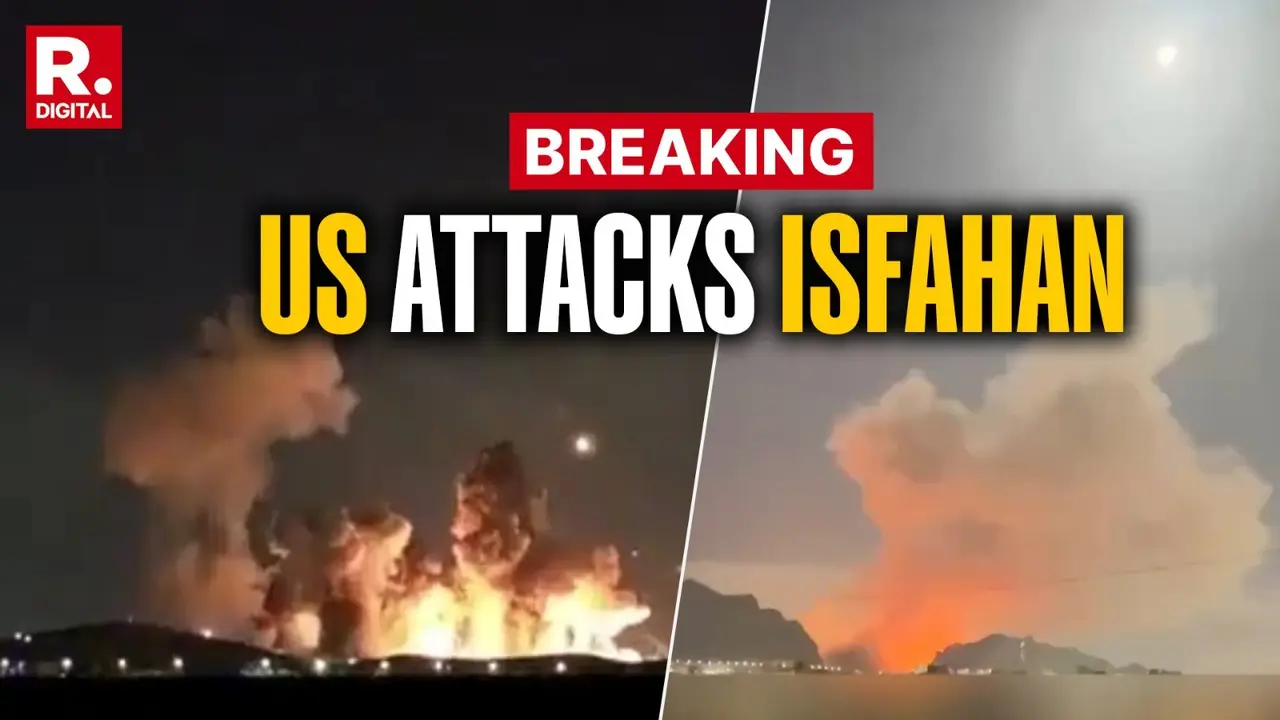
Massive Air Campaign Targets Isfahan Military Complexes
In a significant escalation of the ongoing conflict, United States and Israeli forces conducted a series of high-intensity, coordinated air strikes against military and nuclear-related infrastructure in the Iranian city of Isfahan early Tuesday morning, March 31, 2026. The operation, which involved the deployment of heavy bunker-buster munitions, targeted a large ammunition depot, strategic airbases, and facilities near key research sites. According to local reports and international monitoring agencies, approximately 42 strikes were recorded within a 30-minute window, resulting in massive secondary explosions that illuminated the night sky over the city of 2.3 million residents.
The strikes represent a major joint operation between the U.S. Air Force and the Israeli Defense Forces (IDF). U.S. officials, speaking on the condition of anonymity to the Wall Street Journal, confirmed that the primary objective was the neutralization of deep-buried military assets. The use of 2,000-pound (907-kilogram) bunker-buster bombs, also known as penetrator munitions, was central to the mission. These specialized weapons are designed to penetrate several meters of reinforced concrete or earth before detonating, making them the primary tool for targeting underground storage facilities and command centers.
Strategic Targets and Geographical Impact
The strikes were concentrated on several high-value locations within the Isfahan province, a region long considered the heart of Iran's defense and nuclear research sectors. Witnesses in Isfahan reported hearing thunderous blasts originating from the direction of Mount Soffeh, a prominent geographical feature on the southern outskirts of the city. While these witness reports were widespread, independent satellite fire-tracking data has yet to provide specific confirmation of thermal anomalies for that exact location on the morning of the strikes, though the area is known to house various military positions and hardened storage sites.
Another primary target was the Badr military airbase. As a central hub for the Iranian Air Force and logistical operations, Badr has been a focal point of intelligence gathering for months. Reports indicate that the airbase sustained heavy damage to its runways and hangar facilities. The following table outlines the primary targets identified in the initial damage assessment reports:
| Target Name | Location/Description | Reported Munition Type | Observed Effect |
|---|---|---|---|
| Isfahan Ammunition Depot | Central Isfahan Province | 2,000lb Bunker Busters | Massive secondary explosions; total destruction |
| Badr Military Airbase | Near Isfahan City | Precision Guided Munitions | Infrastructure damage; runway craters |
| Mount Soffeh Complex | Southern Isfahan outskirts | High-volume penetrator bombs | Subsurface tremors; reports of visible fires |
| Nuclear Research Tunnel Site | Classified Underground Complex | Coordinated US-Israeli strikes | Structural compromise; suspected uranium link |
Nuclear Dimensions and Uranium Stockpile Concerns
One of the most critical aspects of the March 31 operation involves the potential presence of nuclear materials at the strike sites. Intelligence analysis suggests that the strikes targeted areas where Iran may have been consolidating its nuclear assets. According to IAEA reports from March 2026, Iran’s stock of 60% enriched uranium is estimated to be between 200kg and 440.9kg. While some reports suggested a recent transfer of materials to an underground tunnel complex in Isfahan, the exact quantity and timing of such a movement remain a subject of intense monitoring by Western intelligence agencies.
The concentration of a significant portion of Iran's enriched material in hardened locations appears to have accelerated the timeline for the military intervention. While officials have not confirmed whether specific uranium storage sites were directly neutralized, the intensity of the "bunker buster" barrage suggests an intent to reach deeply buried assets. The environmental impact of strikes near nuclear-related facilities remains a subject of intense scrutiny, though no immediate reports of radiological leaks have been verified by international monitors.
Official Responses and Digital Evidence
In an unconventional move, U.S. President Donald Trump utilized his Truth Social platform to provide immediate visual confirmation of the strikes. The President posted video footage showing the moments of impact, characterized by massive fireballs followed by rhythmic secondary explosions—a hallmark of ammunition and rocket propellant detonation. These videos have since circulated widely, serving as a primary source of verification for the scale of the destruction.
Conversely, the Iranian government has maintained a notable silence in the immediate aftermath. As of Tuesday morning, Tehran has not issued a formal acknowledgement of the extent of the damage or the specific nature of the targets hit. However, state-affiliated media outlets have focused their reporting on the activities of the Iranian Army and the Islamic Revolutionary Guard Corps (IRGC) air defense units.
Iranian Air Defense and Drone Intercept Claims
While the strikes caused significant damage, Iranian military sources claim to have successfully engaged a number of hostile assets. Reports from the Tehran Times and Al Mayadeen indicate that Iranian air defense systems were active throughout the night. The IRGC has claimed the downing of several unmanned aerial vehicles (UAVs), specifically identifying the U.S.-made MQ-9 Reaper and various Israeli-origin drones.
- MQ-9 Reaper Intercepts: Iranian officials claim to have utilized advanced radar tracking to intercept and destroy MQ-9 drones operating near Isfahan's restricted airspace.
- Total Drone Claims: Military spokesmen in Tehran asserted that a total of 147 hostile drones have been downed since the beginning of the current conflict 32 days ago.
- Electronic Warfare: Unverified reports suggest that Iranian forces employed electronic jamming in an attempt to disrupt the guidance systems of the incoming bunker-buster munitions.
Despite these claims, the sheer volume of successful impacts recorded by ground-level observers suggests that the air defense measures were unable to prevent the primary objectives of the US-Israeli mission from being achieved.
Historical and Cultural Context of Isfahan
The targeting of Isfahan has drawn sharp criticism from various international cultural organizations and pro-Iran activists. As a city with over 2,500 years of history, Isfahan is home to numerous UNESCO World Heritage sites and architectural marvels. While the military strikes were reportedly focused on the outskirts and specific industrial-military zones, the psychological impact on the population of 2.3 million is profound.
The city's significance is twofold: it is a crown jewel of Persian culture and a modern center for Iran's most sensitive technological advancements. This duality makes Isfahan a high-stakes theater for military operations. Critics of the strikes have expressed concern over the proximity of the Badr airbase and the Mount Soffeh complexes to civilian residential areas, noting that the nature of the bombardment posed a risk to the historic urban fabric.
Current Status of the Conflict
The strikes on March 31 mark the 32nd day of sustained hostilities in the region. The conflict, which has seen a steady progression from localized skirmishes to large-scale coordinated aerial campaigns, shows no immediate signs of de-escalation. The degradation of Iran's military infrastructure in Isfahan is expected to have long-term implications for its defensive capabilities, particularly regarding its missile storage and nuclear research trajectory.
Military analysts suggest that the focus on Isfahan indicates a shift toward targeting "strategic depth" rather than just frontline assets. By striking the heart of the defense industry and suspected hardened storage sites, the US-Israeli coalition appears to be aiming for a comprehensive reduction in Iran's ability to sustain high-intensity military operations or advance its nuclear program.
Logistics of the Bunker-Buster Deployment
The use of 2,000-pound munitions requires specific logistical and aerial platforms. The U.S. deployment likely involved heavy bombers or specialized strike fighters capable of carrying the BLU-109 or GBU-31 JDAM (Joint Direct Attack Munition) configurations. These weapons are equipped with delayed-action fuses, allowing the steel-cased bomb to punch through layers of earth and concrete before the main explosive charge is triggered.
The technical precision required for such an operation is immense, especially when targeting facilities located near a major metropolitan area. The 42 strikes in 30 minutes suggest a high level of synchronization between the various air wings involved, ensuring that air defense systems were overwhelmed and that multiple angles of attack were utilized to reach the underground targets.
Summary of Recent Developments
As the situation in Isfahan continues to evolve, the following points summarize the current state of information as of midday, March 31, 2026:
- Operation Scale: A massive coordinated strike by US and Israeli forces involving bunker-buster munitions.
- Primary Targets: Isfahan ammunition depots, Badr Airbase, and underground facilities near Mount Soffeh.
- Nuclear Concerns: Possible targeting of sites linked to Iran's enriched uranium stock, estimated by the IAEA to be between 200kg and 440.9kg.
- Casualties and Damage: Heavy infrastructure damage confirmed; civilian casualty figures remain unverified.
- Military Claims: Iran claims to have downed several MQ-9 Reaper drones, bringing their claimed total to 147 drones since the conflict began.
The international community remains on high alert as the fallout from this operation begins to manifest. With the Iranian government yet to provide a full official response, the potential for further escalation remains a primary concern for regional observers. The use of high-volume penetrator munitions in a city as significant as Isfahan marks a definitive chapter in the 32-day-old conflict, signaling a move toward the systematic targeting of Iran's most protected military and scientific assets.
Comments (0)
No comments yet. Be the first to share your thoughts!