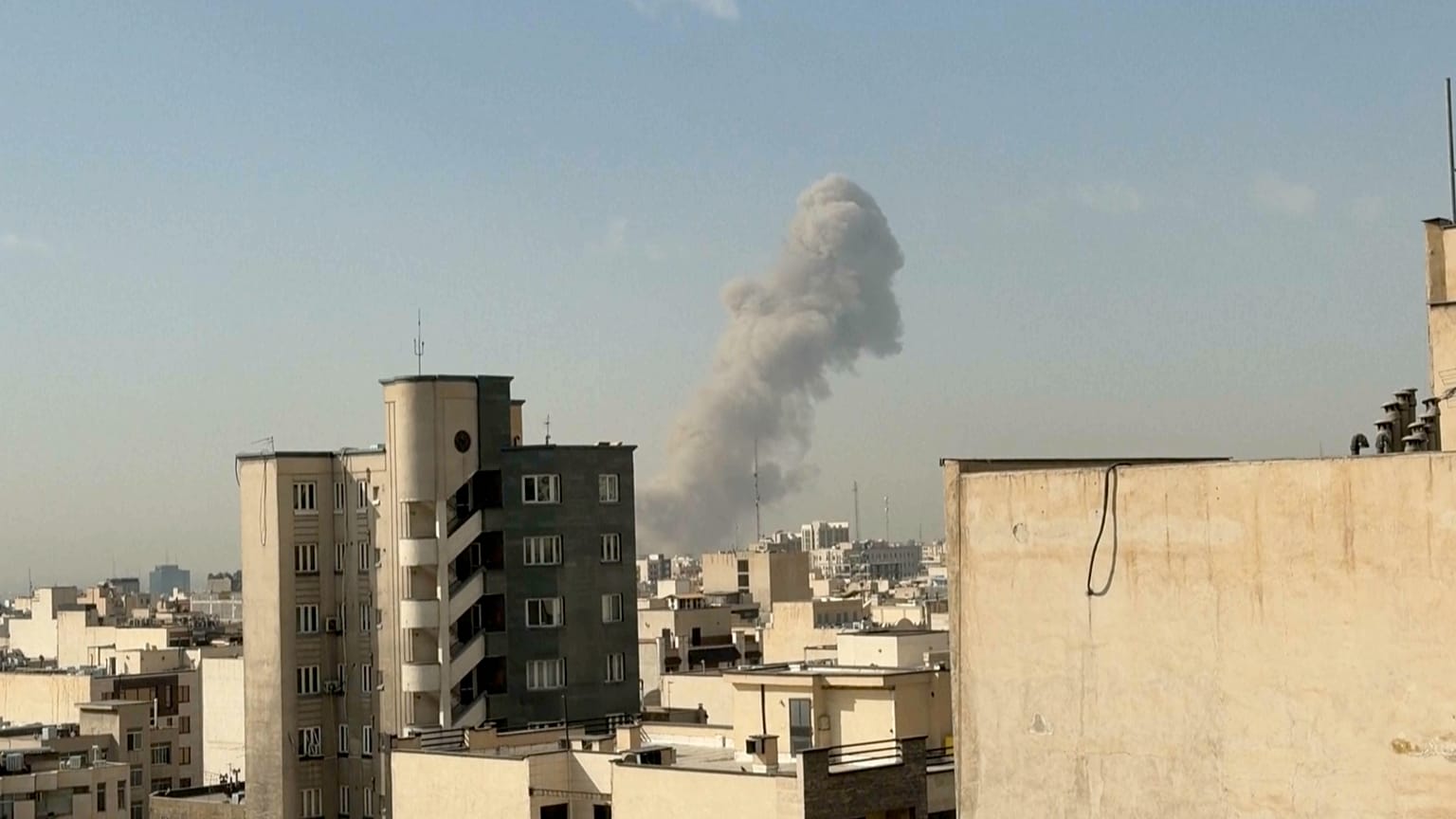
TEHRAN — The Middle East has entered its most volatile chapter in decades following the confirmed death of Iran’s Supreme Leader, Ayatollah Ali Khamenei, in a precision military strike conducted by U.S. and Israeli forces. The operation, referred to by the U.S. as "Operation Epic Fury" and by Israel as "Operation Lion’s Roar," targeted the Supreme Leader’s "Beit-e Rahbari" compound in the heart of Tehran. The strike has triggered a massive Iranian counter-offensive involving drone and missile swarms directed at Israel, the United Arab Emirates, and U.S. military installations across the Persian Gulf.
As of the morning of March 1, 2026, the Islamic Republic of Iran is in a state of total mobilization. Iranian state television confirmed the death of the 86-year-old cleric, who had led the nation since 1989, shortly after satellite imagery from Airbus Defence and Space corroborated reports of catastrophic damage to the leadership compound. The high-resolution imagery showed a black plume of smoke rising from the secure complex and several obliterated structures. The Islamic Revolutionary Guard Corps (IRGC) has formally declared a period of "severe revenge," vowing "severe, decisive and regrettable punishment" for the "murderers of the Imam." A 40-day period of national mourning has been instituted as the nation prepares for a transition of power amidst an active regional war.
The Strike on Tehran: Technical and Tactical Details
The operation occurred in the early hours of Saturday, February 28, into March 1. According to local reports, a series of detonations rocked the Iranian capital, with residents reporting the sound of heavy ordnance and the failure of local air defense systems to intercept the incoming projectiles. Satellite analysis from Airbus suggests that the strikes utilized high-yield, bunker-busting munitions designed to penetrate the fortified structures within the Beit-e Rahbari inner sanctum, resulting in multiple collapsed buildings.
The confirmation of Khamenei’s death came after hours of speculation. Iranian state media eventually broadcast images of the "Imam of the Ummah" with a black border, signaling his martyrdom. The Iranian cabinet, meeting in an emergency session at an undisclosed secure location, characterized the attack as a "great crime" and a flagrant violation of international law and the UN Charter. They accused the United States and Israel of exploiting ongoing diplomatic channels as a "smokescreen" for a decapitation strike against the Iranian leadership.
Iran’s Comprehensive Counter-Offensive: "Truthful Promise 4"
Within ninety minutes of the final explosions in Tehran, the IRGC launched what it termed a "comprehensive counter-offensive," dubbed "Truthful Promise 4." This response has targeted a wide array of high-value assets across the Middle East, significantly expanding the scope of the conflict. In a massive escalation, Iran fired 137 missiles and 209 drones at the United Arab Emirates. The UAE Defense Ministry confirmed that Dubai International Airport was hit, and an "MSP" ammunition ship was disabled at the Jebel Ali anchorage.
The retaliation also struck U.S. interests in Qatar. The interior ministry in Doha reported 16 injuries and significant material damage following a strike on the Al-Udeid air base, the largest U.S. military facility in the region. Meanwhile, Iranian ballistic missiles have struck targets near Haifa, and drone infiltration warnings in northern Israel have kept populations in hardened shelters. The following table summarizes the reported military activity over the last 24 hours:
| Location | Type of Attack | Status/Impact |
|---|---|---|
| Tehran (Beit-e Rahbari) | U.S.-Israeli Strike (Epic Fury / Lion’s Roar) | Confirmed destruction; Death of Ali Khamenei. |
| Dubai, UAE | 137 Missiles / 209 Drones | Dubai Airport hit; MSP ship disabled at Jebel Ali. |
| Al-Udeid, Qatar | Missile and Drone Swarms | 16 injuries reported; damage to U.S. air base. |
| Haifa & Northern Israel | Ballistic Missiles / Rockets | Multiple impacts; Iron Dome active; civilian lockdowns. |
| Strait of Hormuz | Naval Harassment | IRGC naval units deployed; maritime traffic halted. |
Regional and International Reactions
The assassination of the Supreme Leader has sent shockwaves through the global diplomatic community. While regional powers including Saudi Arabia and Qatar have expressed deep alarm, the UAE remains on high alert following the direct hits on its infrastructure. The prospect of a full-scale regional war has prompted urgent calls for immediate de-escalation from the international community.
At the United Nations, an emergency session of the Security Council has been convened. Global leaders from the European Union, China, and Russia have urged "maximum restraint," though the rhetoric from both Washington and Tehran suggests that a ceasefire is not currently on the horizon. The IRGC’s statement remained unequivocal: "The great crime of the murderers of the Imam will never go unanswered. The hand of revenge of the Iranian nation... will not let go of them."
Context: The 2026 Iran-United States Crisis
The current hostilities are the culmination of a months-long escalation. In February 2026, the United States issued an ultimatum to the Iranian government during tense negotiations, focusing on three core demands:
- Cessation of Enrichment: The total dismantlement of Iran's nuclear program.
- Ballistic Missile Eradication: The total eradication of Iran's ballistic missile program.
- Proxy Disengagement: An end to all financial and military support for regional proxy militias.
Iran rejected these demands as a violation of its national sovereignty. The failure of these diplomatic negotiations, coupled with the deployment of U.S. naval concentrations spearheaded by the USS Abraham Lincoln and USS Gerald R. Ford, set the stage for the military intervention that claimed the life of the Supreme Leader.
Succession and Domestic Atmosphere
The death of Khamenei creates a significant power vacuum within the Islamic Republic. Under the Iranian constitution, the Assembly of Experts is tasked with selecting a new Supreme Leader. While the transition process is underway, the country is being governed by a provisional council. State media has focused on themes of "somber solidarity," broadcasting footage of mass mourning processions in Isfahan and other major cities. Conversely, social media reports suggest a divide in public sentiment, though the IRGC’s tightening grip on domestic security has largely suppressed open dissent.
Economic Impact and Global Markets
The escalation has had an immediate impact on global markets, with a "war premium" affecting energy prices. While analysts warn of extreme volatility if the Strait of Hormuz remains closed, initial market reactions have been swift. Brent crude oil was reported at $72.48 per barrel as of March 1, 2026, representing an approximate 2% increase from the previous Friday. Gold prices and S&P 500 futures have also seen fluctuations as investors react to the uncertainty in the Persian Gulf.
| Market Indicator | Level (March 1, 2026) | Market Sentiment |
|---|---|---|
| Brent Crude Oil (per barrel) | $72.48 | Rising (+2%); high volatility expected. |
| Gold | Trending Up | Safe-haven demand increasing. |
| S&P 500 Futures | Trending Down | Pressure on equities due to regional instability. |
A Region in Peril
As the sun sets on March 1, 2026, the Middle East stands at a crossroads. The death of Ali Khamenei is not merely the loss of a head of state, but the removal of the central pillar of the "Axis of Resistance." The scale of "Operation Truthful Promise 4" suggests that Tehran is committed to a multi-front war to preserve its regional influence. With U.S. and Israeli assets under constant pressure, the coming days will determine if the conflict can be contained or if it will expand into a global catastrophe.
Comments (0)
No comments yet. Be the first to share your thoughts!