High-Stakes Brinkmanship: Trump Issues Warnings as Military Countdown Begins
In a weekend of rapid military escalation and intense diplomatic signaling, U.S. President Donald Trump has signaled a countdown for potential military action against the Islamic Republic of Iran if negotiations for a comprehensive nuclear deal fail to progress. As of February 1, 2026, the White House has indicated that the window for negotiation is narrowing, even as a massive U.S. naval task force—described by the President as "bigger than we had in Venezuela"—takes up positions in the Arabian Sea and surrounding waters. While the President has issued stark warnings of intervention, official communications have not yet established a formal, publicly stated "definitive deadline" date for the conclusion of a deal. These developments, confirmed by the President during a series of high-profile interviews and statements from Air Force One, mark the most significant escalation in U.S.-Iran relations since the beginning of the administration's second term.
The current posture comes amidst a backdrop of heightened military readiness on both sides. While President Trump confirmed that Iran is "seriously talking to us," reports suggest these are currently backchannel communications mediated by Turkey and Qatar rather than formal direct talks between high-level officials. "The plan is that they are talking to us, and we'll see if we can do something; otherwise, we'll see what happens," the President told Fox News on Saturday. He emphasized that any acceptable deal would require the total abandonment of Iran’s nuclear ambitions, as well as concessions on its ballistic missile and drone programs. The administration’s strategy appears to be one of "maximum pressure" combined with an open, albeit narrow, door for diplomacy, utilizing the visible threat of naval power as leverage to force a breakthrough.
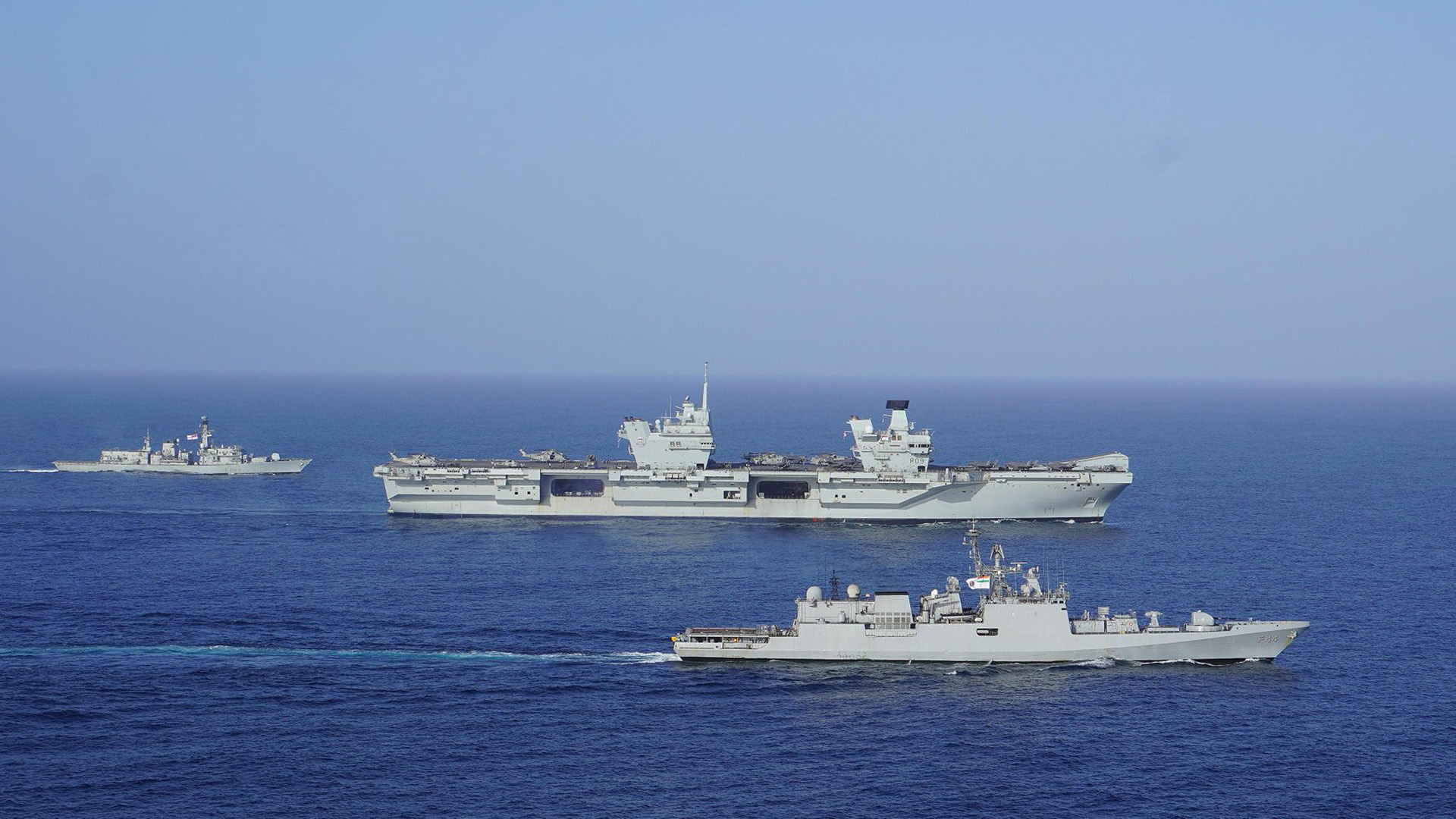
The U.S. Military Buildup: "A Big Fleet Heading Out There"
The centerpiece of the U.S. posture is a significant deployment of maritime assets. Defense officials have confirmed that the USS Abraham Lincoln carrier strike group has reached the Middle East, joined by additional destroyers and littoral combat ships that have entered the region over the last 48 hours. Secretary of Defense Pete Hegseth, speaking during a cabinet meeting, underscored the administration’s resolve, warning Tehran against any further pursuit of nuclear weapons. Hegseth stated that the Department of Defense is "prepared to deliver whatever this president expects," suggesting that the military options on the table are diverse and fully operational.
President Trump’s reference to the January 3, 2026, strike in Venezuela serves as a sobering historical marker for the current crisis. During Operation Absolute Resolve, U.S. Delta Force and air assets successfully captured Nicolás Maduro and Cilia Flores in Caracas. By comparing the size of the current Middle East fleet to the force used in the Caribbean, the administration is signaling that it views the Iranian nuclear threat as a primary national security priority. Military analysts note that the current deployment includes not only carrier-based aviation but also significant cruise missile capabilities and electronic warfare platforms designed to neutralize sophisticated air defense systems.
| U.S. Military Asset/Entity | Reported Status (Feb 1-2, 2026) | Strategic Objective |
|---|---|---|
| USS Abraham Lincoln Carrier Strike Group (CSG) | Deployed to Arabian Sea | Power projection and air superiority |
| Additional Surface Combatants | Entering Persian Gulf/Strait of Hormuz | Ensuring freedom of navigation/Strike readiness |
| U.S. Central Command (CENTCOM) | Highest Alert Status | Regional defense and offensive coordination |
| Secretary of Defense Pete Hegseth | Cabinet Briefing Completed | Execution of presidential directives |
Tehran’s Response: Openness to Talks Amidst Defiant Readiness
In Tehran, the government’s response has been characterized by a dual-track approach of diplomatic flexibility and military defiance. On February 1, Ali Larijani, a top security official and advisor, announced that a "framework" for negotiations with the United States is beginning to take shape. This admission suggests that the economic and military pressure exerted by Washington may be having an effect on the internal deliberations of the Iranian leadership. Iran’s Foreign Minister, Abbas Araghchi, echoed this sentiment on Sunday, stating that "meaningful nuclear negotiations with the US are still possible if trust can be restored," though he emphasized that Iran would not negotiate under the "shadow of threats" and referenced the 2018 U.S. withdrawal from the JCPOA as a primary hurdle.
However, this diplomatic overture is being met with a sharp domestic counter-narrative. Within the Iranian Parliament on February 1, sessions were punctuated by "Death to America" chants as lawmakers, many in IRGC uniforms, protested the European Union's designation of the IRGC as a terrorist organization. The nation’s Army Chief has publicly affirmed that the armed forces are at peak readiness to repel any U.S. or allied attack. Reports from Tehran indicate that the Iranian Navy scheduled live-fire maneuvers in the Strait of Hormuz for February 1-2, a critical chokepoint for global oil supplies, as a direct response to the U.S. naval presence. Anti-U.S. murals and state-sponsored propaganda also appeared across the capital on January 31, highlighting the regime's need to maintain internal legitimacy while considering a return to the bargaining table.
Regional Stakes: Israel and Saudi Arabia Watch Closely
The escalating tension has drawn in the region’s major powers, each with their own set of anxieties regarding the outcome of Trump’s warnings. IDF Chief of Staff Lieutenant General Ayal Zamir held high-level discussions with U.S. Chairman of the Joint Chiefs of Staff Gen. Dan Caine and other Pentagon officials over the weekend, signaling a high degree of coordination between Washington and Jerusalem. Israel has long maintained that it will not allow Iran to reach nuclear "breakout" capacity and has signaled its own readiness to participate in or initiate strikes should the diplomatic window close.
Meanwhile, Saudi Arabia has expressed a more cautious perspective. Following a White House meeting on Friday, January 30, Saudi Defense Minister Prince Khalid bin Salman reportedly told Secretary of State Marco Rubio and Secretary Hegseth that Iran would be "emboldened" if U.S. threats were not backed by action. Privately, Saudi officials are concerned about the potential for a regional conflagration that could target their oil infrastructure, yet they remain equally fearful of a deal that addresses the nuclear issue while ignoring Iran’s regional proxy network. Notably, President Trump has declined to share specific military plans with regional allies, maintaining a level of strategic ambiguity that has left even close partners like Riyadh and Abu Dhabi guessing as to the next move.
The Deadline Context: A History of Friction
The current crisis is the culmination of years of deteriorating relations following the collapse of previous nuclear agreements. The Trump administration’s demand for a "new and stronger" deal includes several key pillars that Tehran has historically found difficult to accept:
- Complete Nuclear Cessation: The permanent abandonment of all uranium enrichment and plutonium-related activities.
- Missile Program Restrictions: Limits on the development and testing of ballistic missiles capable of carrying nuclear warheads.
- Regional Disengagement: An end to the funding and arming of proxy groups in Lebanon, Yemen, Iraq, and Syria.
- Unprecedented Inspections: "Anywhere, anytime" access for international inspectors to both civilian and military sites.
Iranian officials have countered that any new deal must include the immediate lifting of all economic sanctions and a guarantee of sovereign security. The "trust" mentioned by the Iranian Foreign Minister refers to the 2018 U.S. withdrawal from the JCPOA, an event that remains a central grievance for the Iranian negotiating team.
Social Media and Domestic Sentiment
As the February 1 countdown began, digital platforms have become a secondary battleground for the conflict. Under the hashtag #TrumpIranDeal, social media users have expressed a mix of cautious optimism and skepticism regarding whether military pressure can serve as effective diplomatic leverage. Conversely, the hashtag #IranStrike features a mix of hawkish calls for action and deep-seated fears of a regional war that could disrupt global energy markets. Within Iran, the hashtag #FreeIran has seen a surge in activity, reflecting the hopes of opposition groups that U.S. pressure might lead to systemic political change, though these voices are often tempered by the fear of being caught in the crossfire of a kinetic conflict.
The sentiment on the ground in Tehran is reportedly a mix of anxiety and resilience. While the government projects strength, the underlying economic strain caused by years of sanctions has left the population weary. The appearance of anti-U.S. murals on January 31 suggests a state-led effort to galvanize public opinion ahead of a potential confrontation.
Conclusion: The Path Forward
As of February 2, 2026, the situation remains in a state of "dynamic equilibrium." The U.S. fleet is in place, a countdown for potential action has been signaled, and the Iranian leadership has indicated a willingness to talk while keeping their missiles on standby. The coming days will determine if the "framework" mentioned by Ali Larijani can be translated into a formal diplomatic process or if the "big fleet" currently patrolling the Arabian Sea will be called into action.
International mediators, including Turkey and Qatar, are actively working behind the scenes to facilitate a face-saving exit for both parties, with Qatar's prime minister visiting Tehran to advance prospects for a meeting. However, with the U.S. administration demanding nothing less than total nuclear abandonment and the Iranian military preparing for "full defensive readiness," the margin for error is razor-thin. The world now watches the Strait of Hormuz, where the next move—whether a diplomatic breakthrough or a military strike—will redefine the geopolitical landscape of the Middle East for a generation.
Timeline of Recent Events (January 30 – February 1, 2026)
- January 30: Saudi Defense Minister Prince Khalid bin Salman meets with Secretary of State Marco Rubio and Defense Secretary Pete Hegseth at the White House to warn that Iran would be emboldened without U.S. action.
- January 31: Anti-U.S. murals appear in Tehran; President Trump confirms Iran is "seriously talking" to the U.S. but maintains a hawkish tone in a Fox News interview.
- February 1: President Trump confirms the "big fleet" deployment from Air Force One. Ali Larijani announces a developing framework for talks. The Iranian Foreign Minister conditions a deal on "restored trust."
- February 1 (Evening): Lawmakers in the Iranian parliament chant "Death to America" in response to EU sanctions as the military declares high alert and schedules maneuvers in the Strait of Hormuz.
- February 2: U.S. warships remain in strike positions in the Arabian Sea; backchannel diplomatic efforts through Turkey and Qatar remain active.
Comments (0)
No comments yet. Be the first to share your thoughts!