⏳
Verification in
progress...
AI is deep-searching
and cross-referencing facts. This usually takes 30-60 seconds.
---
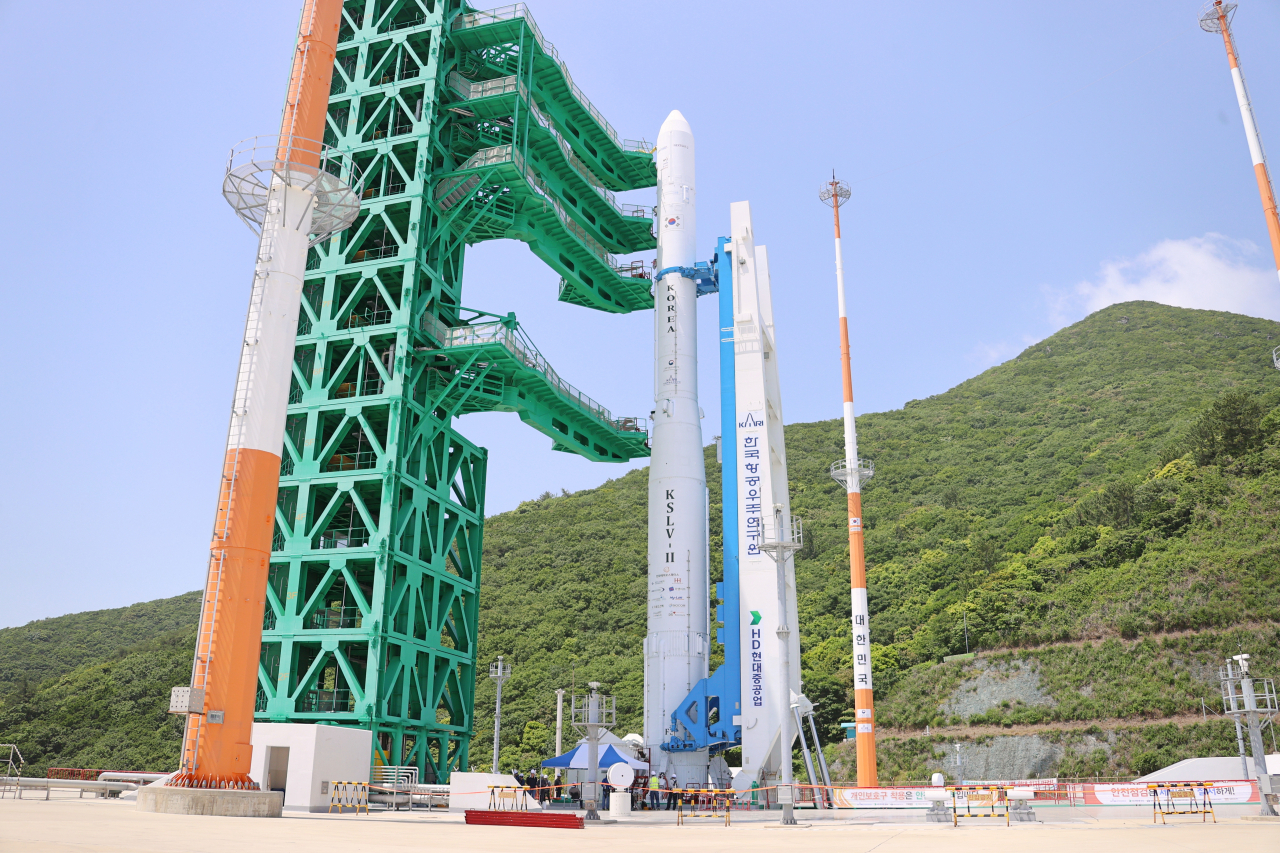
> **Claim:** South Korea’s homegrown Nuri space launch vehicle is positioned for its fifth flight on October 7, 2026, carrying a record payload of 15 satellites from the Naro Space Center in Goheung, South Jeolla Province.
- **Verdict:** Verified
- **Analysis:** The search evidence confirms that the fifth flight of South Korea's Nuri space launch vehicle is scheduled for October 7, 2026, carrying a record 15 satellites from the Naro Space Center in Goheung. [Aju Press](https://www.ajupress.com/view/20261006104622189)
---
---
> **Claim:** According to the Korea AeroSpace Administration (KASA), a launch management committee is scheduled to convene to review technical readiness, meteorological conditions, and space debris collision risks before giving final clearance for propellant loading and confirming the exact liftoff time.
- **Verdict:** Verified
- **Analysis:** Confirmation of the launch management committee reviewing technical readiness, weather, and debris collision risks prior to propellant loading and liftoff confirmation is provided in search reports. [SBS News](https://news.sbs.co.kr/english/article.do?news_id=N1008784782)
---
---
> **Claim:** The provisional launch window is set between 12:23 p.m. and 1:23 p.m. Korea Standard Time.
- **Verdict:** Verified
- **Analysis:** The provisional launch window is explicitly noted as 12:23 p.m. to 1:23 p.m. Korea Standard Time (KST). [SBS News](https://news.sbs.co.kr/english/article.do?news_id=N1008784782)
---
---
> **Claim:** The 47.2-meter rocket was transported to the second launch pad on October 6 using an unmanned special transport vehicle, completing the 1.8-kilometer journey from the assembly complex in roughly 90 minutes.
- **Verdict:** Verified
- **Analysis:** Search evidence confirms the rocket's move to the second launch pad on October 6 via an unmanned transport vehicle covering the 1.8-kilometer journey in about 90 minutes. [Aju Press](https://www.ajupress.com/view/20261006104622189)
---
---
> **Claim:** Ground teams subsequently raised the vehicle into a vertical position, secured it to the pad, and completed umbilical connections and leakage inspections.
- **Verdict:** Verified
- **Analysis:** Ground operations including raising the vehicle into a vertical position, securing it, and making umbilical connections are verified by reporting on the pre-launch sequence. [DongA Science](https://www.dongascience.com/en/news/80207)
---
---
> **Claim:** The fifth flight features the heaviest total payload mass for the Nuri vehicle to date, weighing approximately 1,071 kilograms and targeting a sun-synchronous orbit at an altitude of roughly 570 kilometers.
- **Verdict:** Verified
- **Analysis:** The payload weight of approximately 1,071 kilograms targeting a 570-kilometer sun-synchronous orbit represents the heaviest payload mass to date for Nuri, as confirmed by reporting. [Korea Times](https://www.koreatimes.co.kr/business/tech-science/20261007/nuri-rocket-set-for-5th-launch-to-place-15-satellites-into-orbit)
---
---
> **Claim:** Five NEONSAT Microsatellites: Built by Satrec Initiative under the oversight of KAIST’s Satellite Technology Research Center, these Earth-observation spacecraft represent the second through sixth units of a planned 10-satellite constellation intended for disaster response and national security monitoring.
- **Verdict:** Verified
- **Analysis:** The five NEONSAT microsatellites (units 2 through 6) built by Satrec Initiative under KAIST's Satellite Technology Research Center for a 10-satellite constellation focused on disaster response and security monitoring are confirmed in search results. [Mirae News](https://www.miragenews.com/kaist-to-launch-five-neonsat-satellites-on-nuri-1755564/)
---
---
> **Claim:** Ten CubeSats: Developed by domestic companies, universities, and research organizations to test experimental technologies, including low-cost commercial electronics protection in low Earth orbit.
- **Verdict:** Verified
- **Analysis:** The inclusion of ten CubeSats developed domestically to test experimental technologies is documented in mission manifests. [Korea Times](https://www.koreatimes.co.kr/business/tech-science/20261007/nuri-rocket-set-for-5th-launch-to-place-15-satellites-into-orbit)
---
---
> **Claim:** This mission marks the first time Nuri will sequentially deploy multiple primary satellites supporting the same constellation program. The primary microsatellites are scheduled to separate at intervals of 35 to 40 seconds utilizing a newly introduced low-shock separation system, followed by the secondary CubeSats deployed in pairs.
- **Verdict:** Verified
- **Analysis:** Sequential deployment intervals of 35 to 40 seconds utilizing a low-shock separation system for the primary microsatellites are verified by mission details. [Aju Press](https://www.ajupress.com/view/20261006104622189)
---
---
> **Claim:** While the Korea Aerospace Research Institute (KARI) previously managed hands-on console operations directly through past missions, Hanwha Aerospace—acting as the system integration partner—has assumed a leading role for the fifth flight. Private-sector personnel are operating the majority of the launch control consoles as part of a phased plan to transfer complete launch vehicle assembly and execution capabilities to private industry.
- **Verdict:** Verified
- **Analysis:** The operational shift where Hanwha Aerospace takes a leading role and private-sector personnel operate the majority of launch control consoles is confirmed as part of the technology transfer plan. [The Chosun Ilbo](https://www.chosun.com/english/industry-en/2026/10/06/2PU54MSRAVCTPHXK6VIFKCI27I/)
---
---
> **Claim:** Developed entirely with domestic technology, the three-stage Nuri rocket previously achieved successful back-to-back orbital insertions following its initial test flight in 2021, establishing South Korea's independent access to space.
- **Verdict:** Verified
- **Analysis:** Background facts regarding Nuri being a three-stage domestically developed rocket with successful back-to-back orbital insertions following its 2021 test flight are accurate and well-established. [Korea Times](https://www.koreatimes.co.kr/business/tech-science/20261007/nuri-rocket-set-for-5th-launch-to-place-15-satellites-into-orbit)
---
AI Research Queries
-
🔍
South Korea Nuri rocket fifth launch date October 7 2026 time window
-
🔍
Nuri rocket 5th launch 15 satellites 1071 kg 570 km sun-synchronous orbit
-
🔍
NEONSAT microsatellites Satrec Initiative KAIST Nuri 5th launch
-
🔍
Hanwha Aerospace launch control consoles Nuri fifth flight technology transfer
-
🔍
Nuri rocket moved to second launch pad October 6 Goheung
Comments (0)
No comments yet. Be the first to share your thoughts!