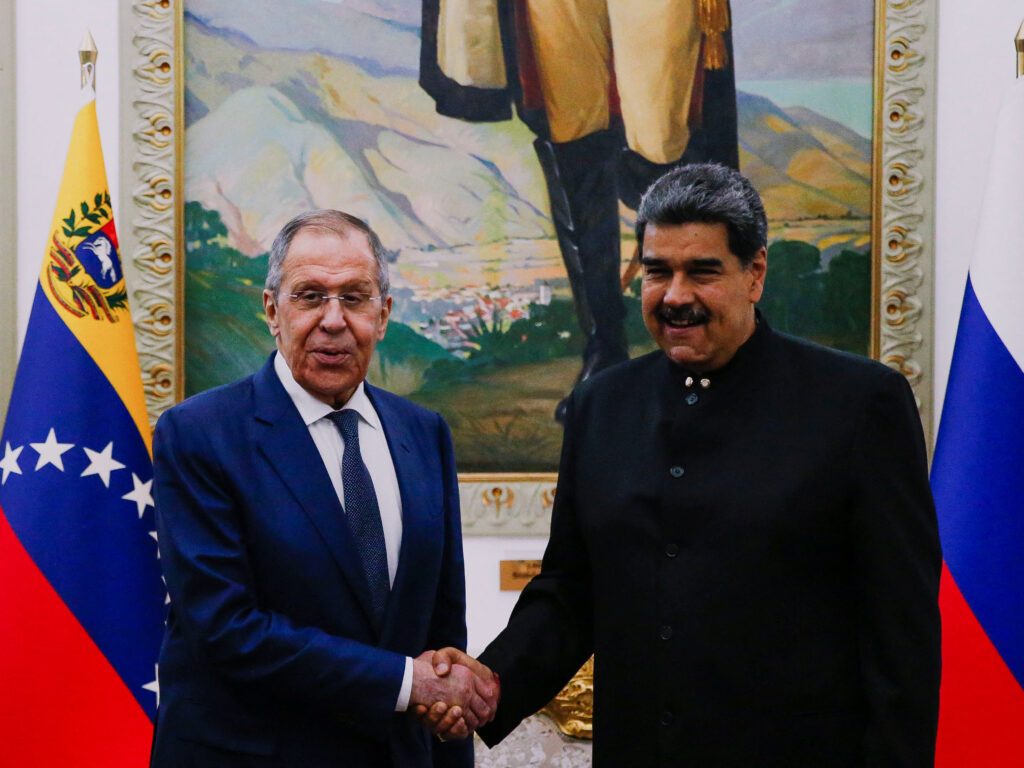
Introduction: A Landscape of Speculation and International Outcry
In the tumultuous currents of contemporary geopolitics, the intricate web of relationships between Venezuela, Russia, and China has become a focal point of intense scrutiny and widespread speculation. Recent developments, particularly those surrounding the U.S. military intervention in Venezuela, including strikes and the capture of President Nicolás Maduro, have ignited a flurry of public discourse, predominantly across social media platforms. This discourse paints a complex picture, oscillating between expressions of solidarity, concern over international law, and various theories attempting to make sense of the rapidly unfolding situation. While official channels from Russia and China have largely reaffirmed their support for Venezuelan sovereignty and condemned U.S. actions, the digital sphere hums with theories and sentiments reflecting a populace grappling with the implications of an evolving global order in the wake of U.S. intervention. This article delves into the narratives emerging from these online discussions, attempting to piece together the public perception of Venezuela's standing with its traditional non-Western allies, Russia and China, in an environment where verifiable facts are scarce and conjecture thrives.
The absence of concrete, recent official data concerning direct trade figures, new agreements, or strategic shifts between Venezuela, Russia, and China leaves a significant void, particularly given the dynamic nature of the current crisis induced by external pressure. This informational vacuum is further exacerbated by the highly sensitive nature of these relationships, often conducted away from the glare of international media. Consequently, public understanding and interpretation are heavily influenced by social media trends and the collective anxieties of a nation experiencing profound external pressures. The discourse, as captured in prominent hashtags, reveals a spectrum of emotions ranging from concern for national sovereignty to cynical skepticism, tempered by the strong condemnations and measured tones of official Chinese and Russian diplomatic statements.
The U.S. strikes and the perceived "fall" or "custody" of Venezuelan President Nicolás Maduro, an event that has resonated profoundly across the international community, appears to serve as a critical inflection point in these online narratives. It is against this backdrop that sentiments, ranging from unsubstantiated fears of abandonment and suspicions of backroom deals to reassurances of continued cooperation and strong international condemnations of the U.S. intervention, are being articulated. Understanding these diverse perspectives is crucial to comprehending the current geopolitical temperature surrounding Venezuela and its enduring, yet seemingly reconfigured, ties with two of the world's most influential powers, despite official reaffirmations of support.
The Echoes of Abandonment: #RussiaChinaAbandonment (A Misperception)
One striking and emotionally charged narrative circulating in the wake of the recent U.S. military intervention in Venezuela is encapsulated by the hashtag #RussiaChinaAbandonment. This sentiment, characterized by a furious and disillusioned tone among some social media users, reflects a perceived betrayal by Venezuela's long-standing allies, Russia and China. The prevailing sentiment suggests that decades of historical loans, trade agreements, and strategic partnerships—particularly in crucial sectors like oil and air routes—are now perilously at risk, if not already severed. However, this narrative largely stands in contrast to the official pronouncements from Moscow and Beijing, which have consistently reaffirmed their support for Venezuela and condemned the U.S. actions.
Users frequently express a profound disappointment, highlighting what they view as a cynical prioritization of Moscow and Beijing's own national interests over their commitment to Venezuela. The narrative often posits that Russia and China, faced with a changing political landscape in Caracas due to external pressure, have chosen to distance themselves or re-evaluate their engagement, leaving Venezuela isolated and vulnerable. This perception of abandonment is not merely economic; it extends to the geopolitical sphere, where these alliances were once seen as a bulwark against Western pressures. Official statements, however, indicate continued rhetorical and diplomatic support.
Key themes underpinning this disillusionment include the perceived fragility of alliances when confronted with significant external military upheaval. Social media posts lament that the "fall of Maduro" or his "custody" has exposed the inherent weakness of these partnerships, suggesting that the support offered by Russia and China was conditional and ultimately self-serving. This sentiment, however, is not reflected in official statements, which firmly condemn external intervention and reiterate support. There is a palpable sense of betrayal, with many questioning the sincerity and depth of the solidarity previously proclaimed by these nations. The historical context of loans and trade, which often involved significant Venezuelan oil concessions and strategic military cooperation, is frequently invoked as evidence of the long-term commitment that is now seen as evaporating, despite official assurances to the contrary.
Representative quotes from this online discourse underscore the intensity of these feelings. Phrases like "Russia's coldness is undeniable" suggest a perceived lack of empathy or direct support from Moscow during a critical juncture for Venezuela. The assertion that "China and Russia are cutting ties" implies a decisive and perhaps abrupt cessation of engagements, rather than a gradual re-evaluation. Perhaps most poignant are comments reflecting on the longevity of these relationships, such as "25 years of support ending just like that," which convey a sense of abrupt closure to a quarter-century of strategic alignment. It is critical to note that these sentiments on social media are contradicted by the official responses from Russia and China, which affirm support and condemn U.S. actions. This narrative paints a grim picture for Venezuela, suggesting a significant recalibration of its international support network and a potentially isolating future, though official responses from Russia and China contradict this perception.
The economic implications of such an abandonment, as perceived by social media users, are vast. Venezuela has historically relied heavily on Russian and Chinese financing, particularly through oil-for-loan deals that have provided crucial liquidity to its embattled economy. The prospect of these financial lifelines being withdrawn or significantly curtailed raises concerns about the nation's ability to navigate its severe economic challenges. However, official statements from both nations continue to affirm their commitment to Venezuela, suggesting this perception of abandonment is unfounded. Furthermore, the strategic importance of air routes and logistical support, which facilitated trade and diplomatic exchanges, is also seen as being jeopardized. This collective anxiety highlights the profound impact that perceived shifts in international alliances can have on public morale and national outlook, even in the presence of official affirmations of support.
The sentiment also reflects a broader disillusionment with the concept of "multipolarity" as an alternative to a Western-dominated international system. For many, the alliances with Russia and China represented a pathway to greater sovereignty and a counterweight to perceived external interference. If these alliances were indeed faltering, as the social media narrative suggests, despite official condemnations of external aggression, it raises fundamental questions about Venezuela's geopolitical options and its capacity to resist international pressures. This narrative, therefore, is not just about specific trade deals or loans; it is about a perceived ideological and strategic retreat by allies who were once seen as steadfast partners in a shared vision of a different world order, despite official condemnations of external aggression.
The Shadow of Secret Pacts: #ChinaRussiaDeals (Unsubstantiated Speculation)
In stark contrast to the despair of perceived abandonment, yet equally potent in its implications, is the sentiment surrounding #ChinaRussiaDeals. This hashtag reveals a public discourse steeped in conspiracy-laden skepticism and a pervasive "told-you-so" cynicism. Rather than outright abandonment, this narrative posits that Russia and China are not necessarily withdrawing but are instead engaged in clandestine negotiations and secret pacts, potentially with unexpected partners, to redefine their interests in Venezuela. It is important to note that official reporting does not substantiate claims of Russia or China engaging in "betrayals" or "clandestine agreements" against Venezuela, but rather shows continuity in their support amidst U.S. aggression.
The core theme revolves around the unsubstantiated belief that Russia and China, in the wake of the U.S. military intervention in Venezuela, have entered into undisclosed agreements, possibly even with the United States, to carve up Venezuela's future trade and oil prospects. This suggests a complex, multi-layered geopolitical maneuvering where traditional alliances are less about ideological solidarity and more about pragmatic, self-serving economic and strategic interests. The "told-you-so" tone implies that many users had long suspected such behind-the-scenes dealings, viewing the public declarations of support as mere facades for deeper, more self-interested agendas, despite official condemnations of U.S. actions and reaffirmations of support for Venezuela.
A significant aspect of this speculation is the idea that the era of exclusive ties between Venezuela and its non-Western partners has come to an end. The narrative suggests that the previous arrangements, which often granted Russia and China preferential access to Venezuela's vast oil reserves and other resources, are now being renegotiated or even dismantled in favor of more diversified or even multilateral agreements. This shift, according to the online discourse, is not transparent but is instead being orchestrated through secret channels, leaving Venezuela's populace and perhaps even its leadership in the dark about the true nature of these new arrangements. Again, there is no official substantiation for these claims.
Speculation abounds regarding new commercial routes and economic frameworks. The mention of "new commercial routes (e.g., Caracas-Moscow-Guangzhou)" being renegotiated is particularly telling. While such routes could ostensibly represent legitimate trade expansion, in the context of this hashtag, they are often viewed with suspicion – as potential fronts for more significant, undisclosed deals. The implication is that these publicly announced initiatives might be a smokescreen to distract from the true nature of the agreements being forged behind closed doors, agreements that could fundamentally alter Venezuela's economic sovereignty and its relationships with global powers.
Representative quotes further illuminate this skeptical outlook. Statements such as "China, US, and Russia already inked agreements" directly point to the belief in secret trilateral deals that bypass Venezuela's direct involvement or benefit. The assertion that "Russia and China sorted things out behind closed doors" reinforces the notion of a lack of transparency and a disregard for Venezuela's agency in determining its own future. Furthermore, the claim that "new air links are a facade" highlights the pervasive cynicism, suggesting that even seemingly positive developments are viewed through a lens of suspicion, interpreted as superficial gestures masking deeper, more complex geopolitical realignments, even as official statements affirm support for Venezuela.
The implications of such perceived secret pacts are profound for Venezuela. If these theories hold any truth, it would suggest a significant erosion of Venezuela's bargaining power and its ability to independently chart its economic and political course. The country's natural resources, particularly its oil, which has long been a cornerstone of its international leverage, could become subjects of external negotiation without its full and transparent participation. This narrative, therefore, speaks to a deep-seated fear of external manipulation and a loss of national control over vital assets, reinforcing a sense of vulnerability in a highly competitive global arena, even when official channels indicate continued support.
Moreover, the belief in secret agreements can foster a climate of distrust between the populace and its international partners, as well as potentially within the Venezuelan government itself. If citizens believe that their allies are secretly dealing with adversaries, it can undermine public confidence in the integrity of international relations and lead to increased internal instability. This narrative, while speculative and unsubstantiated by official reporting, captures a significant dimension of the public's attempt to make sense of complex geopolitical shifts and the uncertain future facing Venezuela.
The Diplomatic Tightrope: #ChinaOfficialStance and Russian Condemnation
Amidst the swirling currents of disillusionment and conspiracy, the hashtag #ChinaOfficialStance offers a distinctly different, albeit cautiously optimistic, perspective. This narrative is characterized by a "cautiously supportive" vibe, reflecting diplomatic optimism that is nonetheless tinged with an underlying sense of uncertainty. It primarily focuses on the official pronouncements and actions of China's Foreign Ministry, which has consistently reiterated its commitment to cooperation with the Venezuelan government and issued strong rhetorical condemnations of U.S. strikes on Venezuela and the capture of Nicolás Maduro, reaffirming support for Venezuelan sovereignty.
Key themes emerging from this discourse emphasize China's consistent pledge for ongoing cooperation and trade with the existing Venezuelan government. This stance is framed as a continuation of established policy, designed to project stability and continuity in bilateral relations despite the U.S. military intervention in Venezuela. Crucially, the official Chinese position frequently highlights a deep respect for Venezuela's sovereignty and independence, even in the context of "Maduro's custody" or other significant external developments. China has also specifically recognized arrangements by the Venezuelan government, now referenced as headed by Delcy Rodríguez. While analysts note China's neutrality policy means direct military intervention is unlikely, its rhetorical and diplomatic support remains strong. This emphasis on non-interference is a cornerstone of Chinese foreign policy and is consistently applied in its dealings with nations facing external challenges.
Similarly, Russia has condemned the U.S. actions as "illegal" and "destabilizing," with Kremlin figures like Dmitry Medvedev signaling Moscow's strong stance. Russia views the U.S. actions as hypocritical, given its own spheres-of-influence doctrine (e.g., Ukraine), and maintains alignment with Venezuela without reported fractures. As of early January 2026, President Putin had not publicly commented on the U.S. intervention.
However, even within this cautiously supportive framework, there are underlying questions and areas of uncertainty. A prominent theme concerns the repayment of Venezuela's substantial oil debt to China, particularly in the post-crisis environment. While official statements maintain a positive outlook on cooperation, the practicalities of debt servicing in a nation facing severe economic constraints remain a significant, albeit often unspoken, concern. This suggests that while diplomatic rhetoric emphasizes continuity, the economic realities of the relationship are subject to ongoing re-evaluation and negotiation.
Representative quotes from this official stance underscore China's diplomatic approach. Statements like "China's positive talks with the Venezuelan government" convey a message of ongoing engagement and constructive dialogue, aiming to reassure both domestic and international audiences of the stability of the relationship. The emphasis on "respect for independence and sovereignty" serves to counter any perceptions of external interference or opportunistic exploitation of Venezuela's situation, aligning with China's broader foreign policy principles. Furthermore, the commitment to "maintaining open communication channels for trade stability" highlights China's pragmatic interest in preserving economic ties and ensuring the smooth flow of commerce, even amidst external military turbulence. Russia's condemnations reinforce a similar message of solidarity against external aggression.
The implications of China's official stance and Russia's condemnation are multifaceted. On one hand, they provide a degree of reassurance to the Venezuelan government and its supporters, suggesting that major international powers remain committed to bilateral cooperation and respect the nation's sovereignty, albeit with China's non-interventionist approach. This can be crucial for maintaining a sense of legitimacy and international standing during periods of intense external pressure. On the other hand, the "cautious" nature of China's support, coupled with the underlying questions about debt repayment, suggests that China's engagement is not without its conditions and practical considerations. It implies a strategic balance between diplomatic solidarity and pragmatic economic interests.
These official narratives also serve as a strong counterpoint to the more alarmist sentiments expressed in other social media hashtags. By consistently emphasizing cooperation, respect for sovereignty, and condemning external aggression, China and Russia seek to project an image of responsible and reliable partners, differentiating their approach from the perceived abandonment or secretive dealings attributed to them in the more cynical social media narratives. However, the effectiveness of this diplomatic messaging in truly assuaging public anxieties and countering widespread speculation remains a subject of ongoing debate and observation.
The Geopolitical Crucible: Venezuela's Place in a Shifting Global Order Amidst U.S. Intervention
The divergent narratives surrounding Venezuela's relationships with Russia and China, as amplified across social media, underscore the nation's precarious position within a rapidly evolving global order, particularly in the wake of the recent U.S. military intervention. The absence of comprehensive, verifiable official information regarding recent trade, military, or financial agreements creates a fertile ground for speculation, rumour, and the projection of various hopes and fears onto the international stage, even as official channels provide clear stances.
Historically, Venezuela under the leadership of figures like Hugo Chávez and Nicolás Maduro cultivated strong ties with Russia and China as a strategic counterweight to the influence of the United States and its Western allies. These relationships encompassed significant energy deals, military cooperation, and substantial financial assistance, often in the form of oil-backed loans. For Moscow and Beijing, engagement with Venezuela represented an opportunity to expand their geopolitical reach into Latin America, secure vital resources, and challenge the unipolar global order. For Caracas, these alliances provided crucial economic lifelines and diplomatic backing amidst increasing international isolation and sanctions.
However, the recent U.S. military intervention in Venezuela, including the strikes and developments surrounding Maduro's leadership, has triggered a re-evaluation of the geopolitical landscape, not necessarily a weakening of Russia and China's commitment. The #RussiaChinaAbandonment narrative suggests a potential weakening of the anti-Western bloc in the public perception, implying that even strategic partners might prioritize stability and self-interest over ideological solidarity when confronted with significant political risk. However, official statements from both Russia and China strongly condemn the U.S. actions and reaffirm their support for Venezuelan sovereignty, indicating continuity in their alignment rather than abandonment. If the perception of abandonment were true, this could have profound implications for other nations that have similarly sought to align with Russia and China as a hedge against Western dominance, prompting a reassessment of the reliability and depth of such partnerships; but currently, this is contradicted by official responses.
Conversely, the #ChinaRussiaDeals narrative, though rooted in skepticism and lacking official substantiation, points to the enduring strategic importance of Venezuela's resources and geopolitical position. The idea of secret pacts, even with the United States, suggests that major global powers continue to view Venezuela as a critical piece on the international chessboard, too valuable to be entirely abandoned or ignored. This perspective, while speculative, implies that the nature of engagement might be shifting from overt ideological alliance to more pragmatic, perhaps even transactional, arrangements that serve the broader interests of the major players, potentially at Venezuela's expense, if these unsubstantiated claims were true. However, official statements from Russia and China maintain steadfast support for Venezuela.
China's official stance and Russia's strong condemnation, as reflected in #ChinaOfficialStance, represent a nuanced and unified approach to this complex environment. Beijing's emphasis on continued cooperation, respect for sovereignty, and open communication channels, alongside Moscow's strong rhetorical condemnation of U.S. actions, reflects a desire to maintain influence and protect their significant investments in Venezuela, while navigating the sensitivities of external military intervention. This diplomatic tightrope walk highlights China's and Russia's evolving roles as global powers, seeking to balance their economic interests with their long-standing principles of non-interference and respectful engagement.
The challenge for journalists and analysts, in this information-scarce environment, is to discern fact from fiction, and official policy from public perception. The sheer volume of social media discourse, while offering valuable insights into public sentiment, also carries the risk of amplifying unverified claims and speculative theories. Without transparent official statements or verifiable data regarding new specific agreements, the true extent and nature of Venezuela's current trade and strategic relationships with Russia and China remain largely shrouded in uncertainty. This lack of clarity complicates efforts to accurately assess Venezuela's economic future, its geopolitical trajectory, and the broader implications for international relations in Latin America and beyond, even with strong official condemnations from Russia and China.
The situation in Venezuela serves as a potent reminder of the complexities inherent in international alliances, particularly when confronted with external military aggression and shifting global power dynamics. The interplay between historical commitments, economic imperatives, geopolitical ambitions, and the raw emotions of a populace in transition creates a volatile mix, making definitive pronouncements difficult. As the international community watches, the future of Venezuela's relationships with Russia and China remains a critical indicator of broader trends in global power shifts and the evolving nature of international cooperation, especially in the face of external intervention.
Conclusion: An Unfolding Narrative Amidst External Intervention
The current state of Venezuela's trade and strategic relationships with Russia and China is, by all accounts, an unfolding narrative dominated by public speculation and strong official condemnations of external intervention, rather than clear, verifiable facts about internal alliance shifts. The intense social media discourse, fueled by recent U.S. military intervention and developments surrounding President Maduro, provides a window into the anxieties, suspicions, and hopes of a populace attempting to comprehend its nation's place in a reconfigured global landscape, despite clear statements from Moscow and Beijing.
While hashtags like #RussiaChinaAbandonment articulate a deep sense of betrayal and the potential collapse of long-standing alliances among some social media users, these claims are largely unsubstantiated by official actions. Similarly, #ChinaRussiaDeals suggests a more cynical view of powerful nations pragmatically pursuing their interests through covert agreements, but official reporting indicates continuity in support for Venezuela and condemnation of U.S. actions. Counterbalancing these narratives, #ChinaOfficialStance highlights Beijing's consistent diplomatic efforts to maintain cooperation and respect for sovereignty, explicitly condemning U.S. intervention, a stance echoed by Russia with its strong rhetorical condemnations and reaffirmation of support for Venezuelan sovereignty.
As of early January 2026, the specific details of Venezuela's trade volumes, military aid, or financial agreements with Russia and China remain largely undisclosed to the public. However, official statements from Moscow and Beijing consistently affirm their support for Venezuela and denounce the U.S. military intervention. The true extent of any shifts in these relationships, whether towards unsubstantiated abandonment, renegotiation, or steadfast continuity in the face of external aggression, is yet to be fully revealed. What is clear, however, is that the perception of these ties, as shaped by social media and the absence of fully transparent official communication on all details, will continue to play a significant role in Venezuela's internal dynamics and its external positioning in the complex tapestry of international relations, especially as Russia and China actively condemn U.S. actions.
Comments (0)
No comments yet. Be the first to share your thoughts!