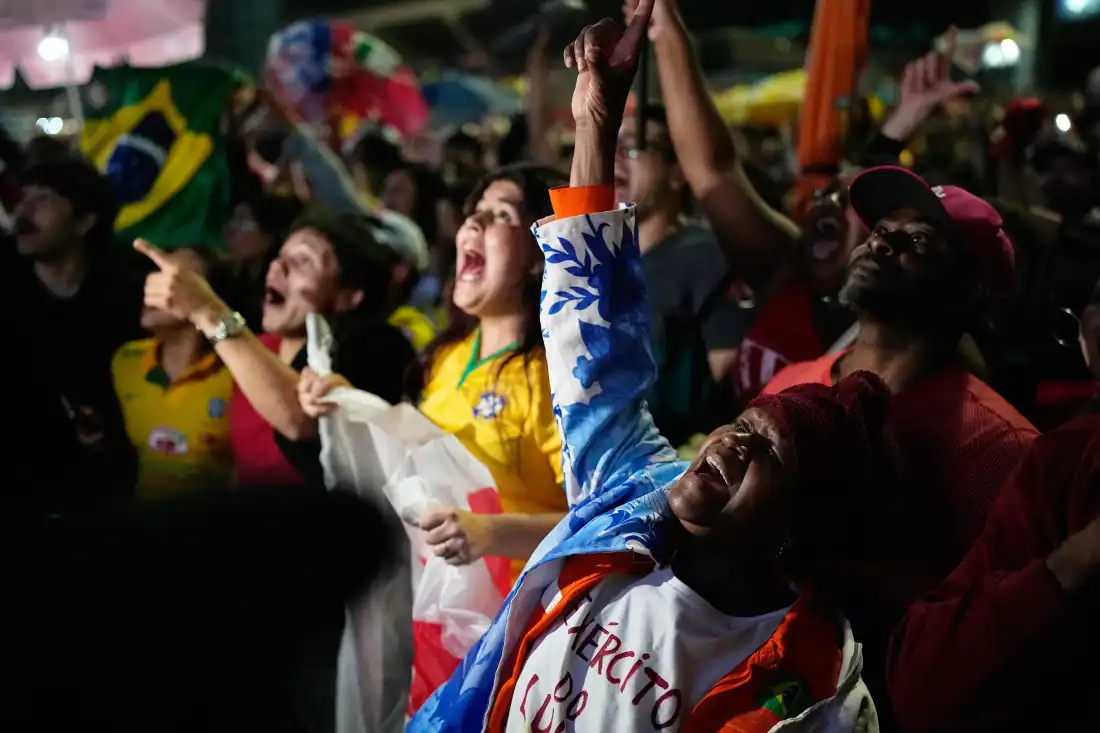
Brazilian President Luiz Inácio Lula da Silva won reelection on Sunday, defeating Senator Flávio Bolsonaro in a tightly contested runoff to secure an unprecedented fourth presidential term, according to official election results reported by international news agencies including Reuters, Agence France-Presse, and CNBC.
With nearly all ballots counted by electoral authorities, Lula received approximately 51.8% of valid votes against Bolsonaro’s 48.2%. The final tally yielded a margin of roughly 4.4 million votes, cementing a decisive shift in voter preference from the initial round of voting earlier in the month.
Flávio Bolsonaro, representing the political right and carrying the mantle of his family's political movement, refused to concede the election. According to reports from Al Jazeera and AFP, Bolsonaro announced plans to challenge the outcome through legal channels, citing contention over a decision by electoral authorities to extend voting hours at select polling locations that his campaign argued generated administrative confusion.
The outcome represents a dramatic reversal from the first round of the election, where Flávio Bolsonaro had led Lula by approximately 2.2 million votes. According to historical data cited by CNN and France 24, Lula's runoff comeback marks the first time since Brazil's return to direct presidential elections in 1989 that a candidate trailing in the first round has successfully overtaken their opponent to win the presidency.
Voter mobilization played a critical role in closing the gap. Electoral data shows that turnout increased significantly for the runoff, with abstention rates dropping from 21.08% in the first round to approximately 19.2%. This decrease brought nearly three million additional voters to the polls, whose support heavily favored the incumbent administration.
At nearly 81 years of age, Lula extends his historic political footprint as the first leader in modern Brazilian history to secure four terms in the nation's highest office. His victory preserves the Workers’ Party’s leadership of the federal government and blocks the conservative opposition's bid to regain control of the presidency.
Brazil’s 2026 presidential contest unfolded against a backdrop of deep political polarization and public debate over economic stewardship, cost of living, and international relations. Despite the legal challenges threatened by the Bolsonaro campaign, election observers and international bodies have moved forward with processing the finalized tallies as the nation adjusts to another four-year term under Lula's leadership.
Comments (0)
No comments yet. Be the first to share your thoughts!