The New Order in Caracas: Sanctions Evolve as Oil Flows North
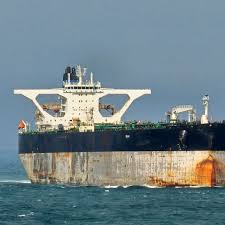
In a series of rapid-fire developments that have fundamentally reshaped the geopolitical landscape of the Western Hemisphere, the United States announced on January 7, 2026, that Venezuela has begun cooperating on the delivery of oil previously seized from a tanker. This announcement follows an agreement reportedly reached by President Donald Trump to secure a first tranche of 30 to 50 million barrels of Venezuelan crude for the United States, marking a pivot in a crisis that saw the capture of Nicolás Maduro and his subsequent appearance in a New York City federal court. As part of the burgeoning arrangement, the United States indicated it will begin lifting specific sanctions against the South American nation, signaling a potential path toward the release of political detainees and a structured role for the exiled opposition.
The diplomatic breakthrough comes amid a tense and volatile atmosphere in the Venezuelan capital. The country transitions under the interim leadership of Vice President Delcy Rodríguez, who was sworn in for a 90-day period following a Supreme Court ruling.
From Miraflores to Manhattan: The Judicial Fate of Nicolás Maduro
The physical center of the Venezuelan crisis shifted to the United States on Monday, January 5, when deposed President Nicolás Maduro and his wife, Cilia Flores, appeared in federal court in New York City. The appearance followed an unprecedented operation that resulted in their capture and extraction from Venezuela. Maduro and Flores face a litany of charges, including narco-terrorism and drug trafficking, allegations that have been the basis of U.S. indictments for years. The proceedings in New York are being watched globally as a test of international law and the reach of U.S. jurisdiction over foreign heads of state.
The legal maneuver has been characterized by the U.S. representative at the United Nations as a "targeted law enforcement measure" rather than an act of military aggression. This distinction is central to the White House’s strategy to frame the intervention as a criminal justice matter aimed at dismantling what it describes as a "mafia state." However, the optics of a former head of state in a U.S. courtroom have ignited a firestorm of debate regarding national sovereignty and the precedents being set for global governance in 2026.
Diplomatic Fault Lines: The United Nations Security Council Clash
For China and Russia, the stakes are not merely ideological but deeply financial and strategic. China has extended approximately $18 billion in loans to Venezuela since 2005 and, until the recent intervention, covers only 4-5% of its total oil imports from Venezuela. The sudden removal of Maduro threatens these investments and diminishes the influence of both powers in Latin America.
The Interim Administration: Delcy Rodríguez and the 90-Day Window
Within Venezuela, the political vacuum is being temporarily filled by Vice President Delcy Rodríguez. Her 90-day interim presidency, sanctioned by the Venezuelan Supreme Court, puts her in an exceptionally difficult position. She must navigate the demands of a military that remains largely intact, a population exhausted by hyperinflation, and a U.S. administration that is simultaneously lifting sanctions and demanding the dismantling of the "Chavista" power structure.
Rodríguez’s public statements reflect this tension. However, the reality of the oil agreement announced by President Trump suggests that the interim government is, at least pragmatically, engaging with the United States to stabilize a collapsing economy. The role of the exiled opposition in this transition remains one of the most significant unanswered questions of the 90-day period.
Energy Security and the Trump Doctrine
President Trump has framed the Venezuela operation as a decisive victory for American energy security and national interests. The administration has emphasized that the agreement to deliver Venezuelan oil to the U.S. is a "game changer" for domestic energy prices and regional stability. This move is seen as a cornerstone of a broader, more assertive foreign policy that prioritizes the acquisition and control of strategic resources. This "realpolitik" approach was further evidenced by the administration's willingness to use targeted force and economic leverage to achieve immediate national security objectives without the long-term commitment of "boots on the ground." By securing the oil and removing the leadership without a full-scale invasion, the U.S. aims to reset the Latin American energy market while avoiding the pitfalls of nation-building.
Economic Fallout: The End of the China-Venezuela Oil Monopoly
The shift in Venezuela's oil exports is a significant economic consequence of the past 48 hours. For years, the Maduro government utilized oil shipments to service its massive debt to Beijing. With the U.S. now securing a first tranche of 30 to 50 million barrels of oil, China’s $18 billion investment is in serious jeopardy. Analysts suggest that the impact on the 4-5% of Venezuela's oil exports that China imports will force China to look elsewhere for heavy crude, potentially driving up global prices or forcing Beijing into a more aggressive posture in other oil-producing regions.
In Russia, the loss of a key ally in the Western Hemisphere is seen as a strategic blow, though some experts suggest that the Kremlin may seek to use the Venezuela situation as a bargaining chip in other theaters, such as Ukraine or Eastern Europe. The "sphere of influence" style of diplomacy favored by the current U.S. administration may offer Moscow a path to negotiate its own interests, even as it publicly condemns the capture of Maduro.
Strategic Risks and the Lack of a Post-Intervention Plan
Despite the tactical success of the capture and the immediate benefits of the oil deal, regional experts warn of a "day-after" problem. The Maduro regime’s infrastructure remains largely functional under Rodríguez, and the inner circle of the United Socialist Party of Venezuela (PSUV) still holds significant power. There are concerns that without a comprehensive plan for governance, the country could descend into a protracted period of internal resistance or civil strife, supported by allies such as Cuba, Nicaragua, and Iran.
The absence of U.S. ground forces means that the stabilization of Venezuela depends entirely on the realignment of internal forces—specifically the military. If the armed forces remain loyal to the "Chavista" ideology or if Rodríguez’s "active resistance" translates into a refusal to hold new elections, the 90-day interim period could conclude with a return to stalemate or an escalation of violence. The precedent set by the U.S. action is also under scrutiny, with critics arguing that it undermines the international rules-based order and could embolden other nations to engage in similar "law enforcement" interventions against sovereign leaders.
Social Media and the Information War
The digital response to the crisis has been as polarized as the diplomatic one. Under hashtags like #MaduroCaptured, supporters of the intervention have celebrated the move as a decisive strike against socialism and a victory for the Venezuelan people. These users often point to the restoration of oil access as a tangible benefit of the "Trump Doctrine." Conversely, the hashtag #USEmpireStrikes has become a rallying point for those who view the operation as a blatant act of imperialism and a violation of international law. This faction warns of a "blueprint" for future interventions in countries like Colombia or Nicaragua.
A third, more speculative narrative has emerged under #GeoShift2026, where analysts and market observers discuss the long-term implications of the "Venezuela flip." This discourse focuses on the volatility of emerging markets, the potential for a "Taiwan playbook" in the wake of the U.S. move, and the shifting focus of Russian and Chinese foreign policy. The speed at which information—and misinformation—is traveling has made the task of stabilizing the narrative as difficult as stabilizing the country itself.
Conclusion: A Continent in Flux
As of the evening of January 7, 2026, Venezuela remains a nation in a state of suspended animation. The physical removal of Nicolás Maduro has broken a decade-long impasse, but it has also opened a Pandora’s box of legal, economic, and security challenges. The United States has successfully secured a vital energy resource and brought a long-standing adversary to justice, but the cost of these gains will be measured in the months to come. With the streets of Caracas quiet but tense, the next 90 days will determine whether this intervention leads to a democratic restoration or a new era of regional instability. For now, the world watches the New York courtroom and the oil tankers moving north, as the 2026 geopolitical chessboard is remade in real-time.
Comments (0)
No comments yet. Be the first to share your thoughts!