As the first sun of 2026 rises over a fractured global landscape, the international community finds itself at a pivotal juncture. The transition from 2025 into the new year has been marked not by the traditional quietude of the holiday season, but by a series of high-stakes diplomatic maneuvers, escalating regional tensions, and a fundamental recalibration of American foreign policy. From the snowy corridors of Mar-a-Lago to the embattled streets of Eastern Ukraine and the volatile energy markets of the Middle East, the geopolitical chessboard is being aggressively rearranged. The "America First" doctrine of the second Trump administration is no longer a campaign promise but a functional reality, creating a ripple effect that is challenging decades-old alliances and forcing both friends and foes to adapt to a new, multipolar world order.
The Trump-Zelenskyy-Putin Triangle: A New Diplomatic Calculus
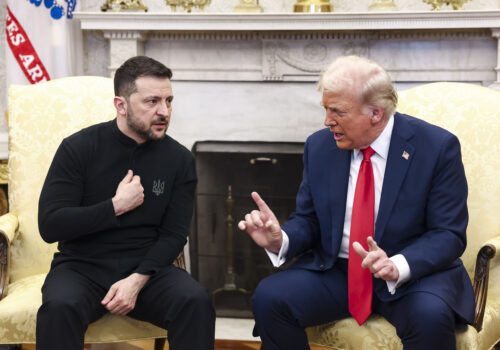
The final days of 2025 saw a flurry of diplomatic activity that has set a stark tone for 2026. On Monday, December 28, 2025, President-elect Donald Trump held a high-profile meeting with Ukrainian President Volodymyr Zelenskyy. Trump had also communicated with Russian President Vladimir Putin prior to Zelenskyy's arrival, and a phone call between Trump and Putin occurred on December 29, 2025, after the Trump-Zelenskyy meeting. These diplomatic engagements represent a departure from the previous administration's approach to the conflict. According to sources close to the transition team, the discussions centered on a potential framework for ending the war, though a ceasefire remains elusive.
Analysts have noted a significant shift in Trump’s rhetoric since October 2025. Once characterized by a degree of ambivalence toward the Ukrainian cause, the President-elect’s tone has become increasingly pro-Zelenskyy and anti-Putin. This shift is believed to be driven by a realization of the strategic importance of a stable Europe and the potential blowback of a total Russian victory. However, the path to peace remains fraught. The Kremlin continues to signal its resolve, and the expiration of the New START treaty in February 2026 looms as a dark cloud over any potential arms control or de-escalation efforts. Without a renewal, experts at the Federation of American Scientists warn that the number of deployed nuclear warheads could double within a few years, effectively undoing forty years of non-proliferation efforts.
Middle East Instability and the UAE’s Strategic Pivot
While the eyes of the world were on the festivities in Kiritimati and Auckland, the Middle East witnessed a significant escalation in regional instability. On December 30, 2025, the United Arab Emirates (UAE) announced the complete withdrawal of its remaining forces from Yemen, a process that was fully completed on December 3, 2025. This decision followed a Saudi-led coalition airstrike on the port of Mukalla. The UAE’s exit signals a widening rift within the Arab coalition and reflects a broader desire among Gulf states to distance themselves from prolonged, indecisive conflicts that drain national resources and invite international condemnation.
The withdrawal comes at a time of renewed threats from non-state actors, including a resurgence of ISIS activity in the Levant and ongoing protests in Iran and Syria. The recognition of Somaliland by Israel in late 2025 has also added a new layer of complexity to the Red Sea’s security architecture. As we enter 2026, the Middle East remains a powder keg, with the vacuum left by shifting alliances potentially being filled by adversarial powers or radical elements. The "geopolitical uncertainty" cited by energy market analysts is largely rooted in this regional volatility, which continues to threaten global supply chains and maritime security.
Economic Warfare and the 'Affordability Crisis'
On the domestic front, the United States is grappling with what Treasury Secretary Scott Bessent has termed an "affordability crisis." In a series of statements made throughout December, Bessent signaled a potential pivot in the administration's trade policy for 2026. Bessent suggested that the administration might look to adjust trade barriers, potentially through measures like refunding tariffs, to ease the burden on American consumers. This comes after the administration secured nearly $10 trillion in commitments for U.S.-based manufacturing, a cornerstone of the "America First" economic agenda.
However, the relationship with China remains combative. Despite the imposition of 47.5% tariffs on Chinese goods, Beijing reported a record $1 trillion trade surplus in late 2025. The anticipated "grand bargain" between Trump and President Xi Jinping appears to have been delayed until at least 2027, as both sides dig in for a protracted struggle over technological supremacy and market access. The administration’s focus on securing critical minerals supply chains—a policy that mirrors some Biden-era initiatives but with a more aggressive nationalist bent—is seen as a direct attempt to decouple the U.S. economy from Chinese influence. This rivalry is not limited to trade; it extends to the deep sea, where sovereignty over mining rights could provide China with significant leverage in the green energy transition.
The Federal Reserve and the Battle for Independence
A unique feature of the current U.S. political landscape is the escalating tension between the White House and the Federal Reserve. President-elect Trump has been vocal in his criticism of the central bank, even threatening lawsuits over issues as granular as the renovation of the Fed’s headquarters. More substantively, the administration has targeted Governor Lisa Cook, advocating for faster and deeper rate cuts to stimulate growth and offset the costs of the ongoing trade wars. This pressure on the Fed has raised alarms among economists who fear that an erosion of central bank independence could lead to long-term inflationary pressures and a loss of confidence in the U.S. dollar.
Financial analyst Ed Yardeni has suggested that the administration may eventually pivot away from high tariffs as a means of deficit relief. While Moody’s revoked the U.S. AAA credit rating in May 2025, the market impact has been surprisingly minimal, suggesting that investors are currently more focused on growth potential than long-term debt sustainability. Nevertheless, the friction between the executive branch and the nation’s monetary authority will be a critical theme to watch throughout 2026.
Latin America and the Revival of the Monroe Doctrine
In the Western Hemisphere, U.S. policy is taking a more assertive, and some say "dangerous," turn. Foreign policy experts have warned that the administration’s actions toward Venezuela and other Latin American nations represent a revival of the Monroe Doctrine. By framing foreign interventions as a means to address domestic economic woes, the U.S. is increasingly infringing on the sovereignty of its neighbors. This shift has been met with significant pushback from regional leaders who advocate for a multipolar world and resist what they term "U.S. hegemony."
The right-wing populist wave that brought Trump back to power is not an isolated American phenomenon. It echoes similar political shifts in Germany, Hungary, and Italy, creating a "Right-Wing International" that is skeptical of globalist institutions like the UN and the EU. This alignment of interests among nationalist leaders is reshaping international organizations and challenging the liberal democratic norms that have governed the West since the end of the Cold War.
Energy Markets: A Year of Glut and Gloom
The energy sector enters 2026 in a state of flux. Oil prices fell in 2025, driven by expectations of an oversupply and a general slowdown in global manufacturing. While consumers may welcome lower prices at the pump, the "downbeat mood" in energy markets reflects deeper anxieties about the stability of major producers like Russia, Iran, and Venezuela, all of whom remain under heavy U.S. sanctions. The transition to renewable energy continues, but it is increasingly being viewed through the lens of national security rather than environmental stewardship. The scramble for critical minerals—lithium, cobalt, and rare earth elements—is the new "Great Game," with the U.S., China, and the EU competing for dominance in the supply chains that will power the 21st century.
Social Sentiment: Skepticism Amid the Celebration
On social media, the digital discourse was dominated by skepticism. While millions gathered in Times Square and other global landmarks to ring in the new year, many questioned whether political leaders have the will or the capacity to address the fundamental issues facing the working class.
There is also a growing sense of personal responsibility and a rejection of symbolic resets. This inward turn reflects a broader disillusionment with systemic solutions and a focus on individual resilience in the face of global instability. However, there are pockets of hope, particularly among those who see 2026 as a year of "new beginnings" and potential political shifts that could favor the populist movement.
Conclusion: Navigating a Year of High Stakes
As 2026 begins, the world is navigating a landscape defined by "known unknowns." The potential for a breakthrough in Ukraine exists, but so does the risk of a catastrophic escalation. The U.S. economy remains resilient, yet it is being tested by internal political strife and external trade pressures. The Middle East is as volatile as ever, and the global arms control regime is on the brink of collapse. For the Trump administration, the challenge of 2026 will be to translate "America First" from a slogan into a sustainable global strategy that avoids total isolation or accidental conflict.
The coming months will be decisive. The expiration of the New START treaty in February, the midterm elections in several key democracies, and the ongoing evolution of the U.S.-China trade relationship are significant events for the new global order. In this environment, the only certainty is uncertainty. As journalists and citizens alike look toward the horizon of 2026, the focus must remain on the facts, the data, and the shifting alliances that will determine the future of the international community. The fireworks have faded, and the hard work of diplomacy and governance now takes center stage.
Comments (0)
No comments yet. Be the first to share your thoughts!