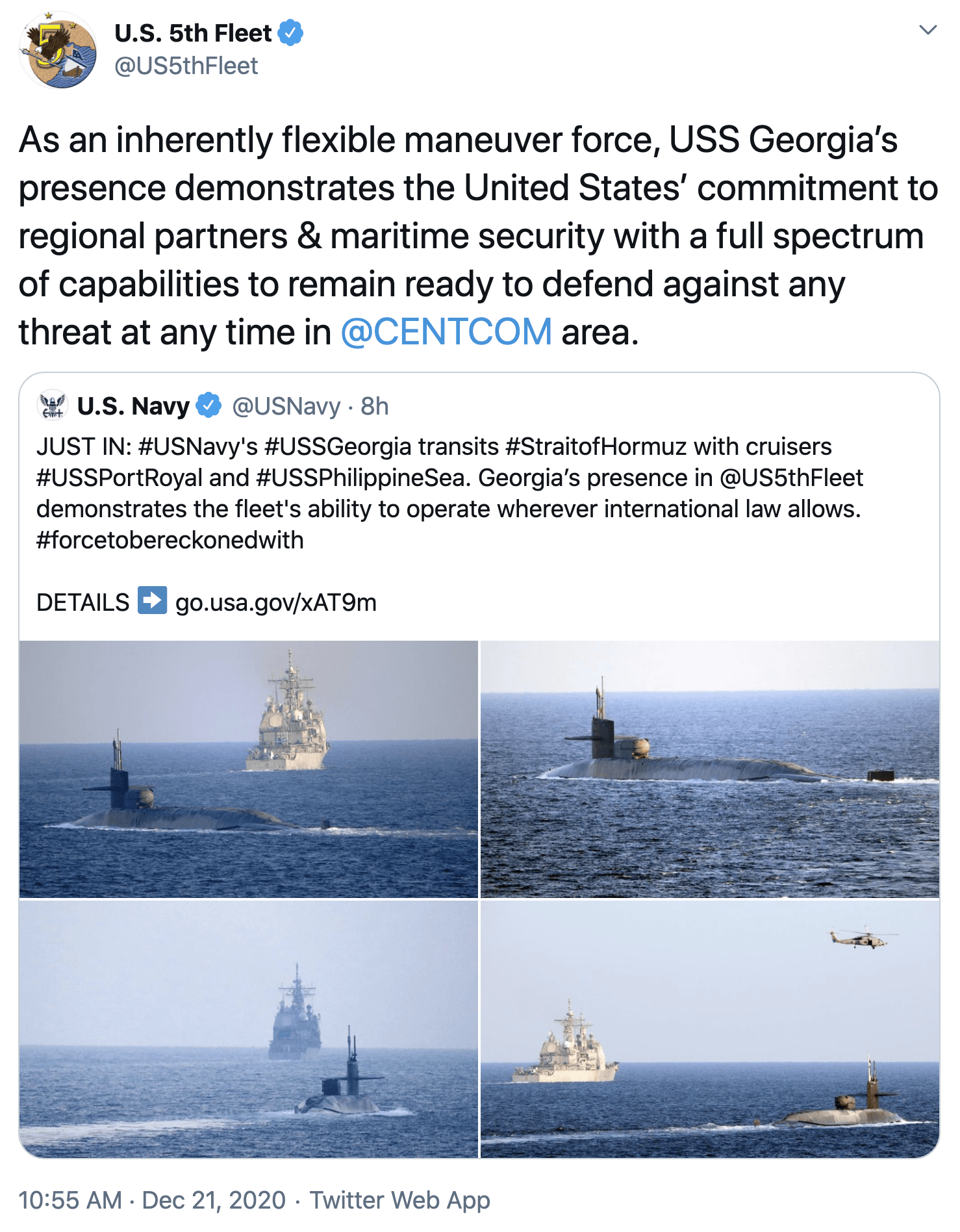
Escalation in the Gulf of Oman
As of May 11, 2026, geopolitical tensions in the Middle East have reached a critical juncture following a series of maritime enforcement actions by U.S. Central Command (CENTCOM) and a breakdown in diplomatic communications between Washington and Tehran. On May 10, President Donald Trump publicly dismissed Iran’s counter-response to a U.S.-led peace proposal, labeling the ceasefire offers "unacceptable" and accusing the Iranian leadership of "playing games." This diplomatic friction coincides with intensified military activity in the region, where U.S. forces are strictly enforcing a blockade against vessels attempting to reach Iranian ports.
The military engagement is part of a broader CENTCOM initiative launched to ensure the safety of international navigation and support freedom of movement in the region's vital waterways. While CENTCOM announced its support for intensified maritime security operations in early May 2026, the situation remains high-risk. Recent reports indicate that U.S. forces have been active in intercepting threats to maritime stability in the Strait of Hormuz, responding to Iranian missile and drone activity aimed at disrupting international shipping lanes.
Diplomatic Stance and the Upcoming Trump-Xi Summit
While the situation in the Middle East remains volatile, the Trump administration is preparing for high-level diplomacy in East Asia. Reports on May 10 highlighted an upcoming summit between President Trump and Chinese President Xi Jinping in Beijing, officially scheduled for May 14-15, 2026. Analysts have noted a "neutral-optimistic" shift in US-China relations following the invitation from President Xi, suggesting a potential diplomatic thaw between the world's two largest economies.
However, this optimism has not extended to the Persian Gulf. President Trump, speaking on May 10, criticized Iran’s latest submission to a U.S. peace proposal. The proposal reportedly demanded that Iran abandon all uranium enrichment and cease interference with shipping in the Strait of Hormuz. Representative Johnny Olszewski, appearing on "Bloomberg This Weekend" on May 10, expressed skepticism regarding the potential deal and criticized the administration for a lack of transparency concerning the negotiations, echoing the White House's sentiment that the Iranian response was insufficient.
Regional Risks and Maritime Incidents
The ongoing military friction has raised concerns regarding the stability of global energy and commodity shipments. While the U.S. military maintains a firm grip on the Strait of Hormuz to prevent a shutdown of the waterway, other maritime incidents have drawn international attention. Reports confirmed that the MV Hondius, an expedition cruise ship, was recently stricken by a hantavirus outbreak. This incident occurred in the Atlantic Ocean near the Canary Islands, rather than the Middle East, requiring emergency evacuations under health protocols starting May 10, 2026.
Despite these risks, global markets have remained relatively resilient. Financial analysts suggest that the administration's aggressive posture in the Middle East is bolstered by the current performance of the U.S. stock market. As long as domestic equities remain strong, the administration appears willing to maintain its hard-line enforcement of the Iranian blockade.
US Domestic Politics and the 2026 Midterm Landscape
As the geopolitical crisis unfolds, the domestic political environment in the United States is increasingly focused on the 2026 midterm elections. The administration is balancing foreign policy challenges with a focus on domestic priorities. In Virginia, a recent court ruling on May 8, 2026, favored Republican interests in a redistricting battle. The Virginia Supreme Court struck down a redistricting amendment, effectively preserving maps that benefit the GOP as they seek to retain control of Congress.
Democrats have responded with determined efforts to maintain their influence. Veteran Representative Jim Clyburn has confirmed he will seek reelection regardless of the ongoing redistricting efforts in South Carolina. Meanwhile, the Department of Justice (DOJ) has been active in launching high-profile denaturalization actions, targeting individuals accused of being foreign agents or having ties to extremist organizations.
Infrastructure and National Security Developments
The Trump administration has prioritized the expansion of U.S. national security projects, including a massive push for space launch capabilities. Senator Marco Rubio has been a vocal supporter of these initiatives, praising the commitment to maintaining U.S. dominance in aerospace infrastructure. However, experts warn that existing facilities are overstretched, leading to a bottleneck at major spaceports.
On a localized level, the administration faced scrutiny over a $6.9 million no-bid contract awarded to Atlantic Industrial Coatings for the maintenance of the Lincoln Memorial Reflecting Pool. The sole-source contract was for repairs and a new "American flag blue" coating for the historic site. President Trump stated he selected the company because they had previously performed work on his swimming pools, specifically at the Trump National Golf Club in Sterling, VA, sparking a debate over federal procurement processes and the preservation of historic landmarks.
Legislative Outlook and Market Summary
The U.S. House of Representatives is scheduled to reconvene on May 11, 2026, at 10:30 a.m. The upcoming session is expected to address the ongoing tensions in the Middle East and the legislative response to the maritime blockade. Interviews conducted over the weekend with Indiana Governor Mike Braun and State Senator J.D. Ford highlighted the divergent priorities of the two parties as they head into the heart of the election season.
As the global news cycle continues to move at a rapid pace, the intersection of military enforcement in the Middle East and the upcoming diplomatic maneuvering in Beijing remains the primary focus of international observers. While the U.S. military maintains its blockade enforcement, the administration's domestic focus on the 2026 midterms suggests a dual-track strategy of maintaining global dominance while solidifying political control at home.
Comments (0)
No comments yet. Be the first to share your thoughts!