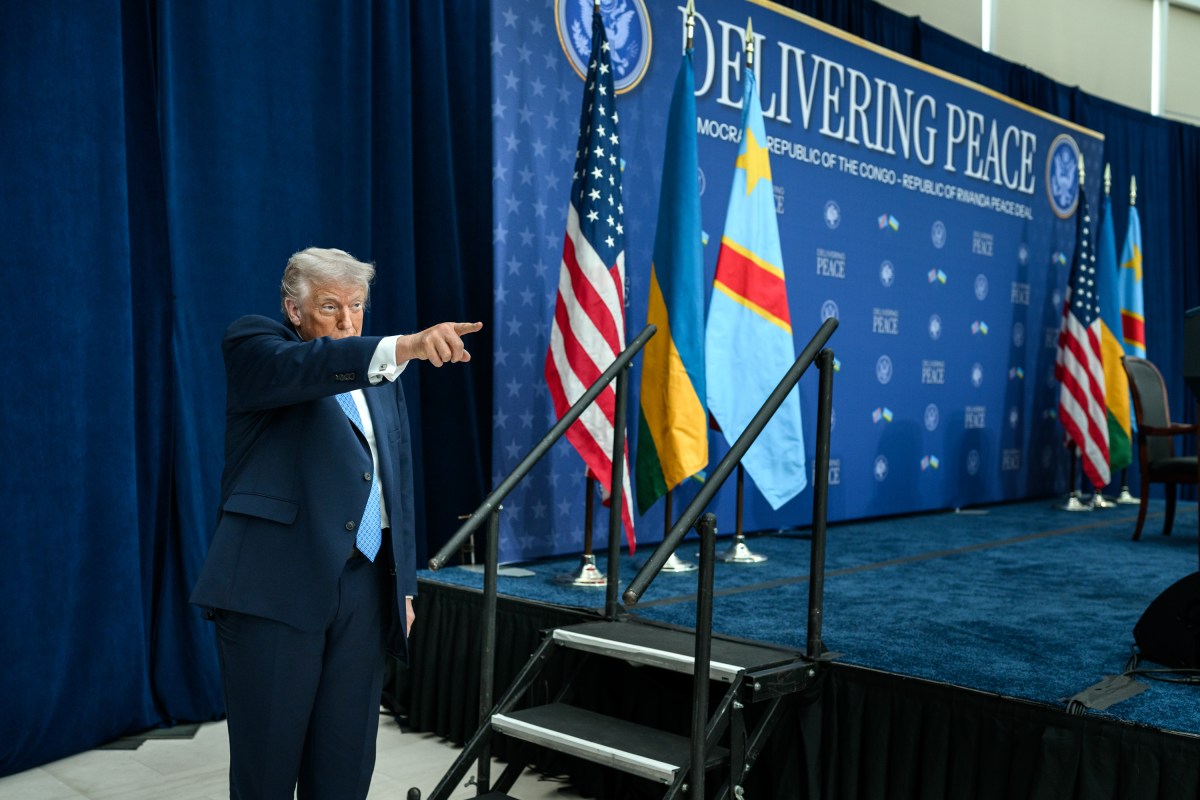
Trump Brokers Congo Peace Deal Amid Implementation Hurdles
Washington, D.C. – Former President Donald Trump recently brokered a peace agreement, dubbed the Washington Accords, between the Democratic Republic of Congo (DRC) President Felix Tshisekedi and Rwanda President Paul Kagame, aimed at resolving the decades-long conflict in eastern DRC. While hailed by Trump as an end to "decades of violence and bloodshed," the deal faces significant challenges, particularly the M23 rebel group's refusal to disarm, casting a shadow over its full implementation.
Accords Finalized at Donald J. Trump Institute of Peace
In recent days, leading up to early January 2026, former President Trump hosted Presidents Tshisekedi and Kagame at the White House to finalize the landmark agreement. Following morning Oval Office meetings, a signing ceremony took place at the newly named Donald J. Trump Institute of Peace. The Washington Accords mandate a permanent ceasefire, the disarmament and surrender of power by the M23 rebels, the elimination of the DRC-based Democratic Forces for the Liberation of Rwanda (FDLR) militia, the return of refugees, and economic integration with a focus on critical minerals like rare earths.
Trump described the agreement as ushering in "hope, prosperity, and peace," positioning it as a voluntary peacemaking effort that addresses violence rooted in the aftermath of Rwanda's 1994 genocide. Rwandan President Kagame commended Trump for seizing an "opportunity to contribute to peace," despite the region's often low global profile. While President Tshisekedi attended the finalization, specific direct quotes from him were not immediately available in reports.
A Year of Diplomatic Efforts Amid Escalation
The finalization of the Washington Accords follows a year of diplomatic engagement. In June 2025, the foreign ministers of the DRC and Rwanda visited the White House to secure the treaty's framework. This diplomatic push gained urgency after early 2025 saw a significant escalation in the conflict, with Rwanda-backed M23 rebels seizing key eastern cities such as Goma and Bukavu. This offensive displaced millions and exacerbated a humanitarian crisis, with the conflict historically claiming over 10 million lives.
The United States' role in mediating the agreement was spearheaded by Richard Boulos, Trump's senior advisor, with support from Qatar. This initiative aligned with Trump's broader foreign policy focus on peacemaking, following a February 7 executive order concerning South Africa and preceding efforts in Sudan.
Implementation Challenges and Unresolved Issues
Despite the fanfare surrounding the signing, the success of the Washington Accords hinges on critical implementation steps that have yet to materialize. A primary concern is the M23 rebel group's compliance, as they "have shown no sign of doing" their part in relinquishing control and disarming. Furthermore, the DRC is tasked with neutralizing the FDLR, a commitment that, like M23's disarmament, relies on adherence amid ongoing violence.
Critics point out that while the deal is labeled "historic" by Trump, it falls short of fully achieving peace, with no reports confirming full implementation or an end to the war as of early January 2026. The conflict continues to be recognized as one of the world's largest humanitarian crises.
Comments (0)
No comments yet. Be the first to share your thoughts!