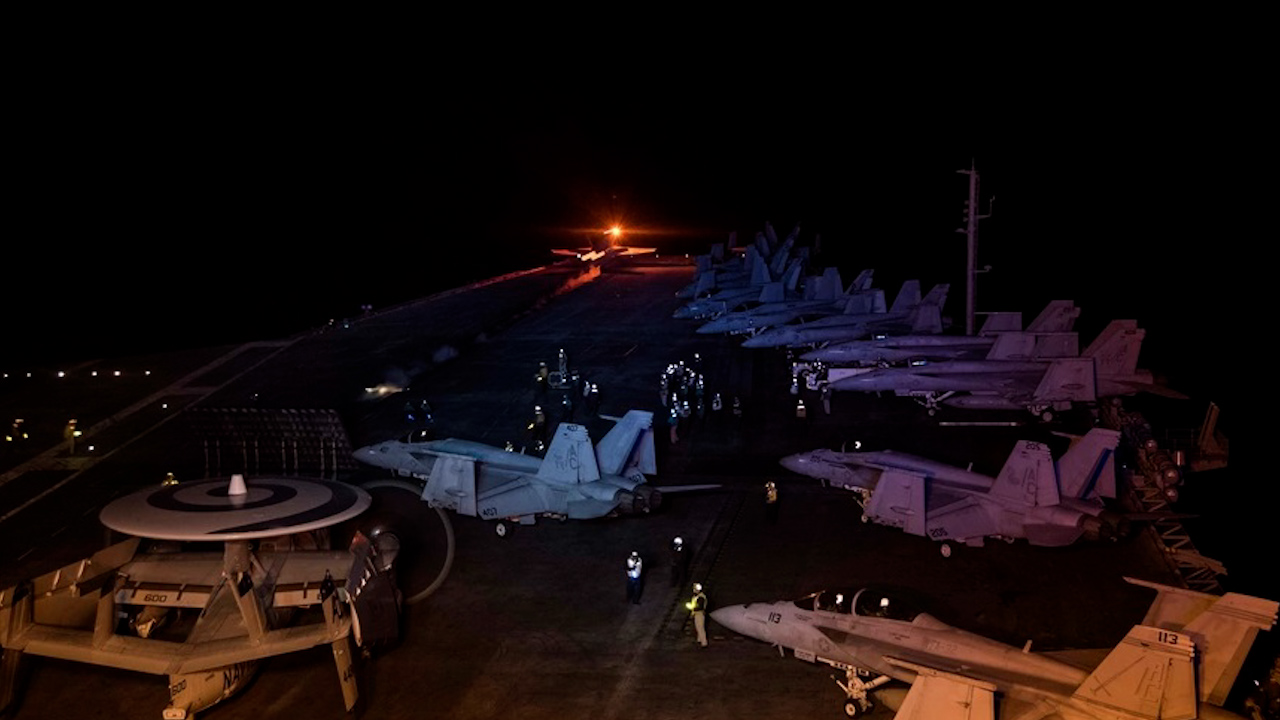
Ceasefire Collapses as US Conducts Fresh Strikes Amid Regional Tensions
The fragile peace between the United States and the Islamic Republic of Iran reached a breaking point on July 18, 2026, as a recently brokered ceasefire agreement collapsed following a series of military exchanges. Reports from July 19 confirm that the truce has functionally unraveled, leading the United States to conduct a second wave of strikes within 24 hours against Iranian targets in response to attacks on U.S. soldiers, including a fatal strike in Jordan. While tensions remain centered on the Strait of Hormuz, a critical maritime corridor, official confirmation of a total shutdown by the Khatam al-Anbiya Central Headquarters remains unverified, though the waterway continues to be a primary point of military and diplomatic friction.
The collapse of the memorandum of understanding (MoU) represents a significant setback for international mediation efforts. While the MoU was a major diplomatic milestone, it followed a period of renewed engagement that included direct talks between the two nations as recently as April 2026. The MoU had established a 60-day window to resolve long-standing issues, with high-level negotiations to finalize the agreement beginning on June 21, 2026, at the Bürgenstock resort in Switzerland. However, U.S. President Donald Trump declared the provisional agreement effectively void on July 18 following reports of Iranian missile and drone attacks on U.S. assets, most notably a lethal strike on a base in Jordan. In response, the U.S. launched a fresh wave of aerial strikes targeting multiple locations utilized by Iranian-backed forces and infrastructure.
Military Developments and Casualty Reports
The U.S. military response has been swift and expansive. Following the president’s declaration that the ceasefire had ended, U.S. forces conducted two waves of strikes within a 24-hour window ending Saturday. Pentagon officials have indicated that the targets included missile launch sites, command and control centers, and logistics hubs utilized by the Islamic Revolutionary Guard Corps (IRGC). The human cost of the conflict has been significant; as of July 19, 2026, official Pentagon and CENTCOM records confirm that six U.S. service members have been killed since the escalation began. This total includes four deaths prior to July 13 and two service members killed during the July 17 attack in Jordan. Additionally, official CENTCOM reports have confirmed that 414 service members have been wounded in action since the start of the conflict.
The following table outlines the key military and diplomatic milestones of the last 72 hours and relevant regional context:
| Date | Event Type | Details | Status |
|---|---|---|---|
| July 17, 2026 | Iranian Offensive | Major ballistic missile and drone attack on a U.S. base in Jordan. | Confirmed (2 Fatalities) |
| June 19, 2026 | Diplomatic Effort | Israel and Hezbollah reached a ceasefire agreement in Lebanon. | Active (Low-intensity violations) |
| July 17, 2026 | U.S. Action | Continuation of strikes on Iranian infrastructure following truce breach. | Ongoing |
| July 18, 2026 | Regional Tension | High-level military friction regarding the status of the Strait of Hormuz. | Unverified Shutdown |
| July 18, 2026 | U.S. Action | Second wave of strikes in 24 hours launched after ceasefire collapse. | Ongoing |
Diplomatic Stagnation and the Role of the Vice President
Despite the military escalation, diplomatic channels remain partially open through neutral intermediaries. Switzerland has confirmed that the Bürgenstock resort remains the designated location for U.S.-Iran talks, providing what Swiss officials describe as a "discreet and reliable environment" for the execution of the diplomatic roadmap. The focus of these potential talks remains the restoration of the interim agreement and the de-escalation of hostilities.
U.S. Vice President JD Vance has been designated as the chief negotiator for the administration. Vance arrived in Switzerland on June 21, 2026, to lead the U.S. delegation in mediated negotiations, with Pakistan (represented by Prime Minister Shehbaz Sharif) and Qatar acting as the primary joint intermediaries. His ability to navigate the complexities of the U.S.-Iran relationship is seen as a pivotal moment for his executive profile. While the administration continues to monitor the situation, Vance has historically remained skeptical of large-scale foreign military ground interventions.
The conflict, which traces its origins back to "Operation Epic Fury" on February 28, 2026, has fundamentally altered the security architecture of the Persian Gulf. The start of the war was marked by a joint U.S.-Israeli airstrike that resulted in the confirmed death of Supreme Leader Ali Khamenei at his residence in Tehran, an event that coincided with a period of internal restructuring within the Iranian government and a more aggressive posture from the Khatam al-Anbiya Central Headquarters.
Andrew and Tristan Tate Arrested in Miami
In a separate development, federal authorities in Miami, Florida, arrested Andrew and Tristan Tate on Saturday, July 18, 2026. The brothers were taken into custody by U.S. Marshals outside the James L. Knight Center shortly before a scheduled boxing event. The arrests were based on a sealed warrant related to an extradition request originating from the United Kingdom.
British prosecutors have confirmed they are seeking extradition on a total of 59 charges, which include 38 new charges involving four additional victims. Specifically, Andrew Tate faces seven counts of rape and three counts of human trafficking. Tristan Tate faces one count of sexual assault and two counts of rape, among other charges. The involvement of federal authorities signals a coordinated effort between the U.S. Department of Justice and the UK’s Crown Prosecution Service.
- Arresting Agency: U.S. Marshals Service.
- Location: Miami, Florida.
- Primary Cause: UK extradition request involving 59 criminal charges.
- Current Status: In federal custody awaiting preliminary hearings.
The brothers are expected to appear before a federal magistrate in the Southern District of Florida early next week to determine the conditions of their detention and the timeline for potential transfer to British jurisdiction.
Blue Origin: Aerospace Developments and Workforce Policy
In the aerospace sector, Blue Origin continues to prepare for the upcoming flight of its New Glenn heavy-lift launch vehicle. The company remains at the center of industry discussions regarding its internal corporate policies, specifically a new equity policy introduced in 2026. This policy includes a "forfeiture-for-competition" clause, stipulating that employees must forfeit all vested and unvested stock options if they depart the company to join a direct competitor, such as SpaceX, within 18 months of their departure.
This policy has drawn mixed reactions within the industry. While it is specifically designed to prevent talent loss to SpaceX, the policy explicitly does not apply to employees in Washington and California due to state laws prohibiting such non-compete restrictions. Despite these internal debates, the sentiment surrounding the New Glenn project remains largely optimistic as engineers focus on the technical milestones required for the rocket's maiden flight.
Current Status of Aerospace Competition
The following table compares the current operational focus of the primary private aerospace entities as of July 19, 2026:
| Company | Primary Project | Recent Development | Market Sentiment |
|---|---|---|---|
| Blue Origin | New Glenn Rocket | Enforcement of forfeiture-for-competition equity clauses. | Optimistic regarding hardware; Mixed regarding labor policy. |
| SpaceX | Starship Iterations | Continued rapid prototyping and orbital flight testing. | High enthusiasm; Dominant market position. |
| United Launch Alliance | Vulcan Centaur | Routine satellite deployment for government contracts. | Stable; Reliable partner for Department of Defense. |
Summary of Global Events: July 18–19, 2026
The last 24 hours have been characterized by a sharp return to high-intensity conflict in the Middle East and high-profile legal actions in the United States. The collapse of the U.S.-Iran ceasefire has immediate implications for regional stability. The diplomatic efforts led by Vice President JD Vance and the mediation venue provided by Switzerland represent the primary avenues for a non-military resolution to the current impasse.
Simultaneously, the arrest of the Tate brothers in Miami on 59 UK-based charges signals a new phase in the international legal proceedings against the influencers. In the private sector, Blue Origin’s restrictive new stock policies have highlighted the intensifying labor competition within the aerospace industry as the race for heavy-lift capability continues.
As of Sunday morning, July 19, 2026, the situation in the Persian Gulf remains fluid. U.S. Central Command has not ruled out further strikes if Iranian forces continue to target U.S. assets. International observers are closely monitoring the region for any signs of further escalation, while global markets react to the ongoing instability in one of the world's most sensitive energy supply routes.
Chronology of the US-Iran Conflict (2026)
- February 28: Conflict begins with "Operation Epic Fury"; joint U.S.-Israeli airstrikes result in the confirmed death of Supreme Leader Ali Khamenei.
- March–June: Series of missile exchanges and proxy engagements across the region.
- June 19: Israel and Hezbollah reach a ceasefire agreement in Lebanon.
- June 21: High-level negotiations to finalize the U.S.-Iran MoU begin at the Bürgenstock resort with the arrival of JD Vance.
- July 17: Major Iranian ballistic missile and drone attack on a U.S. base in Jordan results in two U.S. fatalities.
- July 18: President Trump declares the MoU void; U.S. conducts second wave of strikes in 24 hours; Tate brothers arrested in Miami.
- July 19: U.S. military casualty count officially confirmed at six deaths and 414 wounded since the start of the conflict.
Comments (0)
No comments yet. Be the first to share your thoughts!