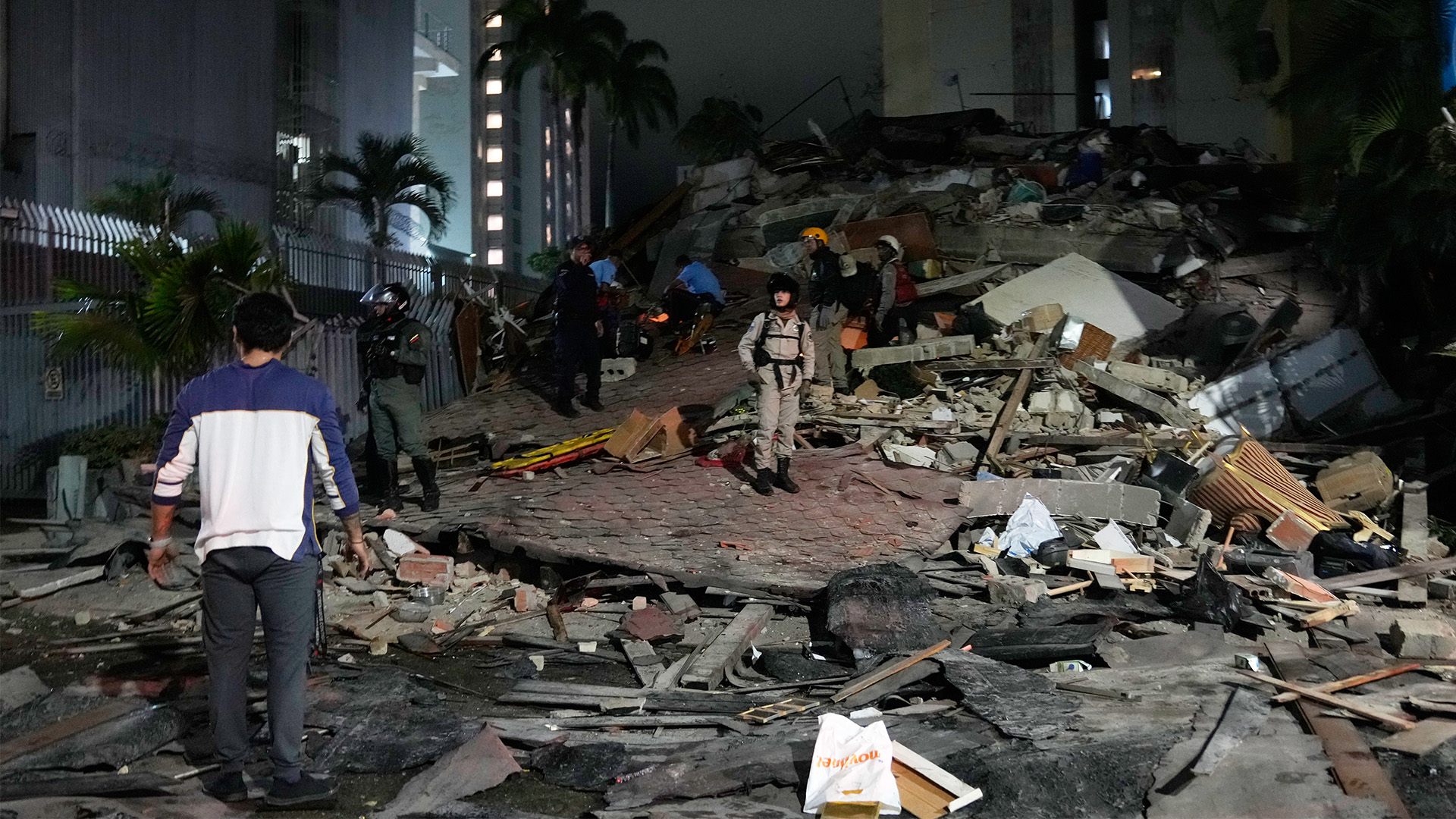
Venezuela Struck by Powerful Seismic Doublet During National Holiday
In a devastating turn of events on Wednesday, June 24, 2026, Venezuela was struck by two consecutive and powerful earthquakes that have left at least 32 people dead and approximately 700 others injured. The seismic events occurred during the nation’s celebration of the 1821 Battle of Carabobo, a significant national holiday, turning a day of patriotic festivities into one of widespread mourning and emergency response. The United States Geological Survey (USGS) has classified the event as a rare "seismic doublet," characterized by a magnitude 7.2 foreshock followed by a magnitude 7.5 mainshock occurring in close temporal and geographic proximity.
The first earthquake, measuring 7.2 on the Richter scale, occurred at 6:04 PM local time (22:04:15 GMT). It was followed a mere 39 seconds later, at 22:04:54 GMT, by a second, even more powerful tremor measuring 7.5. The epicenters were located in the state of Yaracuy, specifically near the coastal town of Morón, approximately 168 kilometers west of the capital city, Caracas. The initial quake originated at a depth of 22.1 kilometers, while the second was shallower at 10.0 kilometers, contributing to the intensity of the surface vibrations felt across the region.
Impact Assessment and Casualty Figures
Acting President Delcy Rodríguez addressed the nation late Wednesday night, confirming the preliminary casualty figures and declaring a nationwide state of emergency. While the official death toll stands at 32, search and rescue operations are ongoing, and authorities fear the number could rise significantly as emergency crews reach more isolated communities. The USGS PAGER (Prompt Assessment of Global Earthquakes for Response) system has issued a somber outlook, estimating a 39% probability of fatalities reaching between 1,000 and 10,000 based on population density and building vulnerability in the affected areas.
| Category | Statistic / Detail |
|---|---|
| Confirmed Fatalities | 32 |
| Reported Injuries | ~700 |
| Primary Quake Magnitude | 7.2 (22:04:15 GMT) |
| Secondary Quake Magnitude | 7.5 (22:04:54 GMT) |
| Epicenter Location | Morón, Yaracuy State |
| Depth of Shocks | 22.1 km and 10.0 km |
| Aftershocks Recorded | Nearly 20 (as of June 25) |
Infrastructure Damage and Emergency Measures
The capital city of Caracas has suffered extensive destruction. Debris-filled streets and collapsed residential structures have been reported in several municipalities. Beyond the capital, the states of Aragua, Carabobo, and Falcón have reported severe structural failures. In the immediate aftermath, the following measures were implemented to ensure public safety and facilitate rescue efforts:
- Maiquetía Airport Closure: The Simón Bolívar International Airport (Maiquetía), the main international gateway serving Caracas, was shut down indefinitely following reports of significant damage to the terminal and runway infrastructure.
- Transportation Suspension: All metro and train services in Caracas and surrounding regions have been suspended to allow for structural integrity inspections.
- State of Emergency: A nationwide declaration has mobilized the military and civil defense units to assist in search and rescue.
- Educational Closures: Schools across the country remain closed as buildings are assessed for safety.
- Healthcare Deployment: Specialized medical teams and mobile clinics have been dispatched to Yaracuy and Carabobo to treat the hundreds of injured citizens.
The seismic activity also triggered brief tsunami advisories for Puerto Rico, the Virgin Islands, and the Dominican Republic. While these advisories were later canceled after oceanographic sensors indicated no significant wave threat, the initial alarm added to the regional tension following the massive tremors.
Geopolitical Context of Humanitarian Aid
The international response to the disaster has been swift, with the United States immediately deploying search-and-rescue teams, medical personnel, and humanitarian aid to the affected regions. Acting President Delcy Rodríguez expressed gratitude for the international solidarity and the tangible assistance provided in the wake of the catastrophe. This material support has been vital for the ongoing emergency operations in Caracas and Yaracuy.
The Venezuelan government has emphasized the urgent need for medical supplies, heavy machinery for rubble removal, and temporary housing for those displaced by the collapse of their homes, noting that international cooperation is essential for the recovery process.
Five-Year Anniversary of the Surfside Collapse
While Venezuela grapples with new destruction, June 24, 2026, also marks a somber milestone in the United States: the five-year anniversary of the Champlain Towers South collapse in Surfside, Florida. The 2021 disaster, which claimed 98 lives, remains a focal point of grief and legal contention. On this anniversary, the narrative among survivors and victims' families is one of frustration and perceived injustice.
The site of the collapse, once a beachfront residential community, is currently being redeveloped into "The Delmore," a project by Damac Properties featuring ultra-luxury condominiums with units priced starting at $15 million and penthouses exceeding $150 million. This redevelopment has sparked significant backlash, as many families feel excluded from the planning process. A permanent memorial for the 98 victims has yet to be established on the actual site of the collapse, leading to accusations that commercial interests have been prioritized over the sanctity of the location where so many perished.
Recent investigative findings from NIST released in June 2026 suggest that the 2021 collapse began in a localized form, specifically noting that two connections between garage columns and the pool deck failed approximately three weeks prior to the final catastrophic failure. These details have renewed calls for stricter building safety regulations and more transparent inspections for aging high-rise structures across the country.
World Cup 2026: Group Stage Milestones and Historic Progress
In contrast to the somber news from Venezuela and Florida, the sporting world is currently focused on the 2026 FIFA World Cup, which is progressing through its critical group-stage matches. The tournament has already seen historic moments that have captivated global audiences. Most notably, South Africa has achieved its first-ever knockout-stage berth, a milestone secured by a historic 1-0 victory over South Korea that has sparked celebrations across the African continent.
The tournament has also seen the return of legendary figures and the rise of new stars. Neymar Jr. made a highly anticipated return to the pitch for Brazil in the 76th minute of their match against Scotland after a 981-day hiatus due to an ACL injury suffered in October 2023. His return contributed to Brazil securing a spot in the Round of 32. Meanwhile, young talent Lamine Yamal has continued to draw praise for his performances, reinforcing his status as one of the premier players of the current generation.
| Team | Status / Achievement | Notable Match Result |
|---|---|---|
| South Africa | Qualified for Knockout Stage | Historic 1-0 Win vs. South Korea |
| Brazil | Secured Round of 32 | Victory vs. Scotland |
| France | Secured Round of 32 | Group Stage Victory |
| Japan | Group Stage Contender | 1-1 Draw |
| Sweden | Group Stage Contender | 2-1 Victory |
The energy surrounding the World Cup remains high, with fans engaging in match predictions and celebrating the diverse array of teams still in contention. While major powerhouses like Brazil and France have confirmed their progression, the tournament has been marked by competitive parity, with teams like Tunisia and Germany facing challenging paths to the next round.
The Road Ahead for Venezuela
As the sun rises on June 25, 2026, the focus in Venezuela remains squarely on the "golden hour" of rescue operations. The first 72 hours following a major earthquake are critical for finding survivors trapped beneath the rubble. With nearly 20 aftershocks already recorded, the stability of damaged buildings remains a primary concern for rescue workers. The Venezuelan government has called for continued international solidarity as it begins the long process of assessing the total economic and human cost of the seismic doublet.
The USGS PAGER assessment continues to be monitored closely by international aid organizations. The high probability of significant fatalities suggests that the current official death toll of 32 is expected to rise as more data becomes available. Emergency crews are currently prioritizing the most densely populated areas of Morón and Caracas, where the risk of trapped individuals is highest.
For the families in Surfside and the fans of the World Cup, the events of June 24, 2026, will be remembered for different reasons—one for the persistence of memory and the other for the thrill of competition. However, for the people of Venezuela, the date now marks one of the most significant natural disasters in the nation's recent history, necessitating a massive and coordinated recovery effort in the weeks and months to come.
Comments (0)
No comments yet. Be the first to share your thoughts!