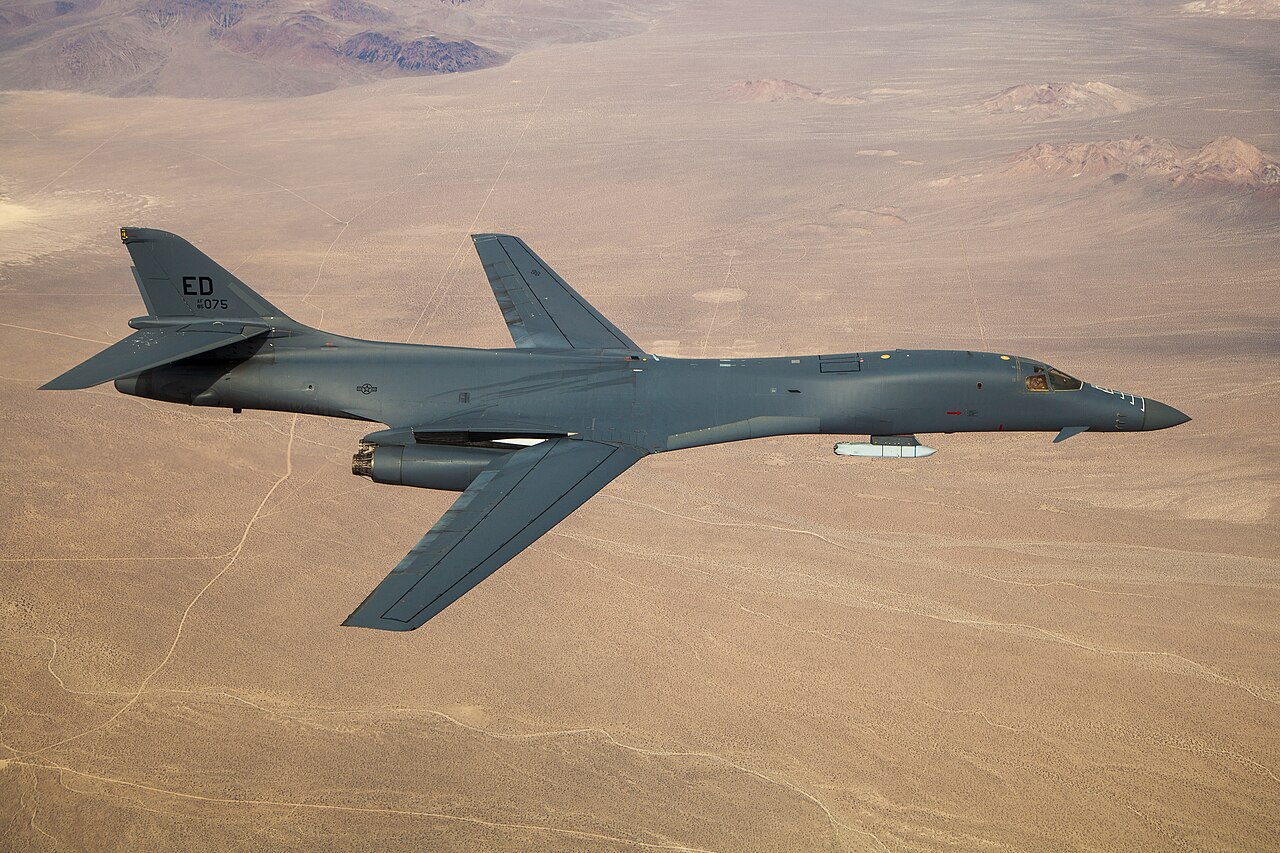
The United States Air Force has abruptly removed its entire fleet of strategic bombers from RAF Fairford in Gloucestershire, returning the aircraft to home stations in the United States. The rapid redeployment occurred over the weekend following urgent intelligence warnings regarding a potential security threat to the installation.
Confirming the maneuver, a Pentagon spokesperson stated that operational security had initially prevented real-time confirmation of the asset movements, but verified that all U.S. bombers deployed to the British base had now flown back to the United States. Tracking data and official accounts indicated that roughly a dozen B-1B Lancer bombers departed the facility.
Speaking to reporters, U.S. President Donald Trump linked the withdrawal directly to specific security threats. “We had an idea that there might be a threat, and why would I leave them there?” Trump said, noting that the administration chose to relocate the high-value assets rather than leave them exposed. Vice President JD Vance added that the administration acted out of an abundance of caution regarding potential hostile actions.
The sudden pullout follows a counter-terrorism investigation near RAF Fairford that began in late September. British police arrested several individuals in the vicinity of the airbase following reports of suspicious activity. While investigators recovered quantities of fuel rather than conventional explosives at the scene, subsequent inquiries and intelligence evaluations raised acute concerns about the safety of the facility.
British Prime Minister Andy Burnham indicated that authorities found strong indications pointing toward external actors, though official investigations remain ongoing and Tehran has denied any involvement. Despite the abrupt departure of the bomber fleet, British officials maintained that standard defensive protocols remain in place and that the airbase itself is secure.
RAF Fairford has served as a primary European staging post for U.S. strategic bomber deployments, having been utilized earlier to support long-range operations. U.S. defense officials emphasized that despite the relocation back to the continental United States, the service maintains its global strike capability and can execute precision missions worldwide without forward-deployed aircraft.
Comments (0)
No comments yet. Be the first to share your thoughts!