Manila Grapples with Global Supply Disruptions Amid Middle East Tensions
As of March 24, 2026, the Philippines finds itself at a critical juncture where national security and energy policy converge. Following a series of warnings issued by government officials on March 16 regarding potential global energy crises stemming from Middle East export disruptions, the Marcos administration has accelerated its efforts to decouple the nation’s economic stability from volatile international oil markets. The Department of Energy (DOE) and the Maharlika Investment Corporation (MIC) have identified energy security as a primary pillar of national sovereignty, framing the current supply chain vulnerabilities not merely as economic hurdles, but as fundamental threats to the state.
The urgency of this transition was underscored by reports from mid-March 2026, which highlighted the Philippine government’s exploration of alternative energy sources and strategic reserves. With the Philippines historically dependent on imported fossil fuels, the tremors in the Middle East have catalyzed a "national security" approach to energy procurement. This includes a tactical diversification of oil sources, such as the recent import of 100,000 metric tonnes (approximately 750,000 barrels) of Russian ESPO Blend crude—the first such transaction in five years. The shipment, transported by the tanker Sara Sky from Russia’s Kozmino port, is scheduled to arrive at Petron’s Bataan refinery terminal in Limay between March 23 and 25, 2026, serving as a strategic bridge while the nation scales its domestic renewable capacity.
The Maharlika Investment Fund: Financing Energy Resilience in FY2026
A central component of the government's strategy is the Maharlika Investment Corporation (MIC), the country’s sovereign wealth fund. In a strategy briefing for Fiscal Year 2026 delivered around March 20, President and CEO Rafael Jose Consing outlined a roadmap that prioritizes energy infrastructure as a catalyst for broader economic growth. The MIC’s mandate for the current year focuses on addressing "chokepoints" in the national grid and modernizing rural electricity infrastructure to ensure a stable power supply for industrial hubs.
According to the MIC’s FY2026 outlook, the fund is targeting investments in the following key sectors to bolster the nation's internal resilience:
- Energy Infrastructure: Modernizing the transmission grid to integrate variable renewable energy (VRE) and reducing line losses in provincial cooperatives.
- Logistics and Supply Chain: Enhancing the movement of fuel and equipment to remote islands to prevent localized energy shortages.
- Mining: Investing in the extraction and processing of minerals to build national resilience; while the Philippines is a major global supplier of nickel and copper, the fund aims to leverage these resources for the green energy transition.
- Agriculture: Ensuring energy-intensive agricultural processes, such as cold storage and irrigation, remain shielded from price shocks.
Consing emphasized that by stabilizing the power supply, the MIC aims to create a more attractive environment for foreign direct investment, particularly in high-value manufacturing and technology sectors that require 24/7 reliability.
The Renewable Energy Push: Targets and Projections
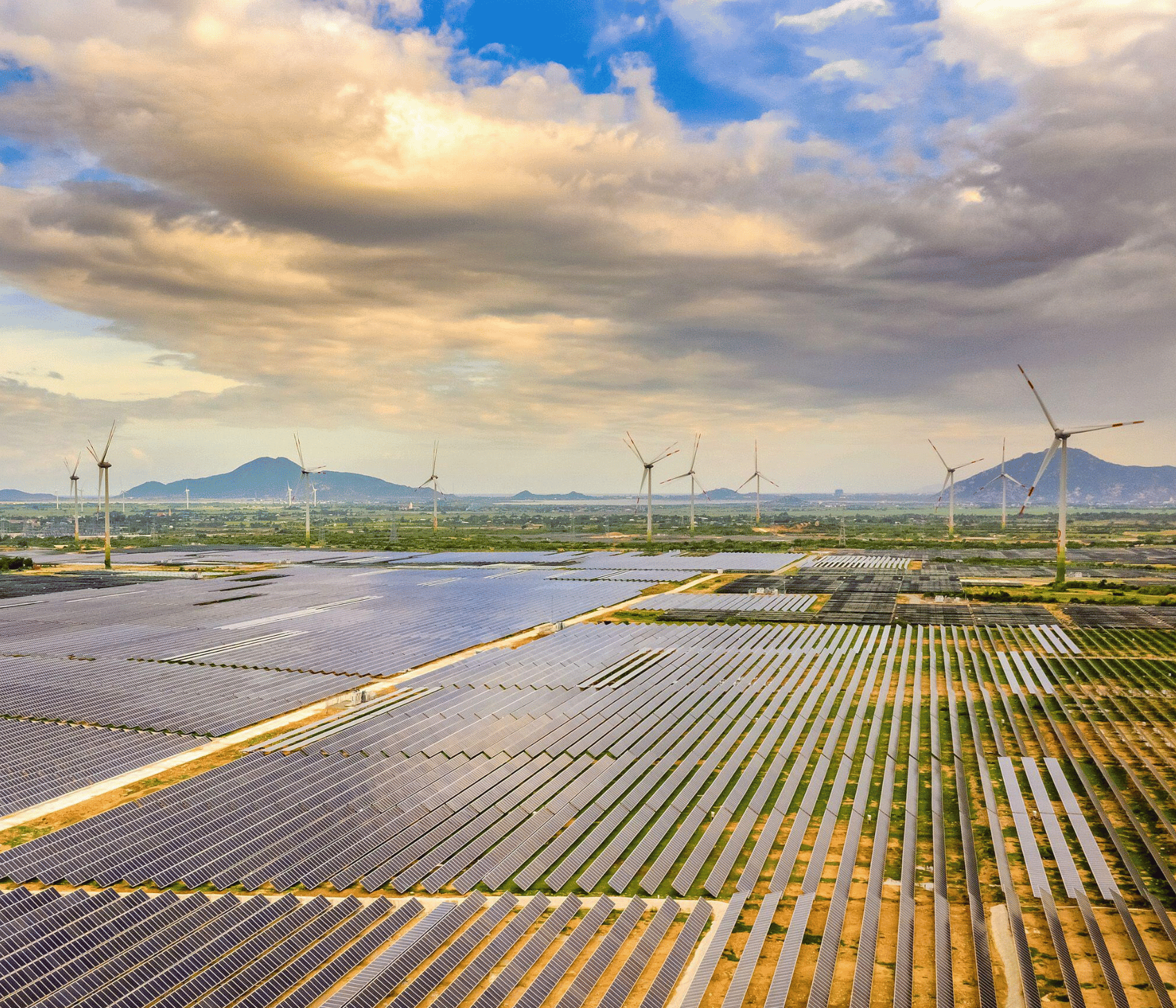
The Department of Energy continues to push the National Renewable Energy Program (NREP), which remains the cornerstone of the Philippines' long-term energy strategy. The program aims to increase the share of renewables in the power mix to 35% by 2030 and 50% by 2040. A significant milestone in this journey was the Green Energy Auction (GEA-4) concluded in late 2025, which awarded contracts for 10,195 MW of solar, wind, and energy storage projects across 123 separate developments.
The market for renewable energy in the Philippines is projected to see exponential growth over the next decade. Driven by smart grid optimization across the Luzon, Visayas, and Mindanao grids, the sector is evolving from a niche market into a primary driver of the national economy.
| Metric | 2025 Figure (Actual/Est.) | 2034 Projection | Strategic Goal (2040) |
|---|---|---|---|
| Renewable Energy Market Size | USD 20.8 Billion | USD 41.9 Billion | N/A |
| Installed RE Capacity (New) | 10,195 MW (GEA-4) | ~30,000 MW (Cumulative) | 20,000 MW (NREP Target) |
| Foreign Investment Deals | USD 15 Billion (Masdar) | TBD | N/A |
| Grid Integration Level | Moderate | High (Smart Grid Optimized) | Fully Integrated |
Geopolitical Partnerships and Critical Minerals
On March 21, 2026, a forum hosted by the Strat Institute titled "Build Resilience: Greenlighting Strategic Investments," in collaboration with the Canadian Embassy and Asia Pacific Canada, highlighted the growing importance of "transactional diplomacy" in securing energy futures. The discussions focused on the Philippines-Canada collaboration regarding critical minerals. As the world shifts toward electric vehicles (EVs) and renewable technologies, the Philippines’ vast reserves of nickel and copper have become strategic assets.
The forum emphasized that by partnering with nations like Canada, the Philippines can secure the technical expertise and capital necessary to process these minerals domestically. This move is intended to move the Philippines up the value chain—from a raw material exporter to a hub for battery component manufacturing—thereby enhancing economic security and providing a hedge against the volatility of imported fuel prices.
Addressing the "Highest Electricity Rates in ASEAN"
The push for energy security is also a response to domestic pressure regarding the cost of living. The Philippines has long grappled with some of the highest electricity rates in the ASEAN region, a factor that has historically hampered industrial competitiveness. Public sentiment, as reflected in recent social media discourse, shows a pragmatic but alarmed citizenry. While there is support for the government's stopgap measures—such as the temporary use of coal and "dirtier" fuels to prevent blackouts during the Middle East crisis—there is a growing demand for permanent structural changes.
One such structural change gaining traction is the revival of nuclear energy. Discussions regarding the Bataan Nuclear Power Plant (BNPP) and the potential deployment of Small Modular Reactors (SMRs) have moved from the periphery to the center of policy debate. President Marcos has reaffirmed the nation’s commitment to nuclear safety and clean energy, viewing nuclear power as a "base-load" necessity that can complement the intermittent nature of solar and wind power.
The Role of the ASEAN Petroleum Security Agreement
In the broader regional context, the Philippines is leveraging its position as the 2026 ASEAN Chair to advocate for collective energy resilience. During recent diplomatic engagements, Manila has urged member states to expedite the activation and strengthening of the ASEAN Petroleum Security Agreement (APSA). This agreement is designed to facilitate fuel-sharing among member states during times of supply disruption.
Given the Philippines' lack of significant strategic petroleum reserves (SPR)—leaving the country dependent on commercial inventories that typically last only 30 to 50 days—regional cooperation is viewed as an essential safety net. Geopolitical analysts suggest that the current Middle East instability has served as a "wake-up call," prompting the Philippines to not only seek domestic solutions but also to lead a regional dialogue on energy sovereignty in the face of global shocks.
Conclusion: A Multi-Pronged Defense Against Volatility
As the Philippines navigates the complexities of the 2026 geopolitical landscape, its strategy is characterized by a blend of immediate crisis management and long-term structural reform. The use of the Maharlika Investment Fund to modernize infrastructure, the aggressive pursuit of renewable energy targets, and the strategic exploration of nuclear power and critical mineral partnerships represent a comprehensive effort to insulate the archipelago from external shocks.
While the path to full energy independence remains long, the developments of March 2026 indicate a clear shift in priorities. The Philippine government has recognized that in the modern era, energy security is the foundation of national security. By diversifying energy sources and strengthening domestic infrastructure, Manila aims to ensure that its economic future is determined by its own strategic choices rather than by conflicts thousands of miles from its shores.
The Department of Energy continues to monitor global oil prices and supply lines, maintaining a state of readiness as the Middle East situation evolves. For now, the focus remains on the "Greenlight" for strategic investments that will define the Philippines' energy landscape for the next decade and beyond.
Comments (0)
No comments yet. Be the first to share your thoughts!