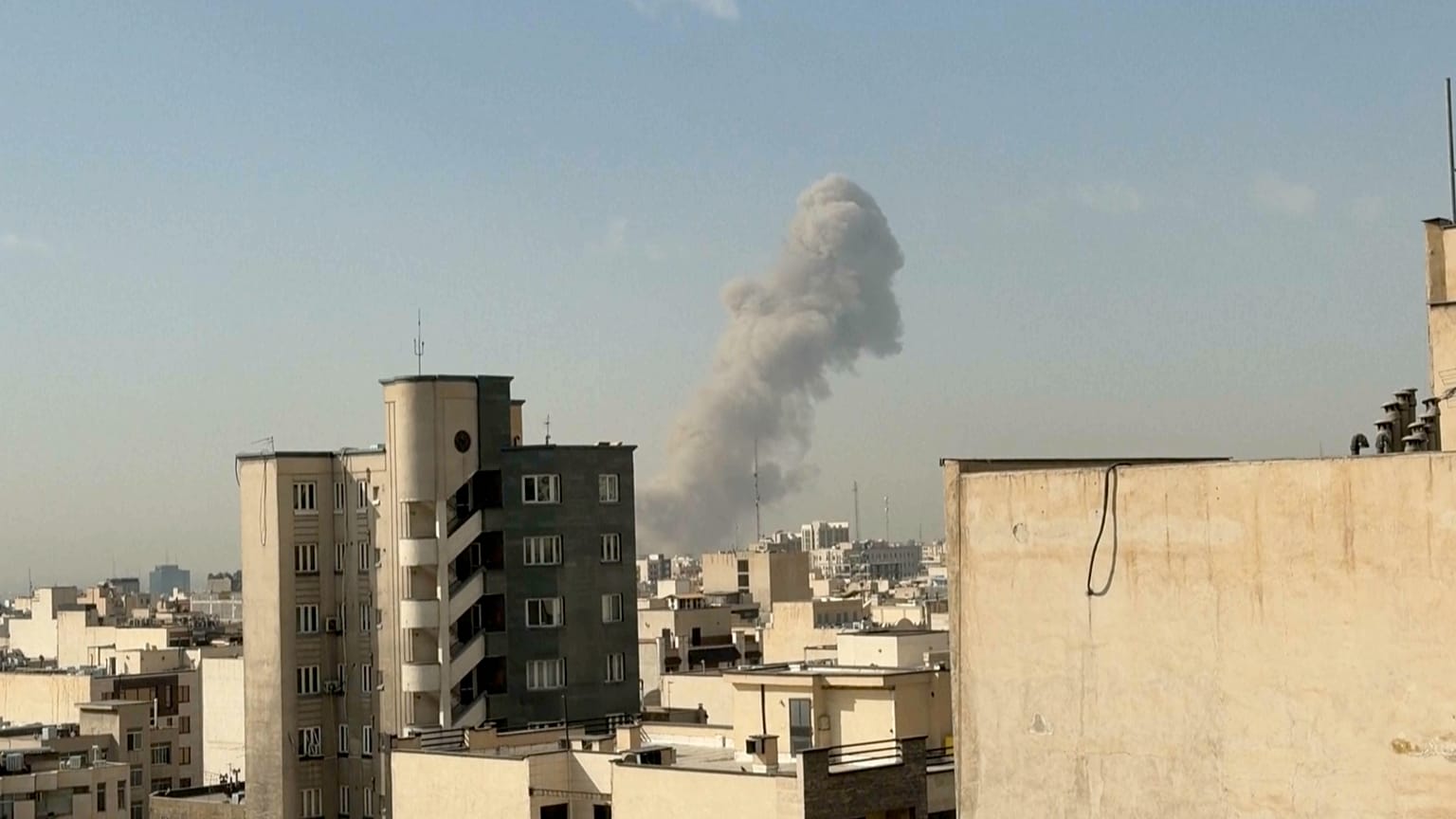
Military Escalation: US-Israeli Offensive Enters Critical Phase
As of March 8, 2026, the geopolitical landscape of the Middle East has reached a point of unprecedented volatility. Following a major US-Israeli offensive—designated "Operation Epic Fury"—that began on March 1, 2026, the conflict has seen a dramatic escalation. The campaign, which targeted over 1,700 sites including leadership compounds in its opening hours, has intensified with the movement of additional naval assets and direct hits on Iranian energy and military infrastructure. Reports indicate that over 2,000 targets were successfully engaged within the first week of the operation.
The US Navy is currently establishing a rare and significant three-carrier strike group presence in the region. The USS Gerald R. Ford transited the Suez Canal southbound on March 5 to join the USS Abraham Lincoln in the Arabian Sea. Meanwhile, the USS George H. W. Bush completed its final pre-deployment training (COMPTUEX) off North Carolina on March 5 and is expected to arrive in the Middle East by mid-March. Admiral Brad Cooper, in a briefing from the region, stated that US-Israeli forces have achieved significant air dominance, conducting extensive airstrikes on military sites in cities including Tehran, Tabriz, and Isfahan.
Recent strikes have targeted high-value infrastructure within Tehran. Reports indicate that Mehrabad International Airport was a primary target, resulting in the destruction of Quds Force aircraft. For the first time in the conflict, oil facilities in Tehran and Bushehr have been hit. Military analysts suggest these strikes are designed to cripple the economic engine of the Iranian military apparatus. Despite these strikes, Iranian missile volleys continue, though officials note they have decreased in frequency while increasing in individual impact.
Casualty Reports and Humanitarian Impact
The human cost of the conflict continues to rise as both military and civilian populations bear the brunt of the kinetic exchanges. While specific cumulative death tolls within Iran remain difficult to verify, the intensity of the initial March 1 strikes suggests significant casualties. Fatalities have also been recorded in Lebanon, where Iranian-backed militias have been targeted, and in Israel following retaliatory strikes.
The United States has suffered confirmed losses. Six US Army Reserve soldiers, all members of the Des Moines, Iowa-based 103rd Sustainment Command (Expeditionary), were killed on March 1, 2026, when an Iranian drone strike hit a tactical operations center at Port Shuaiba, Kuwait. The Pentagon has identified the fallen as Maj. Jeffrey R. O’Brien, Sgt. Declan J. Coady, Capt. Cody A. Khork, Sgt. 1st Class Noah L. Tietjens, Sgt. 1st Class Nicole M. Amor, and Chief Warrant Officer 3 Robert M. Marzan. The 103rd Sustainment Command has been instrumental in managing logistics for the operation, and the loss has resonated deeply within the domestic military community.
| Region/Entity | Reported Fatalities | Key Infrastructure Impacted |
|---|---|---|
| Iran | Significant (Specific tolls unverified) | Mehrabad Airport, Tehran Oil Facilities, Bushehr |
| Lebanon | Significant | Militia Headquarters, Supply Depots |
| Israel | Reported | Civilian and Military Defense Perimeters |
| United States | 6 (Maj. O’Brien, Sgt. Coady, Capt. Khork, SFC Tietjens, SFC Amor, CW3 Marzan) | 103rd Sustainment Command (Port Shuaiba, Kuwait) |
Political Rhetoric and Diplomatic Stagnation
President Donald Trump has maintained a firm stance, posting on social media on March 6 that there will be "no deal" with Iran except for "unconditional surrender." Briefings from the Defense Secretary and Admiral Cooper have reinforced this position, focusing on the degradation of Iranian capabilities and the neutralization of threats to US interests. The President has also indicated a willingness to intensify bombing campaigns if Tehran does not comply. Notably, the administration has ruled out the involvement of Kurdish forces at this stage, despite their reported readiness to engage.
From the Iranian perspective, the response has been one of defiance. Pezeshkian, a prominent member of the Iranian leadership, has dismissed calls for surrender. In public statements, Pezeshkian urged regional neighbors to remain neutral, asserting that Iran would not attack those who do not provoke it. While emphasizing a preference for diplomacy, the Iranian leadership has shown no signs of de-escalation, even as the US continues to target leadership compounds in Tehran to force a change in the country's governance.
Global Economic Fallout: Gas Prices and Energy Markets
The strikes on Iranian oil facilities and the ongoing maritime tension have impacted global energy markets, though prices remain below previous crisis peaks. As of March 7, 2026, international crude oil prices (Brent) were reported at approximately $82 per barrel. This volatility is reflected at the pump for consumers worldwide, fueling economic anxiety.
In the United States, gas prices have climbed to an average of $3.32 to $3.45 per gallon. The economic impact is particularly pronounced in Pakistan, where the government announced a historic Rs. 55 per litre hike. This brought the price of petrol to 321.17 PKR per liter effective March 7, 2026. While some reports suggested panic buying, Pakistani government authorities have stated that fuel reserves remain adequate and have denied claims of widespread shortages.
- United States: National average gas prices between $3.32 and $3.45 per gallon.
- Pakistan: Petrol prices surged to 321.17 PKR per liter; authorities maintain reserves are adequate.
- Global Crude: Brent crude trading at approximately $82 per barrel.
Domestic Weather Outlook: Severe Storms and Tornadoes
While social media trends have seen a rise in the use of the #TornadoOutbreak hashtag, official meteorological reports for March 8, 2026, show no confirmed major tornado outbreaks within the United States. However, a significant severe weather system did impact the country earlier in the week. An EF2 tornado struck west of Fairview, Oklahoma, on the night of Thursday, March 5, resulting in two fatalities. On March 6, another tornado was confirmed in Beggs, Oklahoma, as part of a broader outbreak that prompted state aid for recovery.
Meteorologists note that while severe storms and a tornado impacted Michigan on March 6—specifically affecting Branch, Cass, and St. Joseph counties—there were no confirmed fatalities in that state. The prevalence of the #TornadoOutbreak hashtag appears to be driven by the recent deadly storms in Oklahoma and seasonal awareness rather than a new event on March 8.
Strategic Outlook: No Immediate Exit Strategy
As the US-Israeli offensive moves forward, military analysts express concern over the lack of a clear exit strategy. Admiral Cooper’s confirmation of air dominance suggests that the coalition can continue to strike targets with relative impunity, but the resilience of Iranian-backed militias suggests a protracted conflict. The dismantling of Iranian missile infrastructure remains a top priority for the coalition in the coming days.
The international community remains divided. While some allies have offered logistical support, others have expressed skepticism regarding the long-term feasibility of the total neutralization of Iranian military capabilities. With the USS George H. W. Bush set to join two other carriers on station and the White House demanding total compliance, the window for a diplomatic resolution appears to be closing.
Current Status of Forces and Market Data
| Metric | Current Status (March 8, 2026) |
|---|---|
| US Naval Presence | 3 Aircraft Carriers (USS Gerald R. Ford and USS Abraham Lincoln in region; USS George H. W. Bush expected mid-March) |
| Crude Oil Price (Brent) | ~$82 per barrel |
| US Casualties | 6 Soldiers (103rd Sustainment Command) |
| US Domestic Gas Average | $3.32 - $3.45 per gallon |
| Recent Major Weather | EF2 Tornado Fairview, OK (March 5, 2 deaths); Tornado Beggs, OK (March 6) |
The situation continues to evolve rapidly. Journalistic monitoring of both the tactical developments in the Persian Gulf and the resulting economic shifts remains critical as the world navigates the complexities of the ongoing conflict.
Comments (0)
No comments yet. Be the first to share your thoughts!