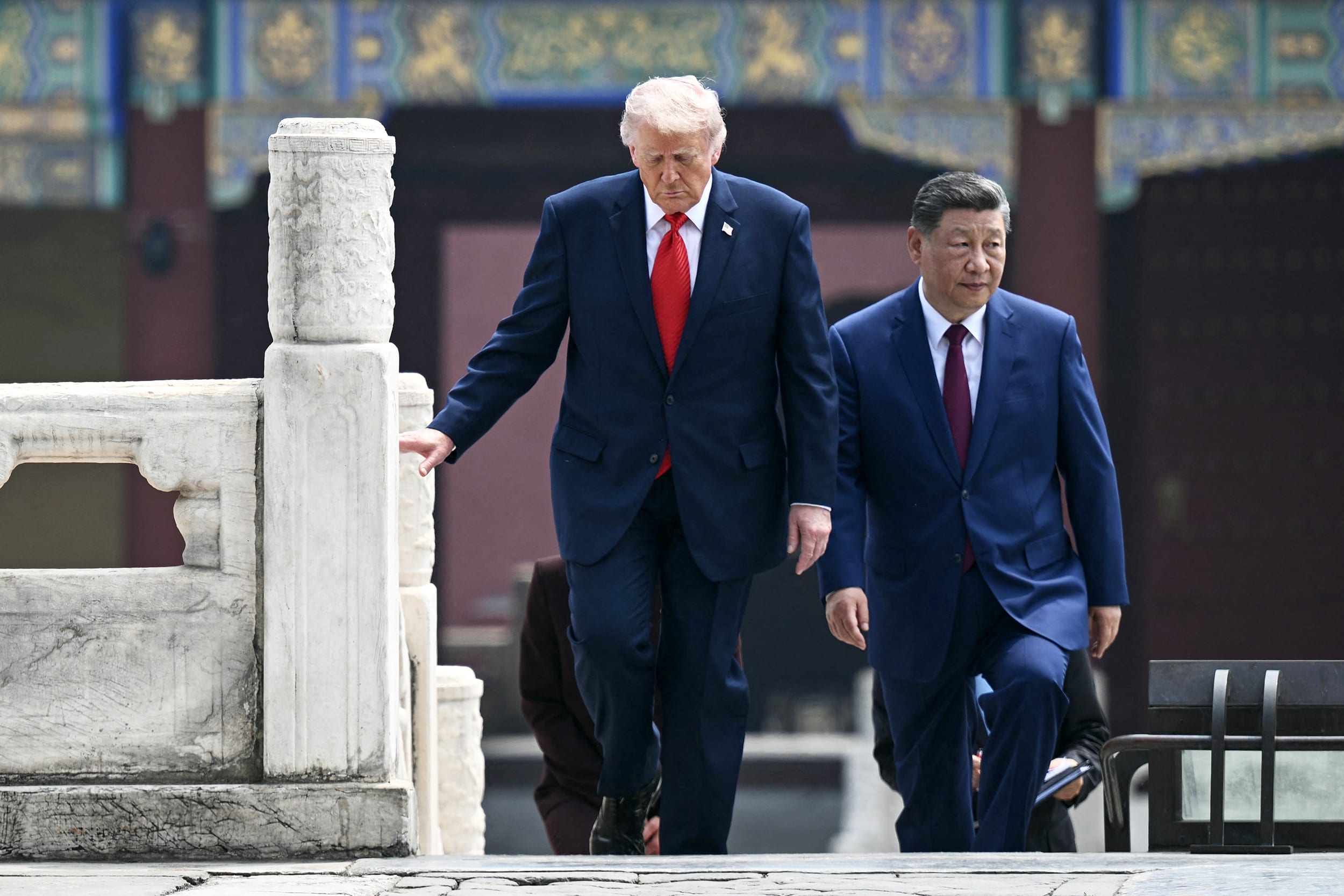
Beijing Summit Marks Shift in U.S.-China Diplomatic Engagement Regarding Iran
In a series of high-stakes discussions concluded on May 15, 2026, U.S. President Donald Trump and Chinese President Xi Jinping reached what Beijing has termed a "series of new consensuses" regarding international security and the escalating conflict in Iran. The summit, held in Beijing, has signaled a potential shift in how the world’s two largest economies manage regional instabilities that threaten global trade routes, specifically the Strait of Hormuz. While the talks focused heavily on the Middle East, they also addressed the ongoing U.S.-China trade truce and the broader strategic competition between the two superpowers.
According to a readout from the Chinese Foreign Ministry, cited by Reuters, both leaders framed an early resolution to the Iranian crisis as a priority that would yield mutual benefits for the United States, China, and the Middle East at large. The discussions occurred against a backdrop of heightened military tensions and concerns over maritime security, with both sides expressing a desire to prevent the current friction from expanding into a broader regional confrontation. The diplomatic engagement in Beijing suggests that China is increasingly positioning itself as a central mediator in Middle Eastern affairs, a role traditionally dominated by Washington.
The "Beijing Consensus" and the Iran Security Framework
The core of the diplomatic exchange centered on the "Iran crisis," a term used by both delegations to describe the current state of hostilities and maritime insecurity. Reports indicate that the talks were aimed at finding a de-escalation path that satisfies U.S. security demands while maintaining China’s economic interests in the region. China, a major purchaser of Iranian oil, has a vested interest in the stability of the Strait of Hormuz, through which a significant portion of global energy supplies pass.
During the summit, President Trump’s rhetoric remained multifaceted. While social media and secondary reports highlighted more aggressive stances—including the phrase "We Will Enter Iran!"—the official diplomatic channels focused on the necessity of a "deal." This duality reflects the administration's "maximum pressure" strategy combined with a stated willingness to negotiate. The Chinese readout emphasized that a "series of new consensuses" had been reached, though specific details regarding the mechanics of a potential agreement remain undisclosed to the public. Analysts suggest these consensuses likely involve maritime "rules of the road" and a shared commitment to preventing a total collapse of regional governance.
Gulf States Reevaluate U.S. Security Guarantees
One of the most significant geopolitical ripples following the Beijing summit is the reported reaction from Gulf Cooperation Council (GCC) states. According to reports from the Hindustan Times and other regional observers on May 16, 2026, Saudi Arabia and its neighbors are actively reassessing the reliability of the United States as a sole security guarantor. This recalibration is reportedly driven by the perception that U.S. diplomacy with China may prioritize bilateral stability over the specific security needs of the Gulf monarchs.
Riyadh is reportedly exploring a "non-aggression framework" with Tehran, a move that would have been unthinkable in previous decades. This shift toward regional hedging suggests that the Gulf states are looking to manage Iran directly, potentially with Chinese mediation, rather than relying exclusively on U.S. military deterrence. The narrative emerging from the region suggests that if the U.S. and China are collaborating on an Iran solution, the Gulf states must ensure their own interests are not sidelined in a "grand bargain" between Washington and Beijing.
Comparative Analysis of Summit Objectives
The following table outlines the reported priorities and outcomes for the primary stakeholders involved in the May 2026 Beijing talks:
| Stakeholder | Primary Objective | Reported Outcome | Strategic Impact |
|---|---|---|---|
| United States | Containment of Iran and trade stabilization. | Confirmed "consensuses" on security; White House invitation for Xi. | Maintains "maximum pressure" while opening a diplomatic exit ramp. |
| China | Energy security and mediation role. | Positioned as a "peace broker" in the Middle East. | Increases Beijing’s leverage in the Western Asia security architecture. |
| Saudi Arabia | Regional security and deterrence. | Exploration of non-aggression framework with Tehran. | Signals a shift toward a multipolar security strategy. |
| Iran | Sanction relief and sovereignty. | Remains the central subject of U.S.-China security talks. | Potential for a new multilateral negotiation framework. |
Diplomatic Optics and the "Missing Cushion" Controversy
Beyond the high-level policy discussions, the summit was marked by significant attention to diplomatic stagecraft and optics. On May 15, 2026, social media platforms and news outlets focused on a viral controversy involving a seating arrangement during a state banquet. Reports suggested that a "missing cushion" or specific chair height made President Trump appear shorter than President Xi Jinping in official photographs. While seemingly trivial, such optics are often scrutinized in international relations as indicators of power dynamics and "face."
Critics and observers have debated whether these arrangements were intentional slights by the host nation or mere logistical oversights. However, the Trump administration has dismissed these narratives, focusing instead on the "successful" nature of the visit. President Trump described the relationship between the U.S. and China as potentially "better than ever before," emphasizing the personal rapport between the two leaders despite the underlying strategic competition. This emphasis on personal chemistry is a hallmark of the Trump administration's approach to foreign policy, often used to bypass traditional bureaucratic friction.
Trade Truce and Economic Stabilization
While security dominated the headlines, the economic relationship between the U.S. and China remained a critical pillar of the talks. The current "trade truce" appears to be holding, with both sides agreeing to maintain the status quo while further negotiations proceed. This stabilization is viewed as essential for global markets, which have been volatile due to the tensions in the Middle East.
- Trade Truce Status: Both nations have agreed to refrain from new tariff escalations through the third quarter of 2026.
- White House Invitation: President Xi Jinping has reportedly accepted an invitation to visit the White House in September 2026, suggesting a continued commitment to high-level engagement.
- Technology and Taiwan: While tensions remain over technology transfers and Taiwan, the Beijing summit focused on "strategic ambiguity" to prevent these issues from derailing the immediate security cooperation regarding Iran.
Domestic Reception and the #MAGA Narrative
In the United States, the reception of the Beijing summit has been split along predictable partisan lines. Supporters of the administration, utilizing the #MAGA hashtag, have framed the visit as a demonstration of "geopolitics by POTUS," arguing that Trump’s direct engagement with Xi Jinping is the only way to resolve complex global issues like the Iran crisis. They point to the "respect" shown to Trump in Beijing as evidence of a restored American standing on the world stage.
Conversely, critics argue that the administration’s diplomacy is overly reliant on optics and lacks the institutional depth required for long-term stability. Concerns have been raised regarding the "abandonment" of traditional allies in the Middle East, with some analysts warning that the Gulf states' pivot toward a non-aggression framework with Iran could undermine decades of U.S. strategic architecture. The debate highlights a fundamental disagreement over whether a "transactional" foreign policy is more effective than a "rules-based" international order.
The Role of Maritime Security in the Strait of Hormuz
The Strait of Hormuz remains the most volatile geographic point in the current geopolitical landscape. The Beijing talks reportedly addressed the security of tankers and the prevention of ship seizures, which have plagued the waterway in recent months. The U.S. has maintained a significant naval presence in the area, while China has traditionally called for "restraint" and "multilateral dialogue."
The "new consensuses" reached in Beijing may involve a more coordinated approach to patrolling these waters, or at the very least, a shared understanding of the thresholds for military intervention. Both leaders are aware that a full-scale conflict in the Strait would lead to a global economic shock, something both wish to avoid as they navigate their own domestic economic challenges. The emphasis on "early solutions" to the Iran crisis reflects this shared economic vulnerability.
Looking Ahead: The September White House Visit
As President Trump returns to the United States, the focus will shift to the implementation of the Beijing agreements and the preparations for President Xi’s visit to Washington in September. This upcoming summit is expected to be a pivotal moment for the remainder of 2026, potentially codifying the "consensuses" reached in Beijing into more formal agreements.
However, the path to September is fraught with potential obstacles. The situation in Iran remains fluid, and any further escalation in the Middle East could force the U.S. into a more direct military role, potentially straining the newly established diplomatic "thaw" with China. Furthermore, the internal dynamics within the Gulf states will be closely watched; if Saudi Arabia moves closer to a formal non-aggression pact with Iran, the U.S. may find itself with a diminished role in the region's security management.
Conclusion: A Multipolar Diplomatic Landscape
The May 2026 Beijing summit represents a significant moment in the evolution of 21st-century geopolitics. It has demonstrated that even amid intense strategic rivalry, the U.S. and China can find common ground when faced with regional instabilities that threaten their mutual economic interests. However, the summit has also exposed the changing nature of global alliances, as traditional U.S. partners in the Middle East begin to hedge their bets in a more multipolar world.
Whether the "Beijing Consensus" leads to a lasting peace in the Middle East or merely serves as a temporary reprieve remains to be seen. What is clear is that the "geopolitics by POTUS" style has forced a re-evaluation of diplomatic norms, placing personal leader-to-leader engagement at the center of the global news cycle. As the world watches the fallout from these talks, the focus remains on the Strait of Hormuz and the delicate balance of power between Washington, Beijing, Riyadh, and Tehran.
Comments (0)
No comments yet. Be the first to share your thoughts!