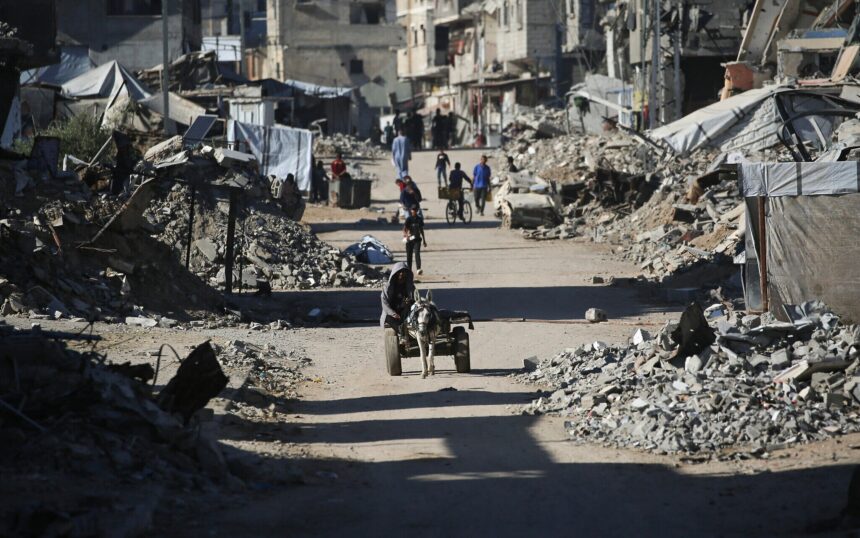
The State of the Gaza Ceasefire and Diplomatic Realignment
As of January 8, 2026, the precarious U.S.-brokered "Comprehensive Plan to End the Gaza Conflict" remains a critical element of the geopolitical landscape. While a formal ceasefire has been in place since October 10, 2025, the agreement is currently facing its most significant test to date. Reports from the ground and international monitors indicate that while U.S. Vice President JD Vance has expressed optimism that the ceasefire would hold, acknowledging its fragility and the need for constant effort, the reality for those in the region is defined by intermittent violence and stalled diplomatic phases.
The implementation of the second phase of the peace plan has reached a stalemate. Hamas has set forth stringent conditions for moving forward, demanding a complete cessation of Israeli strikes, the permanent reopening of the Rafah crossing for two-way traffic, and a substantial increase in humanitarian aid flows. Conversely, Israeli officials have accused Hamas of deliberately delaying the process by withholding the remains of a final hostage. Israel maintains that its recent military actions are not violations of the truce but are targeted strikes against militants operating near the "Yellow Line" in Gaza.
Data cited by the United Nations as of late December 2025 paints a somber picture of the "ceasefire" period. Since the truce began in October, at least 414 Palestinians have been reported killed by the Israel Defense Forces (IDF) by December 29, 2025, according to OCHA. Within the last 48 hours, tensions have escalated further. On January 6, 2026, Israeli forces conducted an assault on Birzeit University in the West Bank, resulting in eleven wounded Palestinian students and dozens more suffering from tear gas inhalation. In a separate incident near Rafah, Israeli forces shot three Palestinians who allegedly crossed the ceasefire demarcation line. Despite these skirmishes, some elements of the agreement remain functional; Israel recently transferred the bodies of 45 Palestinians to Gazan authorities following a hostage-related transfer.
On the diplomatic front, the Palestinian Authority (PA) continues to see a shift in its international standing. This coincides with renewed calls from European and Jordanian leaders for the reform of PA institutions, specifically focusing on strengthening civilian police and administrative transparency.
U.S. Dietary Guidelines: A Paradigm Shift in Nutritional Policy
In a landmark shift for public health, the latest U.S. Dietary Guidelines have been released, marking a significant departure from previous decades of nutritional advice. The 2026 updates are characterized by a move away from low-fat mandates and a new, aggressive stance against ultra-processed foods (UPFs). For the first time, federal guidelines explicitly warn against the consumption of food additives and highly engineered products, instead prioritizing whole, nutrient-dense foods.
The new recommendations emphasize fresh vegetables, whole grains, and high-quality proteins as the cornerstone of a healthy diet. Notably, the guidelines have lifted long-standing restrictions on full-fat dairy, now suggesting that whole milk, cheese, and yogurt can be part of a balanced diet. The inclusion of natural fats, such as butter and beef tallow for cooking, represents a pivot toward traditional food sources. Protein recommendations have also been bolstered, with an emphasis on eggs, meat, seeds, and nuts. The guidelines suggest these proteins be tailored to an individual’s genetic profile and physical activity levels, reflecting a move toward personalized nutrition.
However, the updates have not been without criticism. While many health advocates celebrate the rejection of "junk" and processed sugars, some experts argue the guidelines remain too conservative in certain areas. Specifically, the new policy maintains a cap on saturated fats at 10% of total daily calories and limits protein intake to 1.6 grams per kilogram of body weight. Critics describe these remaining restrictions as "lingering old habits" that contradict the guidelines' newfound embrace of whole animal fats and proteins. Despite these debates, the overarching sentiment is one of cautious optimism, as the policy finally acknowledges the health risks associated with ultra-processed diets and excessive carbohydrate consumption.
Immigration and Customs Enforcement: Oversight and Operational Challenges
U.S. Immigration and Customs Enforcement (ICE) remains under intense scrutiny regarding detention conditions and the legalities of its enforcement operations. The current administrative focus is largely centered on the resolution of ongoing litigation and the management of a strained detention system.
Field reports indicate that ICE continues to conduct localized enforcement operations, though these have shifted toward a more targeted approach following recent court challenges. The agency is currently navigating a complex web of state and federal conflicts, particularly in jurisdictions that have passed laws limiting local law enforcement cooperation with federal immigration authorities. These legal battles are expected to reach higher courts in the coming months, potentially redefining the boundaries of ICE’s reach within "sanctuary" zones.
Furthermore, the medical care and treatment of detainees remain a primary concern for advocacy groups. Recent audits have highlighted issues of overcrowding and inadequate healthcare facilities within private detention centers contracted by the agency. As the 2026 fiscal year progresses, the debate over ICE’s budget and the ethics of its detention model continues to be a point of contention in Washington, with lawmakers divided on whether to increase funding for enforcement or pivot toward community-based alternatives to detention.
The Intersection of Food Policy and Conflict
The release of the new U.S. Dietary Guidelines has inadvertently highlighted the dire humanitarian situation in Gaza, where food has become a central point of the conflict. While the U.S. government promotes "high-quality proteins" and "fresh produce" as essential for health, social media and humanitarian reports from Gaza suggest a starkly different reality. Critics and international observers have accused Israeli authorities of implementing a policy of "starvation by design" by restricting the entry of the very foods now championed by health experts.
Reports indicate that essential items such as eggs, red meat, poultry, fish, and dairy products are frequently blocked from entering the Gaza Strip. These restrictions extend to supplements, nuts, and fresh vegetables, leaving the population dependent on shelf-stable, often lower-quality aid. Conversely, some reports suggest that "junk" items like chocolate are occasionally permitted, leading to accusations that the restrictions are intended to punish the population collectively by depriving them of nutritional staples. This contrast between the Western world’s pivot toward "optimal nutrition" and the systematic deprivation reported in Gaza has become a focal point for human rights advocates, who argue that calorie restriction and nutrient deficiency are being used as tools of war.
Looking Ahead: The Fragile Path of 2026
As January 2026 unfolds, the themes of accountability and systemic reform are prevalent across all three sectors. In the Middle East, the survival of the ceasefire depends on the ability of mediators to bridge the gap between Hamas’s humanitarian demands and Israel’s security requirements.
In the United States, the new dietary guidelines represent a generational shift in how the government views the relationship between the food industry and public health. As the public begins to adapt to these new standards, the focus will likely shift to the accessibility and affordability of the "whole foods" now being recommended. Simultaneously, the ongoing challenges facing ICE reflect a broader national struggle to balance border security with humanitarian standards and legal consistency.
The events of the last 24 to 48 hours underscore a world in transition, where established norms—whether in the realm of international diplomacy, immigration enforcement, or basic nutrition—are being re-evaluated in the face of new crises and scientific understandings. The durability of the Gaza truce and the impact of domestic policy shifts will remain the primary metrics for progress as the year continues.
Comments (0)
No comments yet. Be the first to share your thoughts!