WASHINGTON — Operation Epic Fury, the United States-led military campaign against the Iranian regime, entered its eighteenth day on March 17, 2026, with the Department of Defense reporting sustained progress in degrading Tehran’s strategic capabilities.
Following a briefing on March 16 by Admiral Brad Cooper, Commander of U.S. Central Command (CENTCOM), officials confirmed that the multi-phase operation continues to target Iran’s ballistic missile arsenal, naval assets, and nuclear infrastructure. The campaign, which began on February 28, 2026, was launched in coordination with Israeli forces under the moniker "Operation Roaring Lion." While specific tactical developments from the last 24 hours remain classified, Admiral Cooper emphasized that the dismantling of Iran’s defense industrial base is "absolutely in progress."
The conflict has centered heavily on the Strait of Hormuz, a vital maritime chokepoint through which approximately 20 million barrels of oil pass daily. Since the commencement of hostilities, the Iranian regime has effectively closed the strait, leading to a significant backlog of merchant vessels and a disruption of global energy supply chains valued at approximately $600 billion annually. As of mid-March, U.S. naval forces have reportedly destroyed numerous Iranian warships and struck thousands of terrestrial targets to ensure the eventual restoration of maritime security.
Strategic Objectives of Operation Epic Fury
The Trump administration has maintained a consistent set of four primary objectives since the operation's inception. These goals were first articulated by President Trump on March 2 and have been reiterated by senior military leadership, including General Dan Caine, Chairman of the Joint Chiefs of Staff, and Secretary of Defense Pete Hegseth.
- Ballistic Missile Neutralization: The systematic destruction of Iran’s ballistic missile stockpiles, mobile launchers, production facilities, and the broader defense industrial base that supports long-range strike capabilities.
- Naval Degradation: The annihilation of the Islamic Republic of Iran Navy (IRIN) and the Islamic Revolutionary Guard Corps Navy (IRGCN) to prevent interference with international shipping.
- Nuclear Denial: The targeting of known and suspected nuclear-related sites to ensure the regime cannot obtain a functional nuclear weapon.
- Counter-Proxy Operations: The neutralization of Iran’s ability to provide financial, logistical, and military support to terrorist organizations and proxy militias throughout the Middle East.
Secretary Hegseth stated on March 10 that these objectives are being executed with "ruthless precision," noting that the coalition's intent is to permanently remove Iran’s capacity for regional power projection. This sentiment was echoed by White House Deputy Chief of Staff Stephen Miller on March 13, who characterized the operation as an "unprecedented military success" against the current regime in Tehran.
The Escalation in the Strait of Hormuz
The maritime component of the conflict has seen the most visible escalation. By March 11, U.S. forces had successfully engaged and destroyed a significant portion of Iran’s surface fleet. However, the closure of the Strait of Hormuz remains a primary concern for international markets. A recent investigation documented 16 separate attacks on merchant vessels within the strait since the start of the operation, underscoring the high-risk environment for commercial shipping.
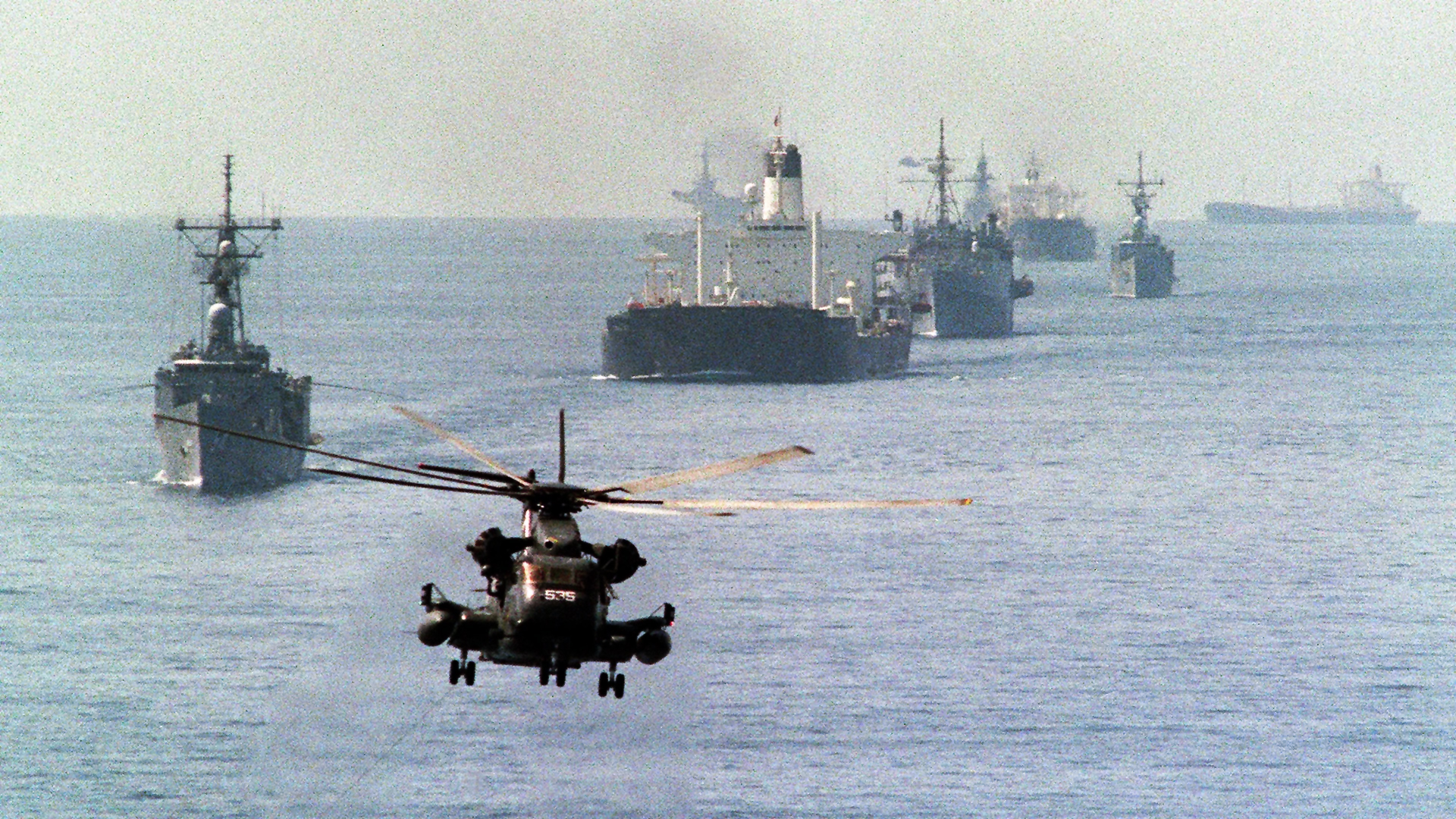
President Trump has indicated that the U.S. Navy may soon begin escorting oil tankers through the strait to break the blockade. Currently, dozens of tankers remain queued in the Gulf of Oman and the Persian Gulf, awaiting security guarantees. While some non-Western nations, including India and China, have attempted selective passages, the majority of Western shipping remains halted due to the threat of mines and shore-based anti-ship missiles.
| Metric | Impact/Status |
|---|---|
| Daily Oil Flow through Strait | ~20 Million Barrels |
| Annual Trade Value at Risk | $600 Billion |
| Merchant Vessel Attacks (since Feb 28) | 16 Documented Cases |
| Primary Target Categories | Missiles, Navy, Nuclear, Proxies |
| Coalition Partners | United States, Israel |
Initial Strikes and the Fall of Leadership
The campaign opened on February 28 with a massive wave of strikes involving B-2 Spirit stealth bombers and Tomahawk cruise missiles. These initial actions targeted critical nuclear facilities at Fordow, Natanz, and Isfahan, as well as air defense networks and command-and-control centers. Reports from the onset of the operation indicated that the strikes resulted in the death of Iranian Supreme Leader Ali Khamenei, creating a significant power vacuum within the regime.
The decision to launch Operation Epic Fury followed Iran’s rejection of a U.S.-led nuclear fuel offer and continued aggression by Iranian-backed proxies, including the lethal attack on the Tower 22 base in Jordan. The current campaign builds upon the foundations laid during "Operation Midnight Hammer" in June 2025, which also utilized heavy bombers to degrade Iranian nuclear sites.
Regional and International Reactions
The international community remains divided over the scale of the intervention. While Israeli forces have been active participants under Operation Roaring Lion, other traditional allies, including the United Kingdom, France, and Australia, have thus far declined to join the direct combat coalition, citing concerns over regional stability and the potential for a broader humanitarian crisis. This has led to a clustering of vessels outside the Strait of Hormuz as shipping companies wait for a more robust international maritime security framework.
Domestically, the operation has seen strong support from Iranian dissident groups. These organizations have utilized social media to highlight the regime’s mistreatment of political prisoners, specifically within facilities like Evin Prison and the Tehran Big Prison. Reports suggest that prisoners are being used as human shields or left trapped in facilities located near military targets, leading to calls for "regime change" and support for the U.S.-led coalition.
Logistics and Sustained Operations
Logistical data indicates a massive mobilization of U.S. Air Force assets to support sustained sorties over the Iranian landmass. Aerial refueling tankers have been deployed in significant numbers to ensure that strike aircraft can maintain a persistent presence over target zones. General Dan Caine noted on March 4 that the dismantling of Iran’s power projection is not a singular event but a continuous process of attrition.
The following table outlines the status of Iranian strategic assets as of the March 16 CENTCOM update:
| Asset Category | Operational Status | Notes |
|---|---|---|
| Ballistic Missile Production | Degraded | Production facilities in Isfahan and Tehran struck. |
| Surface Navy | Near-Annihilated | Most major warships destroyed or port-bound. |
| Nuclear Enrichment | Inoperable | Deep-buried facilities targeted with bunker-busters. |
| Command & Control | Fragmented | Leadership strikes have disrupted central authority. |
Economic and Humanitarian Context
The closure of the Strait of Hormuz has created a pragmatic challenge for global energy security. While the U.S. administration has emphasized the military success of the campaign, the economic reality of stalled oil exports has put pressure on global supply chains. Skeptics of the escalation point to the lack of a broad international coalition as a sign of diplomatic friction, while proponents argue that the decisive action was necessary to prevent Iran from achieving nuclear breakout capability.
Humanitarian monitors have expressed alarm over the "digital blackouts" implemented within Iran, which have made it difficult to verify casualty figures or the status of civilian infrastructure. Critics of the war have raised concerns regarding "no quarter" rhetoric and the potential for violations of international law, though the Pentagon maintains that all strikes are conducted with strict adherence to the laws of armed conflict, targeting only military and regime-critical infrastructure.
Conclusion and Outlook
As Operation Epic Fury enters its third week, the focus remains on the complete dismantlement of the Iranian military's ability to threaten international waters and regional neighbors. Admiral Cooper’s March 16 update suggests that while the initial "shock and awe" phase has concluded, the mission has transitioned into a systematic campaign of infrastructure destruction. With the Strait of Hormuz remaining a volatile front, the coming days will likely determine whether the U.S. Navy moves to a more active role in commercial escort operations, a move that would signal a new phase in the effort to secure global trade routes against the remnants of the Iranian regime.
Comments (0)
No comments yet. Be the first to share your thoughts!