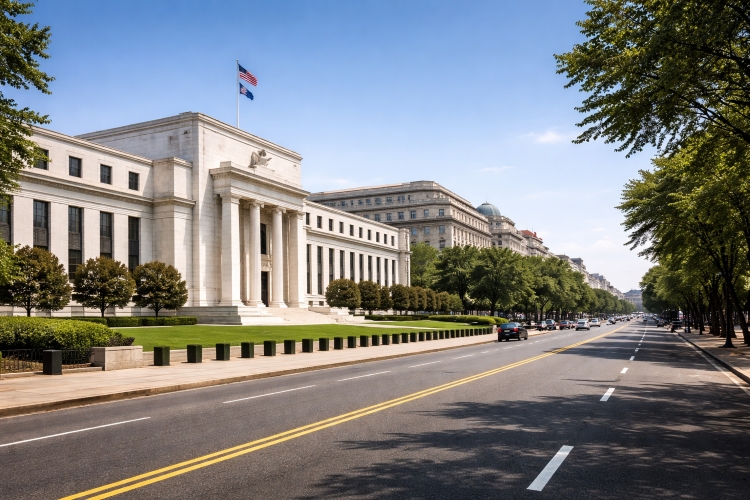
Federal Reserve Holds Benchmark Rate Steady
The Federal Reserve held its benchmark interest rate steady on Wednesday, maintaining the federal-funds target range at 3.75% to 4%, according to reporting by Reuters and Bloomberg. The 10–2 decision follows a rate increase in September, which marked the central bank's first hike in three years. Policymakers opted to pause further tightening to evaluate incoming economic data and monitor whether inflation is returning sustainably toward the central bank’s 2% target.
Despite keeping rates unchanged during this meeting, the Federal Open Market Committee delivered a hawkish message in its policy statement. The committee noted that inflation remains elevated, while characterizing domestic spending as resilient alongside strong productivity and capital investment. According to the statement, accumulating more information will help determine the appropriate policy stance, signaling that additional rate increases remain possible before the tightening cycle concludes.
Internal Dissent and Market Reactions
The decision was not unanimous, revealing notable internal division among policymakers. Federal Reserve Governor Lisa Cook and Cleveland Fed President Beth Hammack dissented from the majority, preferring an immediate quarter-point increase. Their votes highlighted ongoing concerns within the central bank regarding persistent price pressures, even as the broader committee favored a temporary pause.
Financial markets quickly adjusted to the central bank's guidance. Bond traders interpreted the decision and accompanying commentary as a strong signal of a potential rate increase at the next meeting in December. According to market pricing data cited by Bloomberg, investors are currently pricing in roughly a 90% probability of a quarter-point hike, which would lift the benchmark target range to 4%–4.25%.
Public commentary from administration officials added to the discussion surrounding monetary policy. Treasury Secretary Scott Bessent stated on Wednesday that another Federal Reserve rate hike would not necessarily constitute a policy mistake, reflecting ongoing macroeconomic dialogue over how to balance growth with price stability.
Economic Background
The central bank's recent shift toward tighter policy began in September after a prolonged period of steady rates aimed at cooling economic activity. With domestic consumer spending and capital investment remaining robust, policymakers are increasingly reliant on incoming labor market and inflation data to dictate the pace and direction of monetary policy heading into the final stretch of the year.
Comments (0)
No comments yet. Be the first to share your thoughts!