The Digital Convergence of Biology and Mathematics
In the spring of 2026, the global digital landscape has found itself at an unusual crossroads, where the patterns of nature meet the logic of online mathematics. Two distinct phenomena—the recurring sightings of "horned" rabbits in Colorado and a popular social media trend involving math puzzles—have emerged as parallel interests for online audiences. While distinct in nature, these topics have both occupied information feeds, driven by a public appetite for solving mysteries, whether they are biological anomalies or algebraic sequences. As of April 2026, the persistence of these trends highlights a fascination with the "Jackalope" myths of the American West and the accessibility of digital brain teasers.
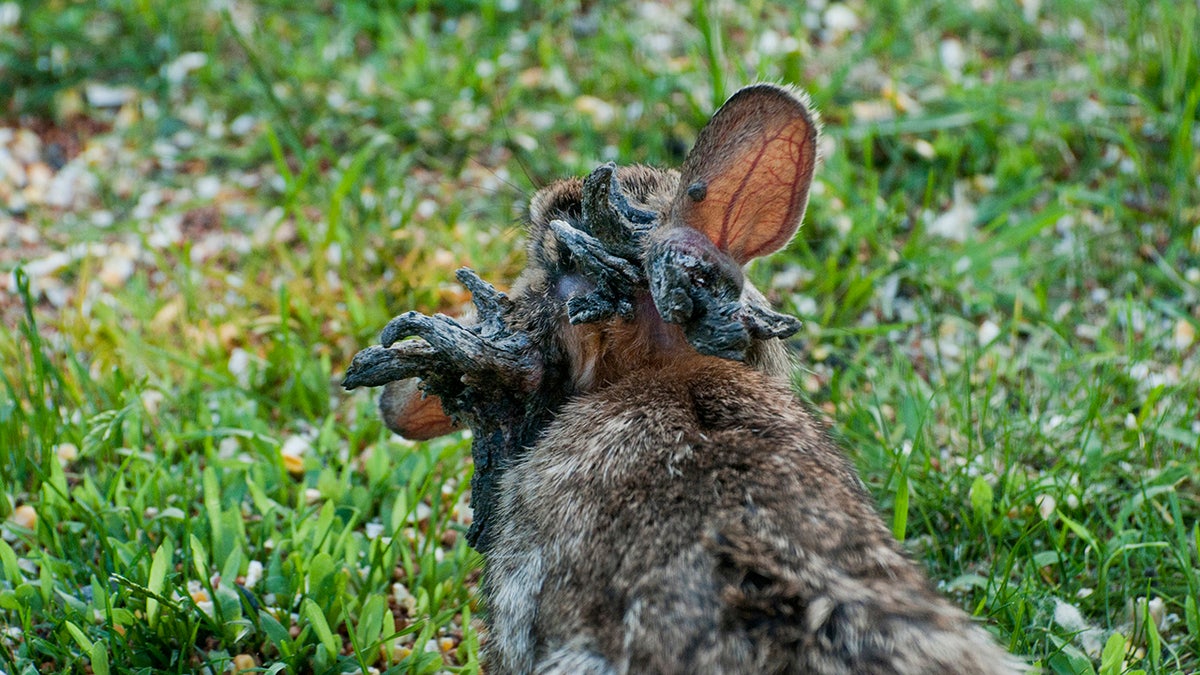
The resurgence of interest in Colorado’s wild rabbit populations stems from a series of viral images and videos that first gained significant traction in August 2025. These visuals depict cottontail rabbits with dark, tentacle-like or horn-like growths extending from their heads and faces, leading many observers to invoke the folklore of the Jackalope. Simultaneously, the academic side of the internet has been active with #MathPuzzle and #Geometry challenges. These puzzles, such as the "Year Game" for 2026, have become a significant source of social media engagement, often prioritizing viral tricks and basic algebraic patterns over the rigorous proofs found in professional competitions.
The "Jackalope" Reality: Understanding Colorado’s Rabbit Papillomavirus
The phenomenon of rabbits with "horns" is not a new discovery; the condition is well-documented by wildlife officials. Known as Cottontail Rabbit Papillomavirus (CRPV), or the Shope papilloma virus, the condition is a natural part of the ecosystem. The virus triggers the growth of wart-like, black, waxy protrusions, which manifest as hard nodules on the animal's skin.
According to wildlife experts, these growths often appear around the head, neck, mouth, and eyes. In many cases, they resemble "black tendrils," creating a startling appearance that mirrors the mythical Jackalope. Despite their alarming look, the biological reality is grounded in virology. The virus is primarily transmitted through the bites of insects, such as fleas and ticks, or through direct physical contact between rabbits. Officials have reassured the public that the virus is rabbit-specific, posing no transmission risk to humans, domestic pets, or livestock.
The impact on infected rabbits varies. While many wild rabbits live with the infections as their immune systems clear the virus, the protrusions can become life-threatening if they impair the animal's ability to see, eat, or hear. In the high-desert environments of Colorado, where rabbit populations are dense, the visibility of these "horned" rabbits often spikes during warmer months and seasons of high insect activity, leading to the waves of sightings that gained media attention through late 2025 and into 2026.
The Statistical Profile of Concurrent Trends
To better understand the scale and nature of these concurrent interests, the following table compares the biological anomaly of the Colorado rabbits with the viral math movement.
| Feature | Colorado "Horned" Rabbits | #MathPuzzle / #Geometry |
|---|---|---|
| Primary Driver | Cottontail Rabbit Papillomavirus (CRPV) | Viral tricks, basic algebra, and sequences |
| Geographic Focus | Colorado (specifically Fort Collins area) | Broad online visibility (e.g., "Year Game") |
| Visual Descriptor | "Black waxy growths," "tentacle-like horns" | 2026 Year Game digits, algebraic patterns |
| Public Sentiment | Curiosity, concern for wildlife | Competitive, collaborative |
| Expert Involvement | Colorado Parks and Wildlife (CPW) | NCTM, STEM educators, and creators |
| Core Mystery | Biological infection vs. Folklore | Deceptive simplicity and "viral tricks" |
The Appeal of the Digital Puzzle: Why #MathPuzzle is Trending
Parallel to the biological intrigue in the West, the hashtag #MathPuzzle has evolved into a popular community interest. While these social media challenges are significantly easier than Math Olympiad or JEE (Joint Entrance Examination) problems, they provide a point of entry for the general public to engage with mathematical concepts. Unlike professional examinations that demand deep conceptual understanding, the current iteration of viral math often focuses on accessible challenges like the "Year Game," where participants use the digits of the current year to form various numbers.
Key themes within this trend include:
- Sequence Recognition: Identifying patterns in numbers and using basic operations to reach a specific goal.
- Basic Algebra: Solving for variables in equations that often feature a "trick" or a deceptive layout.
- The 2026 Year Game: A specific challenge highlighted by the National Council of Teachers of Mathematics (NCTM) that has gained visibility through online challenges.
The reach of these puzzles is driven by their interactive nature. While "99% can't solve" claims are often exaggerated for engagement, the puzzles encourage a level of digital participation that brings mathematical thinking into the social media mainstream.
Public Health and Safety Guidelines for Wildlife Encounters
As interest in Colorado's rabbit populations continues, Colorado Parks and Wildlife (CPW) maintains guidance regarding public interaction with infected animals. While the virus is a natural occurrence, human intervention is generally discouraged.
- Do Not Handle: CRPV is not contagious to humans, but wild rabbits can carry other diseases. Handling wildlife is discouraged to prevent the spread of various pathogens.
- Observe from a Distance: Residents are encouraged to view wildlife from a distance to avoid causing stress to the animals.
- Keep Pets Away: While CRPV does not infect dogs or cats, pets should be kept away from wild rabbits to prevent the spread of parasites like fleas and ticks, which are the primary vectors for the virus.
- Report Abnormal Behavior: If a rabbit appears unable to eat or move due to the size of the growths, residents are encouraged to contact local wildlife officers rather than attempting to handle the animal themselves.
Technical Context: The Math Behind the Trends
For those following the #Geometry and #MathPuzzle trends, the "Year Game" for 2026 has been noted for its heightened challenge compared to prior years. This specific game requires participants to use the digits 2, 0, 2, and 6 to create every number from 1 to 100 using various mathematical operators. While these challenges lack the extreme rigor of Olympiad-level proofs, they serve as an educational tool used by STEM educators to foster interest in arithmetic and logic.
The popularity of these puzzles proves that there is a significant market for intellectual engagement in the age of short-form content. By framing mathematical concepts as accessible challenges, creators have managed to garner significant views, bridging the gap between classroom learning and digital entertainment.
Conclusion: The Enduring Appeal of the Viral Oddity
As of mid-April 2026, the concurrent interest in #MathPuzzle and the biological reality of Colorado's rabbits serves as a testament to the diverse interests of the modern internet user. Whether it is the scientific explanation for a "horned" rabbit or the logic of an algebraic sequence, the underlying draw remains the same: the desire to understand an anomaly and find a solution.
While the Shope papilloma virus will continue to exist in the wild and new math puzzles will emerge to challenge the public, the current moment highlights a unique intersection of nature and logic. In a digital world, the sight of people working to solve a number puzzle or to understand a rabbit's biology offers a glimpse into the collective curiosity of the human mind.
Comments (0)
No comments yet. Be the first to share your thoughts!