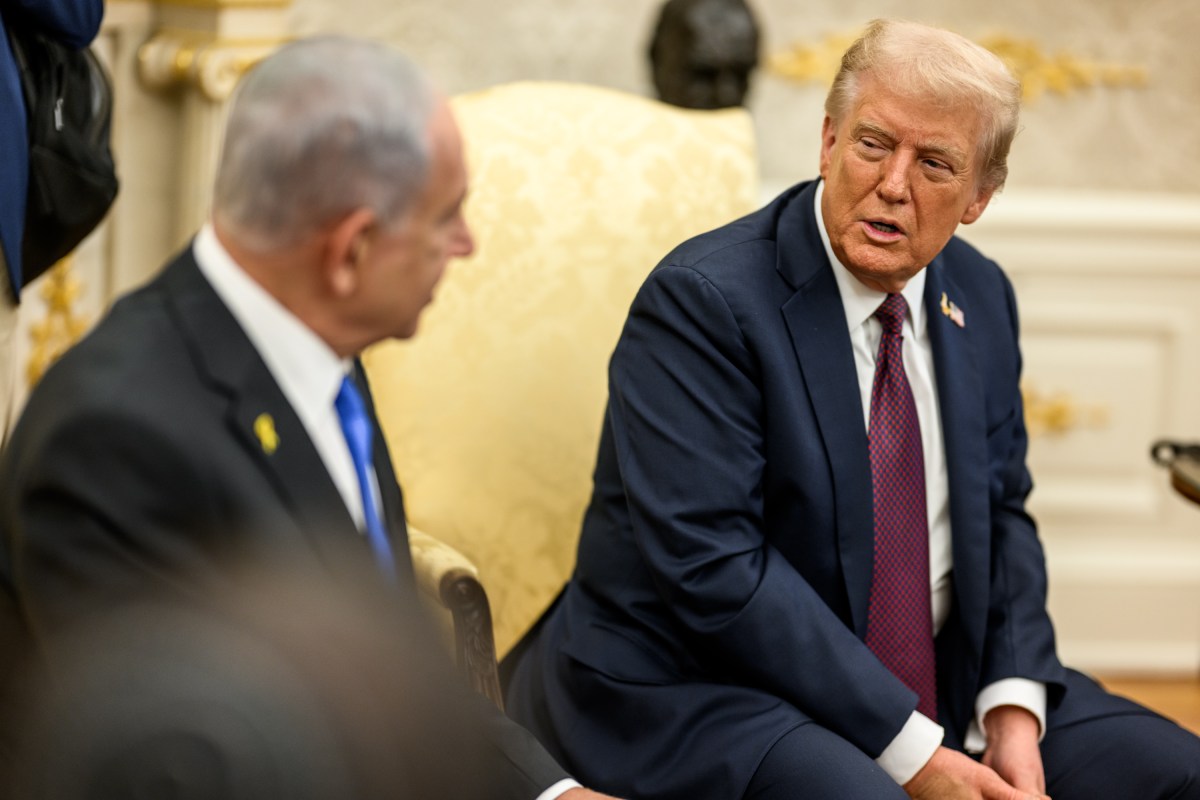
White House Summit: Trump and Netanyahu Align on Iran Strategy
In a high-stakes diplomatic encounter on February 11, 2026, President Donald Trump hosted Israeli Prime Minister Benjamin Netanyahu at the White House, signaling a unified front against escalating tensions with Iran. The private session, which lasted approximately three hours, focused primarily on the upcoming U.S.-Iran nuclear negotiations and the coordination of military readiness in the Middle East. Administration officials confirmed that the talks were characterized by a "strategic convergence" regarding the necessity of preventing Tehran from achieving nuclear breakout capabilities.
The summit occurs at a critical juncture for U.S. foreign policy. President Trump indicated that while diplomatic channels remain open for the scheduled nuclear talks, the window for a negotiated settlement is narrowing. To signal military readiness alongside these diplomatic efforts, the U.S. Defense Department is preparing the USS George H.W. Bush for potential deployment to the region. While an official order for a second carrier strike group has not been issued as of February 12, 2026, the move would bolster the presence of the USS Abraham Lincoln, which is currently the only carrier strike group deployed to the Middle East. This "dual-track" approach—combining intensive diplomacy with a visible increase in military posture—is intended to provide the U.S. delegation with maximum leverage during the upcoming sessions.
While Prime Minister Netanyahu did not address reporters directly during the visit, entering and exiting the White House via the South Lawn, official communications following the meeting emphasized the "unbreakable bond" between the two nations. Netanyahu’s position remains that any agreement with Iran must include more stringent oversight and the permanent dismantling of enrichment infrastructure. The discussion also touched upon the recent history of economic unrest within Iran, which U.S. intelligence suggests has placed the Iranian leadership under significant domestic pressure, potentially influencing their willingness to return to the bargaining table.
The January Jobs Report: A Complex Economic Landscape
The U.S. Department of Labor recently released the January 2026 employment data, painting a picture of an economy in a state of transition. While the headline figure of 130,000 jobs added surpassed the economist expectation of 70,000, the report highlighted underlying weaknesses that have sparked debate among economists and policymakers. The unemployment rate reached 4.3%, yet the broader 2025-2026 slowdown remains a primary concern for the administration.
The private sector served as the primary engine of growth, adding an estimated 164,000 jobs in January. However, these gains were partially offset by substantial losses in the public sector, including the loss of 34,000 federal jobs amid budget cuts and the ongoing restructuring of government agencies. The healthcare sector remained a bright spot, contributing 81,900 new positions to the total payroll. Despite these gains, analysts noted that 2025 marked the lowest growth in a non-recession year since 2003, with average hourly earnings increasing by 3.7% over the past 12
Legislative Defiance: House Votes to Rescind Canada Tariffs
In a significant blow to the administration’s trade policy, the U.S. House of Representatives voted on February 12, 2026, to rescind the President’s proposed tariffs on Canadian imports. The 219-211 vote followed a narrow defeat of a Republican procedural rule related to the tariffs a day earlier. The final passage saw six Republicans defect from the party to vote with Democrats: Representatives Don Bacon, Kevin Kiley, Thomas Massie, Brian Fitzpatrick, Dan Newhouse, and Jeff Hurd.
The legislative pushback reflects a growing divide within the party over protectionist measures and their impact on domestic retail and manufacturing sectors. Critics of the tariffs argued that the levies were contributing to a retail slowdown and increasing costs for American consumers. Markets reacted swiftly to the news, with retail stocks seeing a modest uptick as investors anticipated a stabilization of supply chain costs. However, the White House has signaled that the President may use executive authority to maintain certain trade restrictions, setting the stage for a potential constitutional showdown over the control of international trade policy.
Ghislaine Maxwell Deposition: Legal Standoff in D.C.
On February 9, 2026, Ghislaine Maxwell, the convicted former associate of Jeffrey Epstein, appeared virtually before the House Oversight Committee for a closed-door deposition. Maxwell, who is currently serving a 20-year sentence, invoked her Fifth Amendment rights against self-incrimination, refusing to answer the majority of questions posed by the committee. The deposition was part of an ongoing congressional inquiry into the Epstein network and its potential ties to various high-profile figures.
The White House has maintained a firm stance regarding Maxwell's legal status, dismissing any possibility of a pardon or sentence commutation. A spokesperson stated that the administration has no intention of intervening in the judicial process. Lawmakers expressed frustration at the lack of transparency during the proceedings, citing the continued need for closure for the victims of the Epstein network.
- Refusal to Testify: Maxwell invoked her Fifth Amendment rights on specific queries regarding the Epstein estate and historical flight logs.
- White House Response: The administration maintained a firm "no pardon" stance, distancing itself from the legal drama.
- Congressional Oversight: Lawmakers cited the need for transparency to provide closure for victims.
Fiscal Crisis Looms: Government Shutdown Odds Rise
The threat of a renewed government shutdown has persisted as negotiations over Department of Homeland Security (DHS) funding have reached a standstill. Following a brief partial shutdown in early February 2026, uncertainty remains high due to the impasse over border security spending and the reallocation of federal resources. Without a long-term funding measure, several key agencies could face a another lapse in appropriations by the end of the week.
The potential shutdown has become a lightning rod for political criticism. Opposition leaders have blamed the administration for a lack of clear fiscal direction, while the White House maintains that the responsibility lies with a divided Congress unable to agree on basic security funding. Economists warn that even a brief shutdown could dampen the 130,000-job growth momentum observed in January, further complicating the nation’s economic outlook for the first quarter of 2026.
Conclusion: A Convergence of Challenges
As the middle of February 2026 approaches, the U.S. government finds itself at a crossroads. The administration is simultaneously managing a delicate nuclear standoff with Iran, navigating a fractious relationship with Congress over trade and fiscal policy, and addressing the fallout from high-profile legal investigations. The economic data from January suggests a resilient but cooling labor market, while the looming threat of a government shutdown adds a layer of volatility to the national discourse.
The coming days will be pivotal for the Trump administration. The success or failure of the upcoming U.S.-Iran talks, the resolution of the DHS funding crisis, and the ongoing legislative battle over tariffs will likely define the political landscape for the remainder of the year. For now, the focus remains on the White House’s ability to project stability at home while maintaining a position of strength on the global stage.
Comments (0)
No comments yet. Be the first to share your thoughts!