The End of Spirit Airlines: The Collapse of a Budget Icon
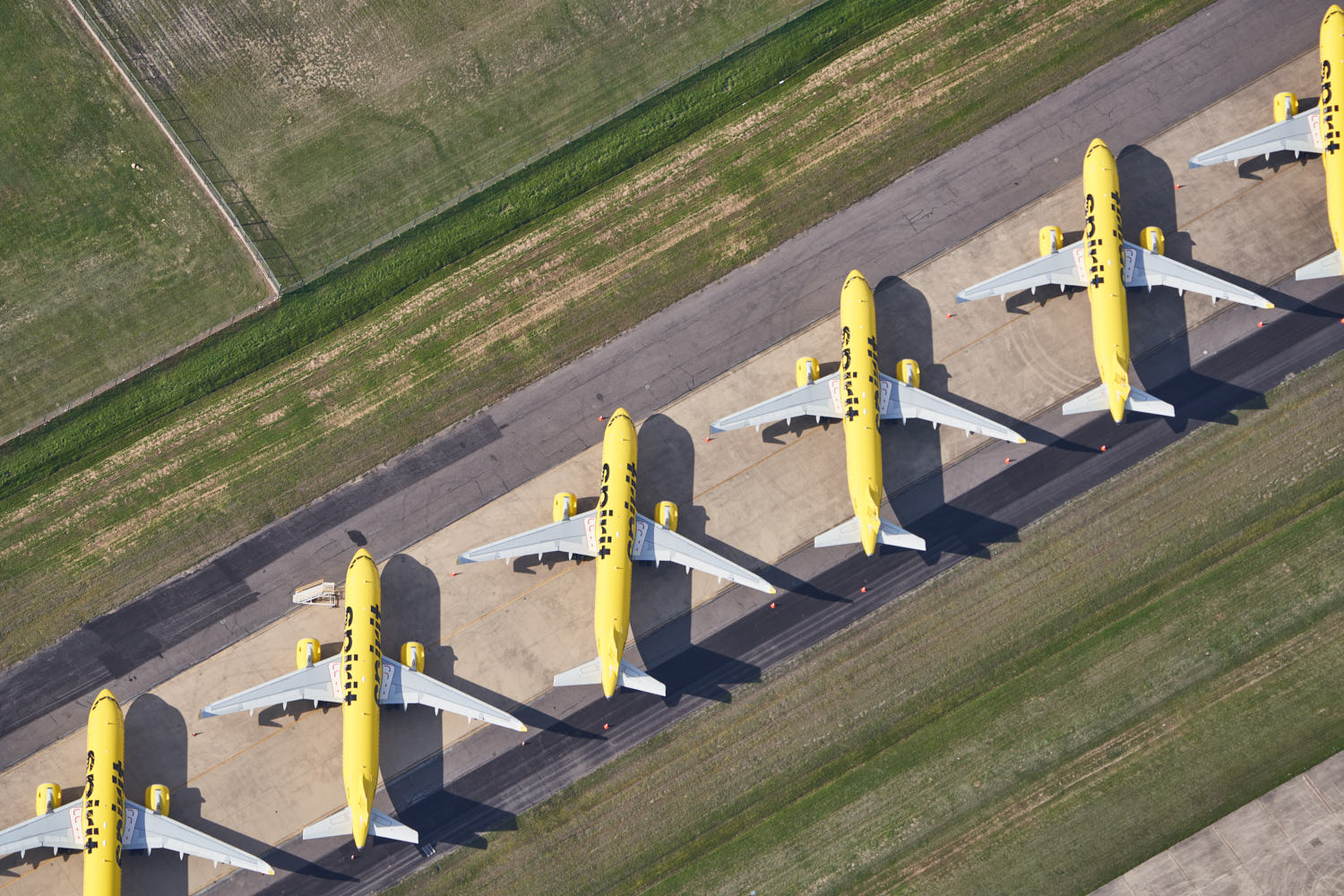
As of May 5, 2026, the era of Spirit Airlines has come to an abrupt and permanent end. The ultra-low-cost carrier (ULCC) officially ceased all operations on May 2, 2026, following the collapse of a last-minute $500 million government rescue package. The bailout failed after the airline’s bondholders rejected the proposed terms, leaving the carrier with no path forward after 34 years of service. Today, the "breaking news" is no longer about strategic maneuvers, but the immediate grounding of its fleet and the cancellation of all remaining flights, marking one of the most significant failures in the modern history of American aviation.
The company’s demise is the final chapter in a saga that began with the landmark January 2024 ruling by U.S. District Judge William Young, who blocked a $3.8 billion acquisition by JetBlue Airways on antitrust grounds. Judge Young’s decision was intended to protect budget-conscious travelers by preserving a "uniquely disruptive" force in the industry. However, after JetBlue and Spirit officially terminated the merger agreement in March 2024, Spirit was forced to face a "debt wall" of more than $1.1 billion in loyalty-backed bonds and other obligations maturing in 2025 and 2026. Ultimately, the airline’s inability to restructure these massive debts in a high-interest-rate environment proved fatal.
The Shadow of the Supreme Court: A Legal Landscape in Flux
While Spirit’s operations have ended, its final years were defined by a shifting federal regulatory environment. The 2024 Supreme Court decision in Loper Bright Enterprises v. Raimondo, which ended "Chevron deference," fundamentally altered how airlines challenged Department of Transportation (DOT) mandates. Under this new standard, courts no longer deferred to federal agencies' interpretations of ambiguous statutes, a shift that provided Spirit and its peers with temporary legal leverage.
In February 2026, the U.S. Court of Appeals for the Fifth Circuit vacated the DOT’s "junk fee" disclosure rule, a significant victory for the industry that Spirit had championed. However, this legal win came too late to save the carrier. While Spirit had argued that aggressive consumer protection mandates exceeded the authority granted to the DOT by Congress, the airline’s deteriorating financial position made these legal battles secondary to its immediate liquidity crisis. By the time the legal team might have petitioned the Supreme Court on further ancillary fee disclosures, the airline had already run out of cash.
Financial Performance and the Path to Insolvency
The urgency of Spirit’s situation was clear in its final financial disclosures. By early 2026, the carrier’s performance metrics had diverged sharply from industry averages, signaling an imminent collapse. The following table illustrates the dire financial state of Spirit Airlines in the months leading up to its May 2026 shutdown.
| Metric (Early 2026) | Spirit Airlines | Industry Average (Legacy) | Industry Average (ULCC) |
|---|---|---|---|
| Available Seat Miles (ASM) | 12.4 Billion | 55.2 Billion | 15.8 Billion |
| Cost per Available Seat Mile (CASM) | 9.2 Cents | 12.5 Cents | 8.8 Cents |
| Revenue per Available Seat Mile (RASM) | 8.4 Cents | 13.1 Cents | 8.9 Cents |
| Operating Margin (Jan 2026) | -17.0% | +6.5% | -1.5% |
| Equity Position | -$2.216 Billion | Positive | Positive |
The data reveals a catastrophic financial decline. In January 2026 alone, Spirit reported an operating margin of -17%, with combined net losses for January and February exceeding $258 million. Most critically, as of January 31, 2026, the airline reported a negative equity position of $2.216 billion, with total liabilities of $8.108 billion far outweighing its $5.892 billion in assets. This insolvency rendered a standard debt-to-equity ratio meaningless and made further private financing nearly impossible.
The Impact of Fleet Issues and Operational Hurdles
Operational challenges accelerated Spirit’s descent. A primary factor was the ongoing crisis involving Pratt & Whitney Geared Turbofan (GTF) engines, which power much of the Airbus A320neo fleet. Throughout 2024 and 2025, Spirit was forced to ground dozens of aircraft for inspections and repairs, leading to a massive reduction in capacity and revenue. While the airline received some compensation from Pratt & Whitney, the disruptions occurred as the airline was already reeling from the failed JetBlue merger. These groundings eventually led to the total cessation of service on May 2, 2026, as the airline could no longer sustain the costs of its remaining network.
Key Milestones in the Spirit Airlines Trajectory
The collapse of Spirit Airlines was the culmination of several years of financial and regulatory turmoil. The following list outlines the critical milestones leading to the shutdown:
- January 2024: U.S. District Court blocks the JetBlue-Spirit merger, citing harm to price-sensitive consumers.
- March 2024: JetBlue and Spirit officially terminate the merger agreement after an unsuccessful appeal process.
- June 2024: The Supreme Court’s Loper Bright decision ends "Chevron deference," altering the framework for challenging federal regulations.
- Late 2024: Spirit begins unsuccessful negotiations with bondholders to extend maturities on $1.1 billion in debt.
- February 2026: The Fifth Circuit Court vacates the DOT’s ancillary fee disclosure rule, a hollow legal victory for the struggling carrier.
- May 2, 2026: Spirit Airlines officially shuts down all operations and cancels all flights after a $500 million bailout package collapses.
The Consumer Perspective: A Market Without Spirit
For the traveling public, the shutdown of Spirit Airlines is a major blow. While the DOJ successfully blocked the JetBlue merger to preserve competition, the ultimate result has been the total removal of a major low-cost option. History suggests that the exit of a ULCC leads to immediate fare increases by legacy carriers on affected routes. Millions of budget-conscious passengers now face a market dominated by fewer players and higher prices.
Conclusion: The End of an Era
The news of May 5, 2026, is a somber reflection on the volatility of the airline industry. Spirit Airlines, once the "canary in the coal mine" for the ultra-low-cost model, has finally succumbed to the weight of its financial obligations and operational hurdles. Its inability to navigate the 2026 debt wall, despite a more favorable judicial environment for administrative challenges, serves as a stark reminder that legal victories cannot compensate for a lack of liquidity. For the first time in over three decades, Spirit’s yellow planes are no longer in the sky, and the future of affordable air travel in the United States faces its most uncertain chapter yet.
Comments (0)
No comments yet. Be the first to share your thoughts!