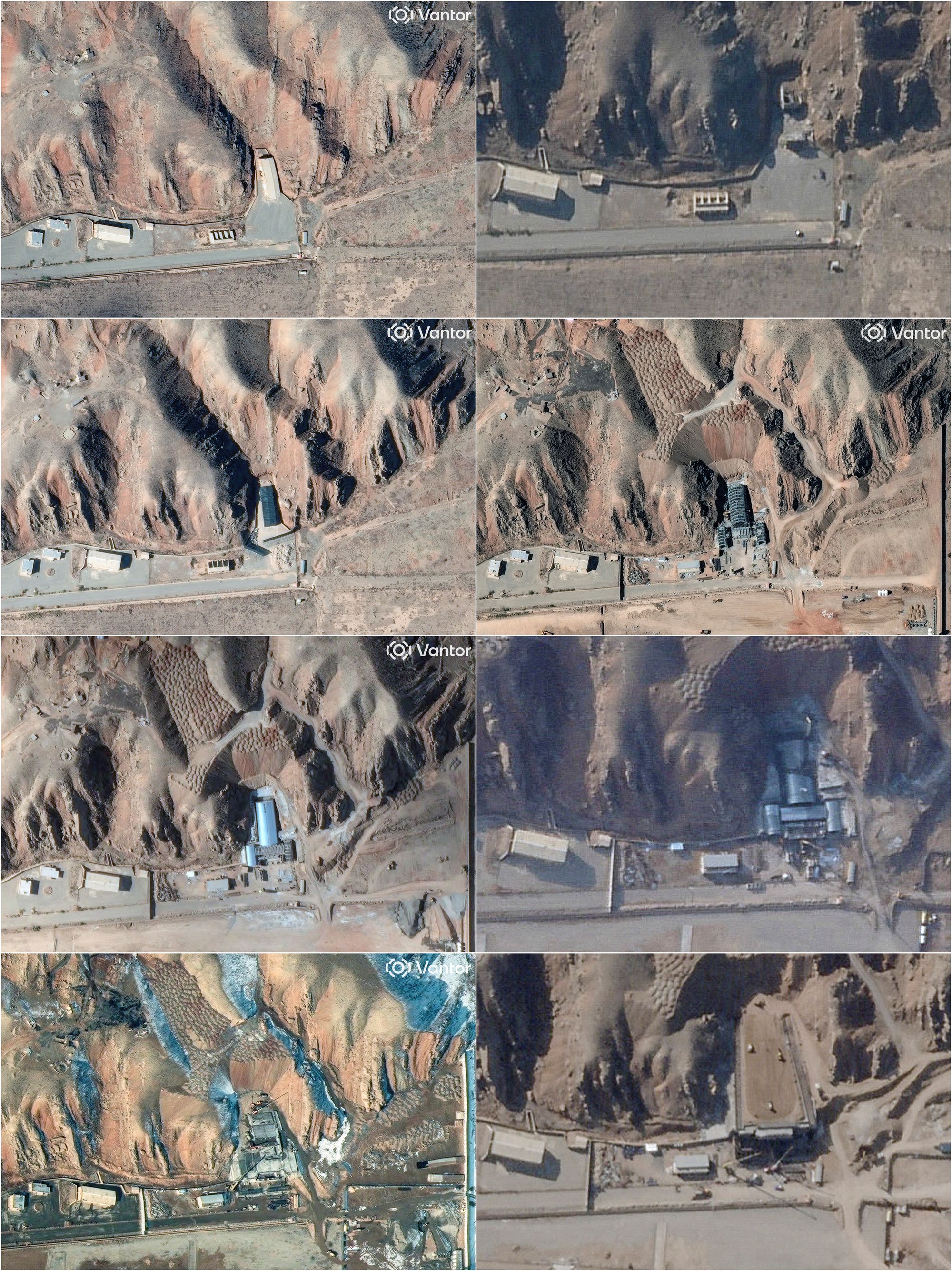
Overview of the Campaign: Targeting Strategic and Nuclear Infrastructure
As of March 7, 2026, the military campaign led by the United States and Israel against the Islamic Republic of Iran has entered a period of significant escalation. Following initial aerial bombardments that began on February 28, the coalition has expanded its operations to include systematic strikes against Iran’s ballistic missile capabilities and nuclear facilities. While early reports focused on neutralizing air defenses, the campaign has transitioned toward dismantling the logistical and industrial nodes of the Iranian military apparatus. This escalation follows the confirmed death of Supreme Leader Ali Khamenei, who was killed during the wave of strikes on March 2.
The current phase of operations marks a strategic shift toward more precise, sustained strikes against hardened targets, including missile production facilities and drone assembly plants. This effort aims to permanently degrade Iran’s ability to replenish its arsenal and project power through its ballistic missile program. Coalition forces have reportedly achieved significant control over Iranian airspace, facilitating thousands of strikes across the country. Reports indicate that U.S. B-52 bombers alone have hit over 1,700 sites, while Israeli forces have conducted 1,600 sorties, utilizing more than 4,000 munitions.
The coalition is now focusing on the "foundations of the regime's survival," targeting the industrial infrastructure that has sustained the Islamic Revolutionary Guard Corps (IRGC) for decades. While the first days of the conflict focused on immediate tactical threats, the current operations are designed to ensure that the Iranian military cannot recover in the short to medium term. President Donald Trump officially announced the strikes on March 2, following a week-long delay intended to allow for a final diplomatic effort regarding a 10-year uranium enrichment halt.
Military Developments and Regional Retaliation
The intensification of coalition strikes has prompted a multi-axis retaliatory response from Iranian forces and their regional proxies. Reports indicate escalating retaliatory attacks, including a confirmed drone strike targeting the U.S. embassy in Riyadh. While no injuries were reported in that specific incident, the strike represents a persistent capability to strike back despite the degradation of Iran's central command structure.
The scope of the conflict has widened to include infrastructure and diplomatic outposts across several countries. Notably, on March 3, an Iranian drone strike hit the U.S. consulate in Dubai, causing visible fires and significant disruption. In response to the rising tensions, the U.S. is currently evacuating thousands of Americans from 14 countries via military and charter flights. This regional instability has created a complex security environment, with the following table summarizing key metrics as of the end of the first week of conflict:
| Metric | Status/Value (March 6, 2026) | Source/Context |
|---|---|---|
| Total Coalition Strikes | Thousands | Includes 1,700+ B-52 targets and 1,600+ Israeli sorties |
| Oil Price (Brent Crude) | Soaring Prices | Significant jump since conflict start |
| U.S. Domestic Gas Price | Increasing | Reflecting global energy volatility |
| U.S. Public Disapproval | 56% (excluding "don't knows") | NPR/PBS News/Marist Poll (March 3-5) |
| Iranian Leadership Status | Internal Deliberations | Assembly of Experts (Khamenei death confirmed March 2) |
U.S. Policy and Strategic Objectives
President Donald Trump has maintained a firm stance on the necessity of the campaign, citing an "imminent nuclear threat" and the failure of diplomacy as the primary triggers for the intervention. The administration has emphasized the need to destroy Iran's nuclear program, including sites like Natanz, and has promised the use of "virtually unlimited" weaponry to achieve its goals. However, officials have not released a specific timetable for the duration of the primary military objectives.
Despite the rapid progress claimed by the Pentagon, the ultimate endgame remains a subject of intense debate within Washington. Critics and some analysts question whether the goal is a total transformation of the Iranian state or a limited, albeit massive, degradation of its military capabilities. Regarding the future of Iranian leadership, the U.S. maintains that the selection process remains an internal matter for Iran's Assembly of Experts, though Washington remains opposed to any successor continuing the policies of the late Ali Khamenei.
Geopolitical Alignments and Economic Fallout
The international community remains deeply divided over the escalation. Saudi Arabia, a long-time regional rival of Iran, has vowed a military response to any Iranian strikes on its soil, backed by U.S. security guarantees. Crown Prince Mohammed bin Salman has reportedly coordinated closely with Washington to ensure the protection of energy infrastructure, though the threat to the Strait of Hormuz remains a primary concern for global markets. On March 6, Qatar’s Energy Minister, Saad al-Kaabi, announced that Qatar had halted LNG production following Iranian strikes and warned that all Gulf energy exports could be halted within weeks if the war continues, noting it would take months to return to a normal delivery cycle once production restarts.
In Europe, the United Kingdom has provided critical support for the campaign. After initially denying the request, Prime Minister Keir Starmer granted permission on the evening of March 1 for the U.S. to utilize British bases, including RAF Fairford and Diego Garcia, for defensive operations against Iranian missiles and drones. This support reflects a commitment to neutralizing immediate threats, even as broader European anxiety persists over a protracted war that could trigger new waves of migration and energy shortages.
The economic impact is already being felt globally, with energy prices soaring since the start of the conflict. These economic pressures are fueling domestic skepticism. Protests have emerged across several U.S. cities, with veterans' groups and active-duty personnel expressing vocal opposition. Polling conducted March 3-5 indicates that 56% of the American public opposes U.S. military action in Iran, a figure that suggests a significant challenge for the administration in maintaining domestic support.
The Iranian Domestic Front and Succession
Inside Iran, the situation is characterized by a mix of chaos and organized defiance. Following the death of the Supreme Leader on March 2, the process for selecting a successor has moved behind closed doors within the Assembly of Experts. While the central government attempts to maintain control over the regular military and the remaining IRGC units, it is simultaneously issuing stern warnings to secessionist movements in the border regions.
The humanitarian situation is deteriorating rapidly in major urban centers. With air defenses crippled, many residents have fled Tehran and other major cities, fearing that the targeting of IRGC sites in residential or industrial areas will lead to significant collateral damage. The closure of international embassies and the suspension of most commercial flights have left thousands of foreign nationals stranded, with the U.S. urging all remaining citizens to evacuate the region as diplomatic presence is scaled back.
Strategic Uncertainties and the Path Forward
As the conflict enters the second week of March, several critical uncertainties remain:
- The Successor Crisis: While the Assembly of Experts deliberates on a new leader, the lack of a clear successor may lead to a prolonged power struggle or a more radicalized defensive posture.
- Proxy Escalation: The regional reach of Iranian proxies suggests that even if Iran's domestic military is crippled, the network of militias could continue to target U.S. interests and allies for months or years.
- Economic Thresholds: It remains to be seen how high energy prices can climb before the coalition faces significant diplomatic pressure from Asian and European allies to halt operations.
- Regional Volatility: The potential for ethnic militias to seize territory remains a volatile factor that could draw neighboring countries further into the conflict.
The coalition's focus on missile production hubs signals a commitment to a "maximum pressure" military strategy. However, without a clear plan for post-conflict governance and with rising domestic and international opposition, the transition from military dominance to regional stability remains elusive. The coming days will be decisive in determining whether the conflict remains a contained aerial campaign or spirals into a wider regional war.
Military operations continue around the clock, with reports that additional carrier strike groups are moving into the North Arabian Sea to provide sustained sortie rates. As of the morning of March 7, no ceasefire negotiations are on the horizon, and both the coalition and the Iranian leadership appear dug in for a protracted engagement.
Comments (0)
No comments yet. Be the first to share your thoughts!