The Genesis of a Digital Phenomenon
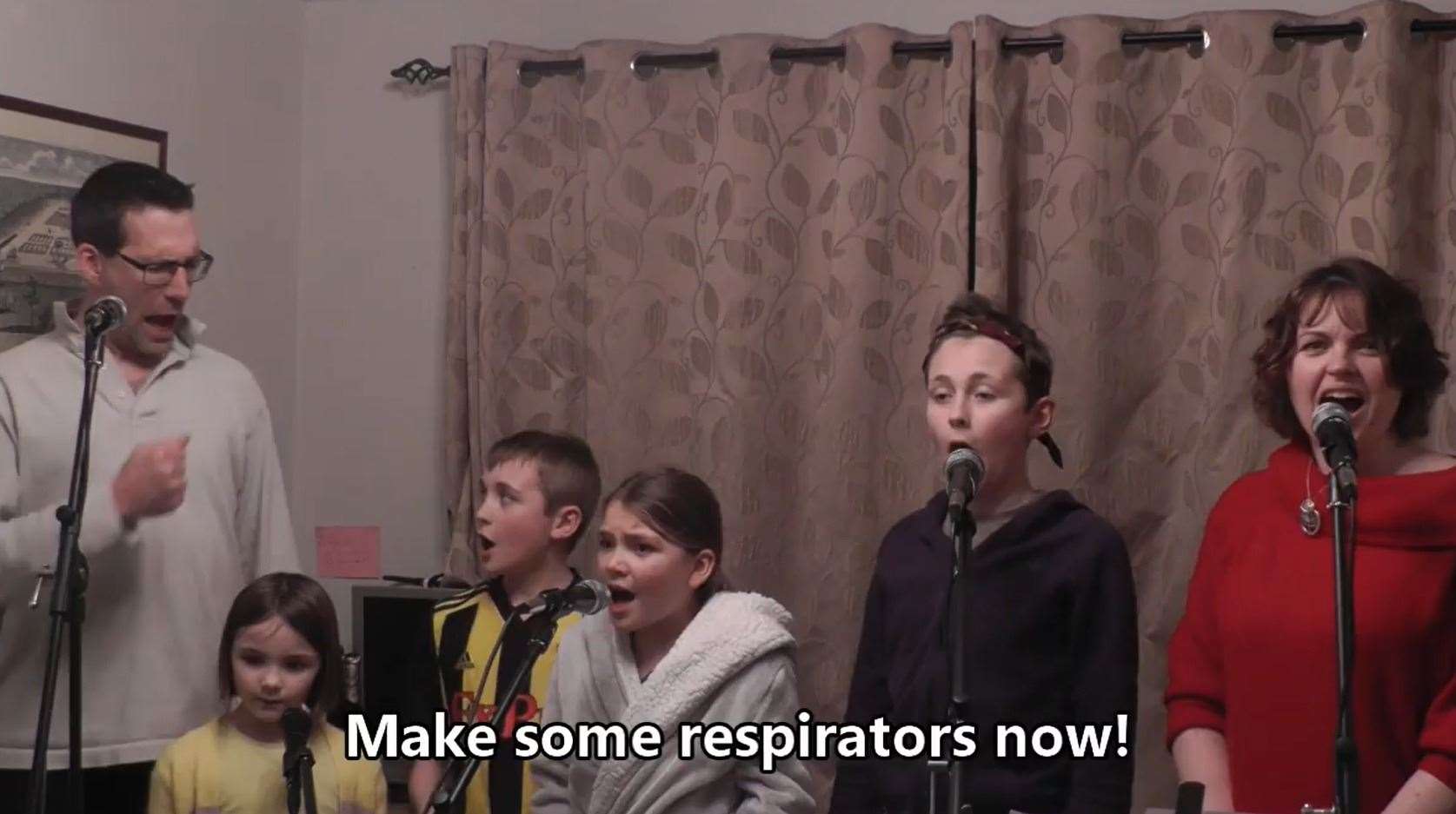
In the chronological history of the early 2020s, few moments captured the intersection of domestic frustration and creative resilience as poignantly as the viral surge of the Marsh family. Based in Kent, United Kingdom, Ben and Danielle Marsh, along with their four children—Alfie, Thomas, Ella, and Tess—became the faces of the #LockdownStories movement on March 31, 2020. Their adaptation of the iconic "One Day More" from Claude-Michel Schönberg’s musical Les Misérables served as a cultural touchstone during the initial waves of the COVID-19 pandemic. Today, as we look back from April 2026, the performance remains a definitive example of how digital platforms can transform private family moments into global communal experiences.
The video, originally shared to entertain friends and extended family, quickly transcended its private intent. It featured the family in their living room, utilizing the sweeping, operatic structure of the original Broadway and West End score to narrate the mundane yet overwhelming challenges of life under quarantine. From the struggle with online grocery slots to the exhaustion of remote schooling, the Marsh family’s lyrics replaced Victor Hugo’s themes of revolution and romantic despair with the relatable "battle" of household confinement. This shift from the grand scale of 19th-century France to the micro-scale of a suburban living room resonated with millions, propelling the video into the stratosphere of #ViralNews.
Lyrical Adaptation and Cultural Resonance
The brilliance of the Marsh family’s rendition lay in its lyrical precision. While the original "One Day More" is a complex polyphonic piece where multiple characters express their conflicting hopes and fears, the Marsh version synchronized these voices to represent a modern family unit. The lyrics were meticulously rewritten to reflect the specificities of the March 2020 lockdown. Key themes included:
- The Frustration of Remote Connectivity: References to "Skype" and the technical failures of digital communication replaced the revolutionary fervor of the ABC Café.
- Educational Anxiety: The children’s verses focused on the lack of traditional schooling and the looming uncertainty of exams, a sentiment that echoed across households worldwide.
- Domestic Logistics: Lines regarding the scarcity of basic goods and the difficulty of securing delivery slots became instant comedic highlights.
- Intergenerational Separation: The lyrics touched upon the inability to visit grandparents, grounding the humor in a layer of genuine emotional longing.
By using Les Misérables—a show synonymous with endurance and the human spirit—the family tapped into a pre-existing emotional reservoir. The hashtag #LesMisérables, which typically tracks theatrical performances and literary analysis, saw a significant shift in usage as the video trended, blending high art with the gritty, often humorous reality of "stay-at-home" orders. The contrast between the formal, operatic delivery and the informal, everyday subject matter created a "cognitive dissonance" that is often a hallmark of high-impact viral content.
Quantitative Impact: The Metrics of Virality
The trajectory of the Marsh family’s video provides a textbook case study for digital media analysts. Within days of its upload, the video amassed millions of views across Facebook and YouTube. The following table illustrates the comparative reach and engagement metrics that defined the video’s initial peak and its lasting legacy in the #ViralNews category.
| Metric Category | Initial 72-Hour Impact (Est.) | Long-Term Digital Footprint (2020-2026) |
|---|---|---|
| Total Views (Cross-Platform) | 5,000,000+ | 25,000,000+ |
| Social Media Shares | 250,000+ | 1,200,000+ |
| Mainstream Media Features | BBC, CNN, NBC, The Guardian | Documentary and Academic Citations |
| YouTube Subscriber Growth | 10,000+ | 150,000+ (Marsh Family Channel) |
The data suggests that the video was not merely a "flash in the pan." Instead, it established the Marsh family as consistent creators. Their YouTube channel, "Marsh Family," became a repository for subsequent parodies and original songs, maintaining a steady audience long after the initial lockdown restrictions were lifted. This transition from "accidental viral stars" to "established digital creators" highlights the changing nature of celebrity in the mid-2020s, where authenticity and relatability often outweigh traditional production values.
The Role of #LockdownStories in Digital Archiving
The hashtag #LockdownStories served as a decentralized archive of the human experience during the pandemic. While much of the news during that period was dominated by epidemiological data and political shifts, #LockdownStories provided a bottom-up perspective. The Marsh family’s contribution was significant because it utilized humor as a coping mechanism, a phenomenon well-documented in psychological studies of crisis management.
Journalistically, the story of the Marsh family falls into the "Human Interest" category, yet its implications are broader. It demonstrated the power of "User-Generated Content" (UGC) to compete with, and often outperform, professional entertainment. During a period when West End and Broadway theaters were dark, the Marsh family provided a form of "digital theater" that filled the vacuum. This led to a broader discussion within the arts community about the accessibility of performance and the potential for digital platforms to democratize musical theater.
The Psychology of Viral Humor During Crises
Why did this specific video go viral among thousands of other lockdown parodies? Experts in digital culture point to three primary factors:
- The "Relatability" Quotient: The setting—a cluttered, normal living room—removed the barrier between the performer and the audience. Viewers saw their own lives reflected in the background.
- Musical Competence: Unlike many viral videos that rely on "cringe" humor, the Marsh family demonstrated genuine musical talent. Their harmonies were tight, and their timing was professional, which commanded respect and repeated viewing.
- Catharsis through Parody: Les Misérables is a story about overcoming hardship. By parodying it, the family offered a form of catharsis, allowing viewers to laugh at a situation that was otherwise frightening and restrictive.
In the context of #ViralNews, the Marsh family provided a "palate cleanser" to the often-grim news cycle of 2020. Their story was devoid of the "Strategic Shifts" or "Global Power Dynamics" often found in hard news, focusing instead on the universal experience of being "stuck" with one's family. This universality is what allowed the video to travel across linguistic and cultural borders, appearing on news feeds from London to Tokyo.
Legacy and the 2026 Perspective
As of April 19, 2026, the Marsh family continues to be cited in retrospectives of the pandemic era. While no new viral developments have emerged from the family in the last 24 hours, their body of work remains a significant part of the digital cultural canon. The #LesMisérables hashtag continues to see sporadic spikes whenever the family releases a new adaptation or when the original musical reaches a milestone, showing a permanent link between the professional stage and the Marsh’s Kent living room.
The #LockdownStories hashtag, while largely dormant in 2026, serves as a digital time capsule. Researchers and historians use these stories to understand the social fabric of the early 2020s. The Marsh family’s "One Day More" is often the lead exhibit in such studies, representing the "Creative Pivot" that millions of individuals made when faced with unprecedented isolation.
Conclusion: The Enduring Power of the Living Room Stage
The story of the Marsh family and their Les Misérables parody is more than just a viral news snippet; it is a testament to the endurance of creativity. In an era where news is often characterized by volatility and conflict, the #LockdownStories movement provided a necessary counter-narrative of solidarity and wit. As we move further away from the events of 2020, the image of a family singing in harmony amidst the chaos of a global shutdown remains one of the most enduring symbols of the decade. The Marsh family didn't just change the lyrics to a song; they provided a soundtrack for a world in waiting, proving that even when the doors are locked, the music does not have to stop.
Their journey from a viral Facebook post to a respected YouTube channel underscores the shift in how "Viral News" is consumed and remembered. It is no longer just about the 15 minutes of fame; it is about the ability to build a community around shared experiences. In the landscape of 2026, the Marsh family stands as a reminder that sometimes, the most important news isn't happening in the halls of power, but in the living rooms of ordinary people finding extraordinary ways to cope.
Comments (0)
No comments yet. Be the first to share your thoughts!