South Korea Summons Russian Defense Attaché Following Strategic Bomber Flight Near Ulleungdo
SEOUL — South Korean authorities summoned a high-ranking Russian defense official following an incident in which Russian military aircraft entered the Korea Air Defense Identification Zone (KADIZ) and approached close to South Korean territory, according to regional reporting.
The diplomatic response followed a 10-hour mission conducted on November 24, during which two Russian Tu-160 supersonic strategic bombers and accompanying fighter escorts flew over international waters in the East Sea. Moscow released footage of the flight on November 25, describing the operation as a pre-planned and routine training exercise that strictly adhered to international airspace regulations.
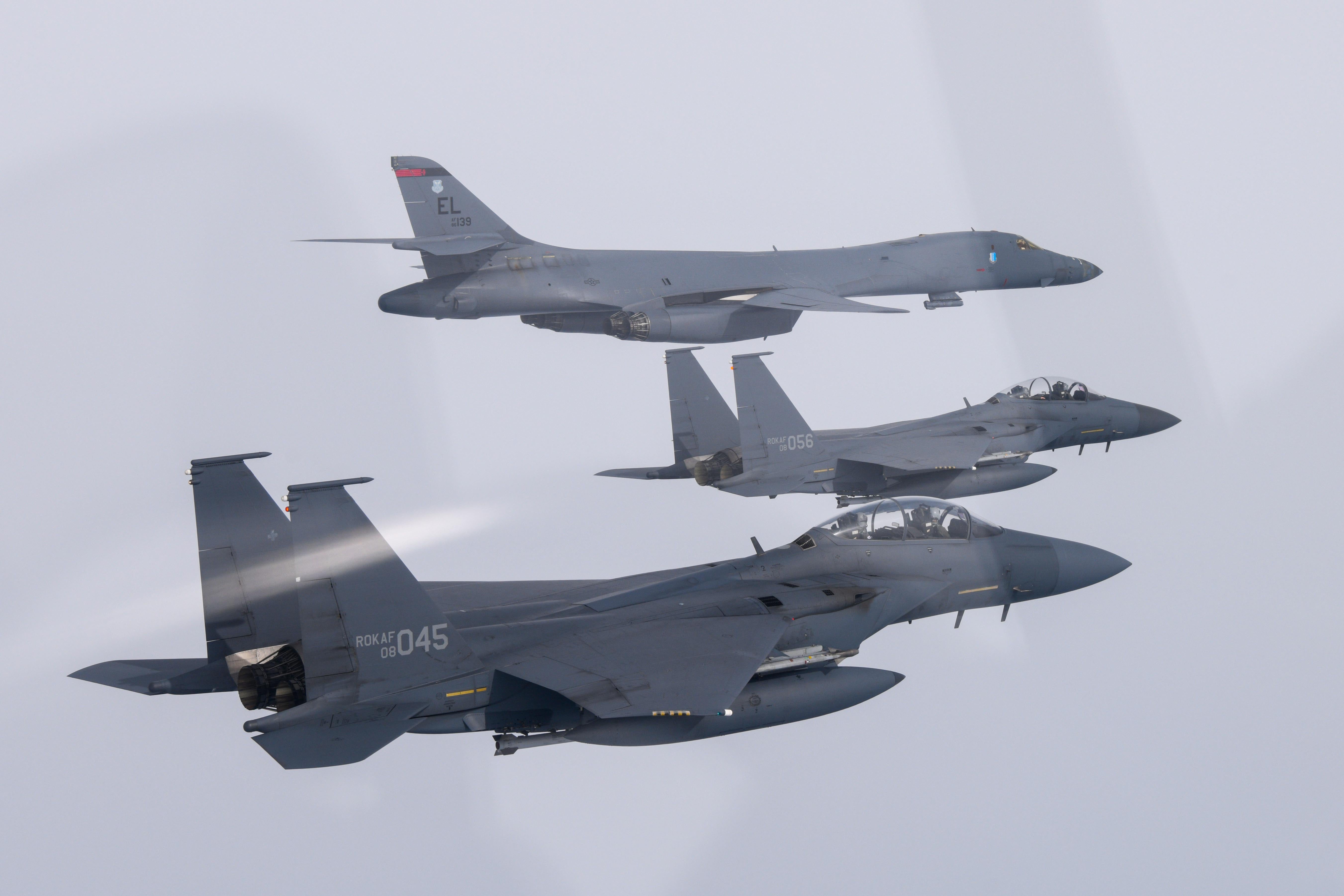
According to South Korean military assessments, the Russian formation—consisting of two nuclear-capable Tu-160 bombers, Su-35S jets, and Su-30SM fighters—traveled south toward Ulleungdo Island. Officials in Seoul reported that the aircraft entered the KADIZ without prior notification and came within approximately 24 kilometers of the island itself, approaching within a very short distance of the outer boundary of South Korean sovereign airspace before executing a turn away from the area. In response to the unannounced approach, the South Korean military scrambled F-15K fighter jets to monitor the formation.
The maneuver prompted swift diplomatic pushback from Seoul. South Korean officials called in Russia’s defense attaché, Colonel Nikolai Marchenko, to formally lodge a complaint and express strong regret over the flight path and the lack of advance notice.
While Moscow maintained that the flight remained entirely over international waters and posed no threat, security analysts cited in regional coverage offered differing interpretations of the event. Some specialists questioned whether the close approach served as a deliberate probe of local air defenses or tactical training for operations near the Korean Peninsula. Other observers suggested that the sharp trajectory change near Ulleungdo might have stemmed from a navigation or flight-planning discrepancy.
The Tu-160 is a heavy, long-range strategic bomber capable of carrying nuclear payloads and supersonic cruise missiles. While the aircraft did not violate South Korean territorial airspace, the close proximity of nuclear-capable strategic assets to populated islands has heightened vigilance among defense planners in Seoul amid broader security complexities in the region.
Comments (0)
No comments yet. Be the first to share your thoughts!