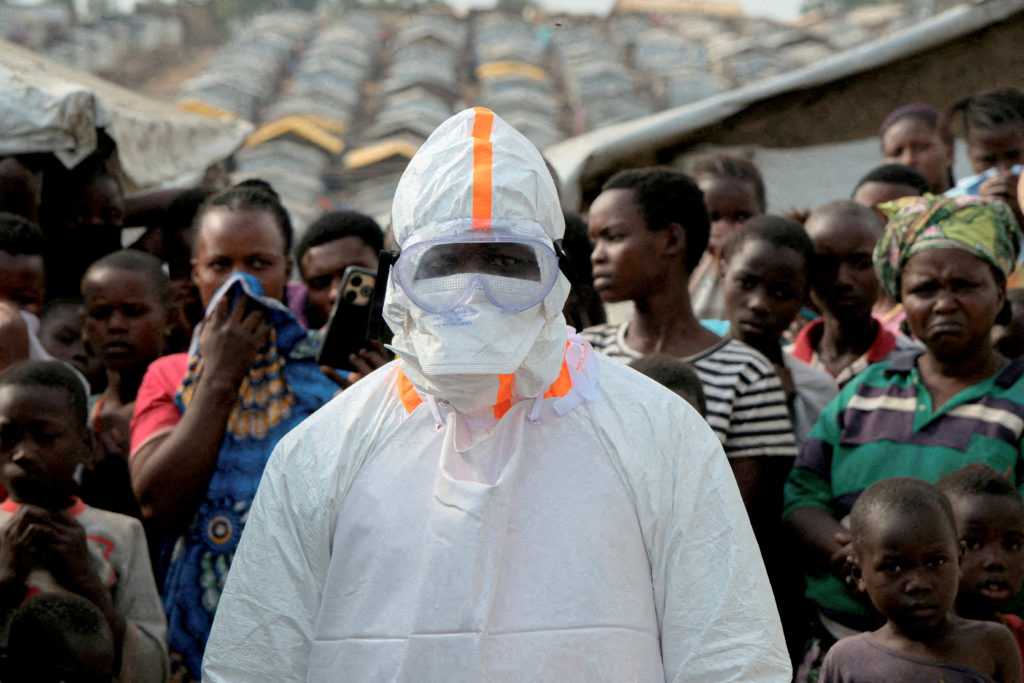
The regional Ebola outbreak in Central and East Africa expanded further on Sunday as health authorities in the Democratic Republic of the Congo confirmed the virus has reached an eighth province, while Kenya reported its eighth infection.
According to the DRC Ministry of Health, two new cases of Ebola, including one fatality, were identified in North Ubangi province. Both patients are men in their twenties residing in the Wapinda health zone, which shares a border with Bas-Uele, another previously affected province. North Ubangi borders the Central African Republic, introducing a new geographic front to the ongoing health response amid regional population displacements linked to armed violence.
The latest expansion brings the number of affected DRC provinces to eight, following earlier confirmations in North Kivu, Ituri, Haut-Uele, Tshopo, South Kivu, Bas-Uele, and South Ubangi. Cumulative totals for the outbreak have climbed to 9,415 cases and 4,536 deaths, driven heavily by transmission in eastern provinces such as Ituri.
Kenya Reports New Confirmed Case in Isolation
Meanwhile, the Kenyan Ministry of Health confirmed its eighth Ebola case on Sunday after an individual under quarantine tested positive for the virus. Health officials identified the patient as a 49-year-old healthcare attendant who had previously provided care for Kenya's index patient—a traveler who arrived from the DRC via Uganda before passing away at Nairobi Hospital.
Kenyan health authorities emphasized that the newly confirmed patient had been isolated in quarantine prior to testing positive. Officials stated there is currently no evidence of community transmission associated with this case, though monitoring remains active along key transit corridors connecting the DRC, Uganda, and Kenya.
Background on the Current Epidemic
The ongoing outbreak represents one of the most geographically dispersed viral waves in the region in recent years, testing cross-border containment frameworks and public health surveillance systems. International health agencies continue to support local ministries in tracking transmission chains, managing treatment centers, and enforcing screening protocols at vulnerable border crossings.
Comments (0)
No comments yet. Be the first to share your thoughts!