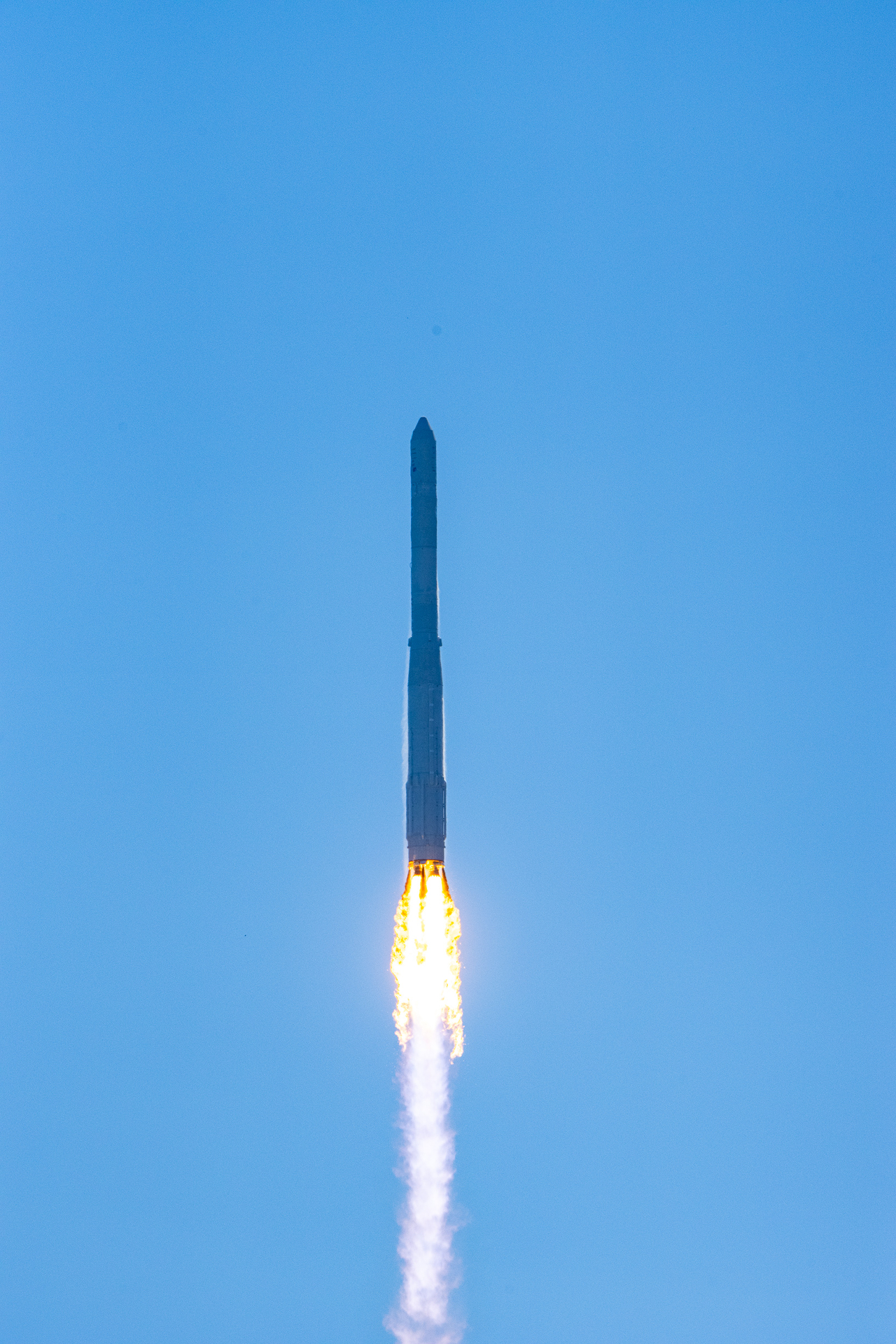
South Korea's Fifth Nuri Mission Achieves Orbit
South Korea successfully executed the fifth launch of its homegrown KSLV-II Nuri space vehicle on October 7, 2026, lifting off at 12:25 p.m. local time from the Naro Space Center in Goheung, South Jeolla Province. The three-stage rocket carried 15 satellites into low Earth orbit, marking the highest number of payloads ever deployed in a single mission by the country's domestic space program.
The launch was overseen by Oh Tae-seok, administrator of the Korea AeroSpace Administration (KASA). Telemetry and flight data were monitored and tracked jointly by the Korea Aerospace Research Institute from control facilities located in South Korea and Palau.
Payload Composition and Technical Objectives
The mission's primary cargo consisted of 15 spacecraft designed for Earth observation, scientific research, and technological testing. According to mission parameters, the manifest included:
- Five NEONSAT microsatellites (numbered 2 through 6), forming the core of South Korea's first domestically launched microsatellite constellation dedicated to environmental monitoring and national safety.
- Ten secondary CubeSats supplied by various institutional and commercial operators.
A critical technical objective of the flight was the sequential deployment of the five NEONSAT spacecraft. To prevent potential orbital collisions among satellites sharing identical operational parameters, controllers scheduled the releases at intervals of roughly 35 to 40 seconds.
Initial post-launch telemetry confirmed that the rocket successfully achieved its target orbit and initiated payload separation. Subsequent reporting from South Korean authorities verified that all 15 satellites were successfully released. The final two CubeSats separated approximately 17 minutes after liftoff, concluding the deployment phase of the flight.
Strategic Growth for National Space Infrastructure
This mission represents the first time Nuri has been utilized to deploy multiple primary satellites operating under a unified constellation mission. The successful deployment strengthens South Korea's independent capabilities in Earth observation and expands domestic launch infrastructure.
Developed entirely with domestic technology, the Nuri vehicle series serves as the backbone of South Korea's long-term strategy to secure autonomous access to space. Program officials indicated that data gathered from this mission will support the continued scaling of the country's satellite networks and upcoming aerospace engineering initiatives.
Comments (0)
No comments yet. Be the first to share your thoughts!