The Current Geopolitical Landscape: A State of Protracted Conflict
As of April 25, 2026, the Middle East remains the focal point of global geopolitical attention, entering the eighth week of a high-intensity conflict that has fundamentally restructured regional alliances and global energy security. Following the initial kinetic phase of Operation Epic Fury, which commenced on February 28, 2026, the theater of operations has transitioned into a complex war of attrition. While no major new military offensives were reported in the last 24 hours, the strategic environment is defined by the aftermath of coordinated US-Israeli strikes on Iranian sovereign territory and the subsequent Iranian retaliations across the Persian Gulf.
The conflict, which saw the elimination of Supreme Leader Ali Khamenei during the initial strikes, has moved beyond a localized exchange. Analysts currently describe the situation as a "strategic stasis," where both the US-led coalition and the remaining Iranian military apparatus are recalibrating their positions. Ali Larijani, the Secretary of Iran's Supreme National Security Council, was confirmed killed in an Israeli airstrike near Tehran on March 17, 2026. His son, Morteza Larijani, was also killed in the same strike. The primary focus for international observers today is the continued disruption of the Strait of Hormuz and the resulting economic pressure on both Western markets and the Gulf Cooperation Council (GCC) states. Diplomatic efforts, led largely by the United Nations and regional actors, remain at an impasse as the security requirements of the belligerents continue to diverge.
The Genesis of Operation Epic Fury and the Military Campaign
The military campaign known as Operation Epic Fury began at approximately 7:00 AM local time on February 28, 2026. This operation involved a series of sophisticated, multi-layered airstrikes conducted by US and Israeli forces. The primary objectives were the degradation of Iran’s nuclear enrichment capabilities, the neutralization of its long-range missile silos, and the decapitation of its political and military leadership. According to defense briefings, the strikes successfully targeted hardened facilities in Natanz and Fordow, as well as the Leadership House compound in Tehran, where Supreme Leader Ali Khamenei was killed.
The loss of the Supreme Leader early in the campaign created a temporary power vacuum within the Islamic Republic, yet the Islamic Revolutionary Guard Corps (IRGC) managed to maintain operational control over its proxy networks and domestic defense systems. By mid-March, the conflict had expanded to include significant naval engagements and drone warfare, as Iran sought to project power beyond its borders to offset the damage sustained on the mainland. This period was marked by a shift from defensive posturing to aggressive retaliation against regional infrastructure.
Iranian Retaliation and the Targeting of Energy Infrastructure
In response to the opening strikes, Iran executed a series of retaliatory maneuvers aimed at the economic interests of the United States and its regional allies. The most significant of these occurred on March 18, 2026, when Iranian forces targeted Qatar’s Pearl GTL (Gas-to-Liquids) facility, operated by Shell and QatarEnergy. This strike damaged a production train and forced a halt in operations, marking a turning point in the conflict and causing significant ripple effects across global energy markets.
The retaliation continued into April, with Iranian forces utilizing a combination of loitering munitions and ballistic missiles to target regional oil processing hubs and desalination plants. While regional missile defense systems intercepted a majority of the incoming threats, the psychological and economic impact was profound, forcing a reassessment of security protocols across the Arabian Peninsula.
The Strait of Hormuz and Global Economic Consequences
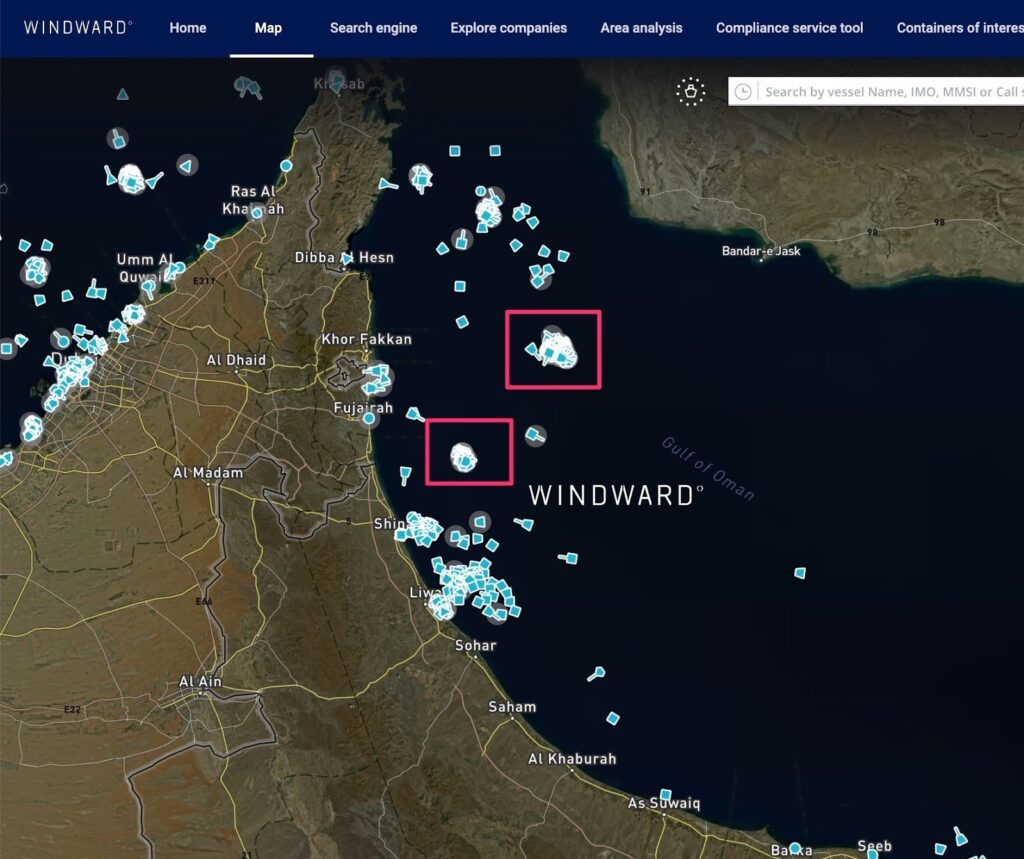
Perhaps the most consequential development of the conflict occurred in early March 2026, when a major crisis led to the halting of shipping through the Strait of Hormuz. By deploying sea mines and anti-ship cruise missiles along the narrow waterway, Iranian forces effectively halted approximately 20% of the global oil trade. This move was designed to leverage global economic stability against the military pressure exerted by the US-Israeli coalition. The impact on energy markets was immediate and sustained.
By mid-March, energy markets were severely disrupted. While analysts monitored the extreme volatility, the closure of the primary export route for hydrocarbon wealth led to significant downward revisions in GDP projections for GCC nations. Goldman Sachs has projected a staggering 14% GDP decline for both Qatar and Kuwait for the fiscal year 2026 if the blockade persists. Furthermore, the firm forecasted a 3% contraction for Saudi Arabia and a 5% contraction for the United Arab Emirates.
| Country | Projected GDP Decline (2026) | Key Infrastructure Impacted | Strategic Response |
|---|---|---|---|
| Qatar | 14% | Pearl GTL Facility, South Pars Field | Terminated mediation with Iran |
| Kuwait | 14% | Northern Oil Fields | Hardened defense posture |
| Saudi Arabia | 3% | East-West Pipeline (Overloaded) | Urged US to "neutralize Iran" |
| UAE | 5% | Fujairah Bunkering Hub | Increased air defense spending |
The Shift in GCC Diplomacy: From Mediation to Confrontation
The ongoing conflict has fundamentally altered the diplomatic landscape of the Persian Gulf. Prior to February 2026, several GCC states, most notably Qatar, had attempted to maintain a role as mediators between Tehran and Washington. However, the direct strikes on Qatari energy assets and the perceived Iranian threat to the South Pars gas field ended this era of neutrality. By mid-March, a consensus had emerged among Gulf nations, urging the United States to take decisive action to "neutralize" the Iranian threat.
This shift was codified in the UN Security Council Resolution 2817, sponsored by Bahrain on behalf of the GCC and Jordan, and passed on March 11, 2026. The resolution, which received 13 votes in favor (with China and Russia abstaining), condemned Iran's attacks on GCC states and the threats to maritime security. While the resolution addressed the escalation and the need for a restoration of maritime security, its implementation remains stalled due to the ongoing military reality on the ground.
The Northern Front: Escalation in Lebanon
While the primary conflict involves Iran, the northern front in Lebanon has seen a significant escalation. In late March, the Israeli defense establishment signaled an expansion of operations to prevent Hezbollah from launching cross-border attacks. While Hezbollah sources claim the clashes remain largely confined to the border regions, the movement of Israeli armored divisions suggests a long-term intention to reshape the security dynamics of the region.
The situation in Lebanon is complicated by the presence of Iranian advisors and the potential for a wider regional spillover. However, as of April 25, the intensity of these operations has reached a plateau, with both sides engaging in tactical skirmishes rather than large-scale maneuvers. The international community remains concerned that a breakthrough on this front could trigger a broader collapse of Lebanese state institutions.
The Red Sea and the Houthi Involvement
The Houthi movement in Yemen has also played a strategic role in the Iranian-led "Axis of Resistance." In mid-March, reports surfaced of increased Houthi preparations for maritime interventions in the Red Sea. These preparations included the establishment of a joint operations room with IRGC advisors in Sanaa and the deployment of advanced sea mines. The Houthis have utilized the conflict to bolster domestic support, organizing widespread pro-Iran demonstrations across Yemen.
The threat to the Bab el-Mandeb Strait complements the closure of the Strait of Hormuz, creating a dual-chokehold on global maritime trade. While the US Navy has maintained a presence in the Red Sea to protect commercial shipping, the persistent threat of drone attacks and mine warfare has forced many shipping companies to continue rerouting vessels around the Cape of Good Hope, further increasing global logistics costs.
The Status of Gaza and the Palestinian Territories
Amidst the regional conflagration, the situation in Gaza remains a point of high tension, though it is currently governed by a tenuous ceasefire framework established under a UN-brokered agreement in late 2025. During a March 24 briefing, proposals were discussed regarding the decommissioning of Hamas weapons as part of a long-term stabilization plan. However, the escalation in the wider Middle East has diverted resources and diplomatic attention away from the Palestinian territories, leaving the ceasefire in a fragile state.
Humanitarian conditions in Gaza continue to be a primary concern for international aid agencies, but the focus of the Israeli military has clearly shifted toward the Iranian threat and the northern border. The decommissioning proposal remains on the table, but its progress is contingent upon the broader regional security environment.
UN Security Council and International Diplomatic Efforts
The international response to the conflict has been characterized by emergency sessions and resolutions that have struggled to keep pace with events on the ground. Following the initial outbreak of war, the UN Security Council held an emergency briefing on February 28 to address the immediate implications of Operation Epic Fury. Since then, the council has been a venue for heated debate between the US-led coalition and nations calling for an immediate cessation of hostilities.
- UN-Brokered Ceasefire (Late 2025): Established the current framework for Gaza.
- Resolution 2817 (March 11, 2026): Addressed the maritime security crisis in the Persian Gulf and condemned Iranian attacks on GCC states.
- Emergency Briefing (April 24, 2026): Analyzed the long-term military and global impacts of the Israel-Iran war.
Despite these efforts, the lack of a viable successor to the Iranian leadership has made formal negotiations difficult. The international community is currently grappling with the reality of a decentralized Iranian military command, which continues to authorize localized strikes despite the loss of central political figures.
Future Outlook: Constraints and Strategic Realities
As the conflict enters the end of April, the primary constraint on further escalation appears to be economic and logistical. The United States has signaled a hardline stance regarding the security of the region. In a statement on March 22, 2026, President Trump threatened to "obliterate" Iranian power plants if the regime continued its provocations and failed to reopen the Strait of Hormuz, following earlier warnings from military officials regarding the use of force to restore maritime trade.
Iran, for its part, retains significant leverage through its control of maritime chokepoints and its remaining proxy forces. The disruption of the Strait of Hormuz remains its most potent weapon in ensuring that its nuclear program—or what remains of it—is protected from further strikes. The strategic calculation for both sides has now shifted toward a test of endurance, with the global economy serving as the primary battlefield.
In conclusion, the Middle East as of April 25, 2026, is a region transformed. The old paradigms of mediation and containment have been replaced by direct confrontation and economic warfare. While the initial "Fury" of the February strikes has subsided, the resulting geopolitical and economic tremors continue to reshape the world stage. The international community now looks toward the coming months to see if a new regional order can emerge from the current stasis, or if the conflict will continue to simmer, keeping global markets and security on a knife's edge.
Comments (0)
No comments yet. Be the first to share your thoughts!