The Breakthrough at Mar-a-Lago: A New Chapter in the Ukraine-Russia Conflict
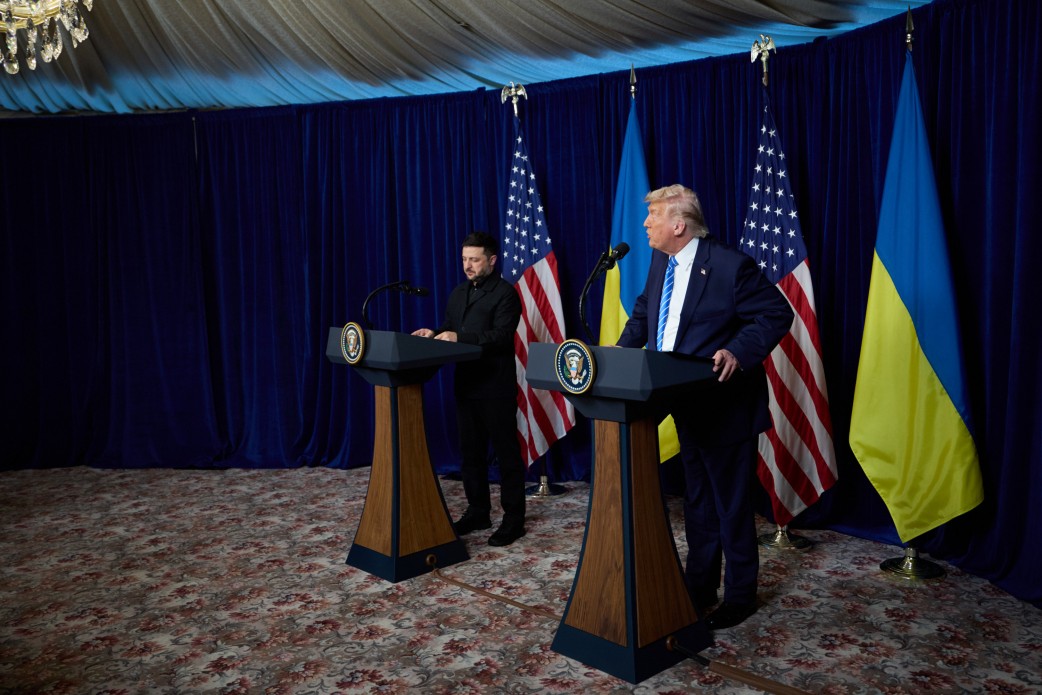
In a historic high-stakes diplomatic encounter at the Mar-a-Lago estate in Palm Beach, Florida, U.S. President Donald Trump and Ukrainian President Volodymyr Zelenskyy announced on December 28, 2025, that they are "closer than ever" to a comprehensive peace deal to end the nearly four-year-old war between Ukraine and Russia. The meeting, which lasted several hours in the late afternoon, concluded with a joint press conference where both leaders expressed a level of optimism rarely seen since the full-scale invasion began in early 2022. President Trump, characterizing the progress as a monumental shift in global security, stated that a 20-point peace framework is now approximately 90% to 95% agreed upon, marking a significant departure from previous stalled negotiations.
While the leaders celebrated the narrowing of gaps on security and economic cooperation, they remained transparent about the "thorny" issues that continue to obstruct a final signature. Foremost among these is the status of occupied territories, particularly the Donbas region, which remains under partial Russian control. Despite these hurdles, Trump praised Zelenskyy’s "bravery" and resilience, while asserting that Russian President Vladimir Putin is increasingly serious about a resolution. The summit represents the culmination of weeks of intensive backchannel diplomacy involving high-level U.S. envoys and European allies, signaling a potential pivot in the geopolitical order of the 21st century.
The 20-Point Framework: Security and Prosperity
The core of the discussions centered on a detailed 20-point peace plan designed to stabilize Eastern Europe and provide Ukraine with a sustainable future. According to President Zelenskyy, the most critical component—US-Ukraine security guarantees—is now "100% agreed." These guarantees are intended to provide Ukraine with a level of protection comparable to NATO’s Article 5, ensuring that any future aggression would be met with a decisive response. This development is particularly significant given Russia’s long-standing opposition to Ukraine’s formal entry into the NATO alliance. By establishing bilateral and multilateral security pacts outside the formal NATO structure, the Trump administration appears to be seeking a middle ground that satisfies Kyiv’s need for safety while potentially de-escalating Moscow’s stated casus belli.
Beyond the military dimension, the framework includes a comprehensive "Prosperity Plan." This economic initiative is designed to leverage international investment for the reconstruction of Ukraine’s infrastructure and the modernization of its industrial sectors. Zelenskyy noted that while the military dimension is fully agreed upon, the prosperity plan remains a work in progress, with final details regarding funding and implementation still being hammered out. The goal is to transform Ukraine into a regional economic powerhouse, integrated into the European market, thereby creating a financial deterrent against future instability.
The Territorial Stumbling Block: The Donbas and the Referendum Strategy
Despite the high percentage of agreement on the framework’s technicalities, the issue of land remains the primary obstacle to a final peace treaty. President Trump reiterated his demand for a halt to fighting at the current battle lines, a position that implies a de facto Russian retention of seized areas in the short term. This "freeze" of the front line is a contentious point for many in the Ukrainian government and the international community, as it risks legitimizing territorial gains made through force. Trump acknowledged these challenges, describing the territorial disputes as "thorny" and noting that negotiations on these specific points could theoretically drag on for a significant period.
In a major concession signal, President Zelenskyy indicated that a national referendum might be necessary to decide the fate of territorial concessions. This move would shift the burden of such a heavy political decision from the executive branch to the Ukrainian citizenry, potentially providing the democratic legitimacy required for a painful compromise. Furthermore, Zelenskyy expressed a willingness to withdraw Ukrainian troops from the industrial heartland of eastern Ukraine in exchange for a demilitarized zone monitored by international observers. This proposal is contingent on a reciprocal withdrawal by Russian forces, a condition that Moscow has yet to formally accept. The prospect of a demilitarized zone represents the clearest signal yet from Kyiv that it is willing to explore non-military solutions for the eastern front.
Diplomatic Backchannels: The Christmas Day Negotiations
The road to the Mar-a-Lago summit was paved with intensive diplomatic activity during the holiday season. On December 25, 2025, President Zelenskyy held substantive discussions with U.S. special envoy Steve Witkoff and Jared Kushner. These talks were described as "intensive," focusing on the granular details of the peace framework and the specific security guarantees required to bring Kyiv to the table. The involvement of Witkoff and Kushner underscores the Trump administration’s reliance on a close-knit circle of negotiators to bypass traditional bureaucratic hurdles and expedite a deal.
These Christmas Day discussions were vital in preparing the ground for the Florida meeting, as they addressed the "sensitive issues" that had previously caused friction between the two administrations. Zelenskyy’s willingness to engage during the holiday period was seen as a testament to the urgency of the situation on the ground, where Russian attacks on Kyiv have continued despite the diplomatic overtures. The coordination between the Ukrainian leadership and Trump’s envoys suggests a high level of trust and a shared commitment to achieving a breakthrough before the onset of the 2026 spring fighting season.
European Coordination and the Global Security Architecture
Immediately following the conclusion of their meeting, Trump and Zelenskyy engaged in a series of high-level calls with European leaders to brief them on the progress. The list of contacts included European Commission President Ursula von der Leyen, as well as the heads of state of France, Germany, Great Britain, Poland, and Finland. This outreach is intended to secure broad international backing for the peace deal and to ensure that European security guarantees are aligned with the U.S.-Ukraine agreements. Zelenskyy emphasized that US-Europe-Ukraine guarantees are "near-finalized," suggesting a multi-layered security architecture that would involve the continent’s major powers.
The inclusion of Poland and Finland in these calls is particularly noteworthy, given their status as frontline states with a direct interest in the containment of Russian influence. The Trump administration’s strategy appears to involve a shift in the burden of defense funding toward Europe, a theme that has been a hallmark of Trump’s foreign policy. By involving European leaders in the final stages of the negotiation, the U.S. is seeking to create a unified front that can exert maximum pressure on Vladimir Putin to accept the terms of the deal. This "burden-sharing" approach is designed to stabilize the region while reducing the long-term financial and military commitment of the United States.
Pressure on Putin: The December 26 Ultimatum
While the Mar-a-Lago talks were characterized by a spirit of cooperation, the underlying tension with Moscow remains palpable. On December 26, 2025, just two days before the summit, Zelenskyy publicly called for the United States to increase pressure on Vladimir Putin if the Russian leader rejects the proposed peace deal. This "carrot and stick" approach is central to the current diplomatic strategy; while the 20-point plan offers a path to peace and economic stability, the threat of increased U.S. military support and economic sanctions remains the primary leverage against the Kremlin.
Trump’s claim that Moscow is "serious about peace" follows a pre-meeting call with the Russian President, yet the reality on the ground remains contradictory. Recent Russian strikes on Kyiv and infrastructure targets suggest that Putin is still testing the resolve of both the Ukrainian military and the incoming U.S. administration. The success of the Mar-a-Lago framework will ultimately depend on whether the international community can present a credible threat of escalation that outweighs the benefits Putin perceives in continuing the war. Zelenskyy’s push for U.S. pressure is a clear signal that Kyiv will not accept a deal that leaves it vulnerable to future Russian aggression.
Social Media Sentiment: A World Divided on "Peace at Any Price"
The announcement of the Mar-a-Lago progress has ignited a firestorm of debate across social media platforms under the hashtags #Trump, #Ukraine, and #GlobalSecurity. On X (formerly Twitter), the discourse is characterized by extreme polarization. Proponents of the deal argue that Trump’s "deal-maker" approach is the only viable path to ending the bloodshed and preventing a broader global conflict. They view the 95% agreement as a triumph of pragmatism over the perceived "forever war" mentality of the previous years. Representative quotes from supporters highlight a sense of relief, with many praising the "bravery" of both leaders for seeking a compromise.
Conversely, critics on social media have expressed deep skepticism and concern. Many "con-Trump" voices argue that the president’s willingness to freeze battle lines amounts to a betrayal of Ukrainian sovereignty and a reward for Russian aggression. There are widespread fears that the "security guarantees" promised by Trump may not be as robust as a formal NATO membership, potentially leaving Ukraine in a "gray zone" of vulnerability. Furthermore, some users have questioned Trump’s mental state and competence, suggesting that his desire for a "quick win" might lead to a flawed and unsustainable peace. Within Ukraine, the sentiment is equally divided, with some citizens desperate for an end to the fighting while others view any territorial concession as a national tragedy.
The Role of the Industrial Heartland and Demilitarization
One of the more technical aspects of the proposed deal involves the future of Ukraine's industrial heartland in the east. This region, which has seen some of the most intense fighting of the war, is central to Ukraine’s economic viability. Zelenskyy’s proposal to withdraw troops in exchange for an internationally monitored demilitarized zone (DMZ) is a high-stakes gamble. A DMZ would require a significant commitment from international peacekeeping forces, likely from non-aligned or European nations, to ensure that neither side violates the ceasefire. This move would effectively neutralize the region as a military theater, allowing for the eventual return of displaced civilians and the resumption of industrial activity.
However, the implementation of such a zone is fraught with difficulty. History has shown that DMZs can become frozen conflicts of their own, as seen in the Korean Peninsula. For the Mar-a-Lago plan to succeed, the DMZ must be a temporary measure leading toward a final political settlement, rather than a permanent division of the country. The "prosperity plan" mentioned by Trump and Zelenskyy would be vital in this regard, providing the necessary capital to rebuild the heartland and integrate it back into the national economy, even if its political status remains under negotiation through the proposed referendum process.
Trump’s Address to the Ukrainian Parliament: A Symbolic Gesture
In a move designed to bolster the deal’s standing within Ukraine, President Trump offered to address the Verkhovna Rada (Ukraine’s parliament). This offer was welcomed by President Zelenskyy, who recognizes the need to sell the peace framework to a skeptical and war-weary legislature. A direct address by a U.S. President to the Ukrainian people through their elected representatives would be a powerful symbolic gesture, reinforcing the "100% agreed" security guarantees and the commitment of the United States to Ukraine’s long-term success. It would also serve to counter the narrative that the deal is being imposed on Kyiv from the outside.
The timing of such an address would be critical. It would likely occur after the final points of the 20-point plan are resolved but before the proposed national referendum. By speaking directly to the Ukrainian people, Trump would be attempting to bypass the political infighting within Kyiv and appeal to the broader public’s desire for peace and prosperity. This populist approach is a hallmark of Trump’s political style and could be the deciding factor in whether the Ukrainian public accepts the compromises inherent in the deal.
Global Security Implications: NATO vs. Bilateral Pacts
The Mar-a-Lago summit has profound implications for the future of the global security architecture. By moving away from NATO membership as the primary security vehicle for Ukraine, the Trump administration is effectively creating a new model for international alliances. This "Article 5-style" bilateral and multilateral guarantee system could become a blueprint for other nations caught in the crosshairs of major power rivalries. It allows for the provision of high-level security without the formal institutional constraints and political baggage associated with NATO expansion.
However, this shift also raises questions about the long-term relevance of NATO itself. If the United States can provide equivalent security through ad hoc coalitions and bilateral deals, the incentive for other nations to adhere to the strict requirements of the Atlantic alliance may diminish. European leaders, while supportive of the peace deal, are likely wary of this shift toward a more transactional and decentralized security model. The ongoing calls between Trump and figures like Ursula von der Leyen and Emmanuel Macron will be essential in ensuring that this new framework complements, rather than undermines, the existing European security order.
Conclusion: The Elusive Peace and the Road Ahead
As the sun set over the Atlantic on December 28, the world watched a moment of rare diplomatic theater that could define the next decade of international relations. The Mar-a-Lago summit succeeded in bringing the "90-95% agreed" peace framework into the light, providing a glimpse of a post-war reality that seemed impossible just months ago. The agreement on security guarantees and the outline of a prosperity plan offer a foundation for hope, but the "thorny" territorial issues and the need for a national referendum ensure that the path ahead remains treacherous.
President Trump’s warning that negotiations "could drag on for years" serves as a sobering reminder that a breakthrough in Florida is not the same as a signed treaty in Kyiv or Moscow. The coming weeks will be "intensive," as described by Zelenskyy, requiring a level of diplomatic finesse and international cooperation that will test the limits of the Trump administration’s "America First" foreign policy. For the people of Ukraine and the broader global community, the stakes could not be higher. The world remains in a state of watchful waiting, hoping that the progress at Mar-a-Lago marks the beginning of the end of a tragic chapter in human history, rather than just another pause in an endless conflict.
Comments (0)
No comments yet. Be the first to share your thoughts!