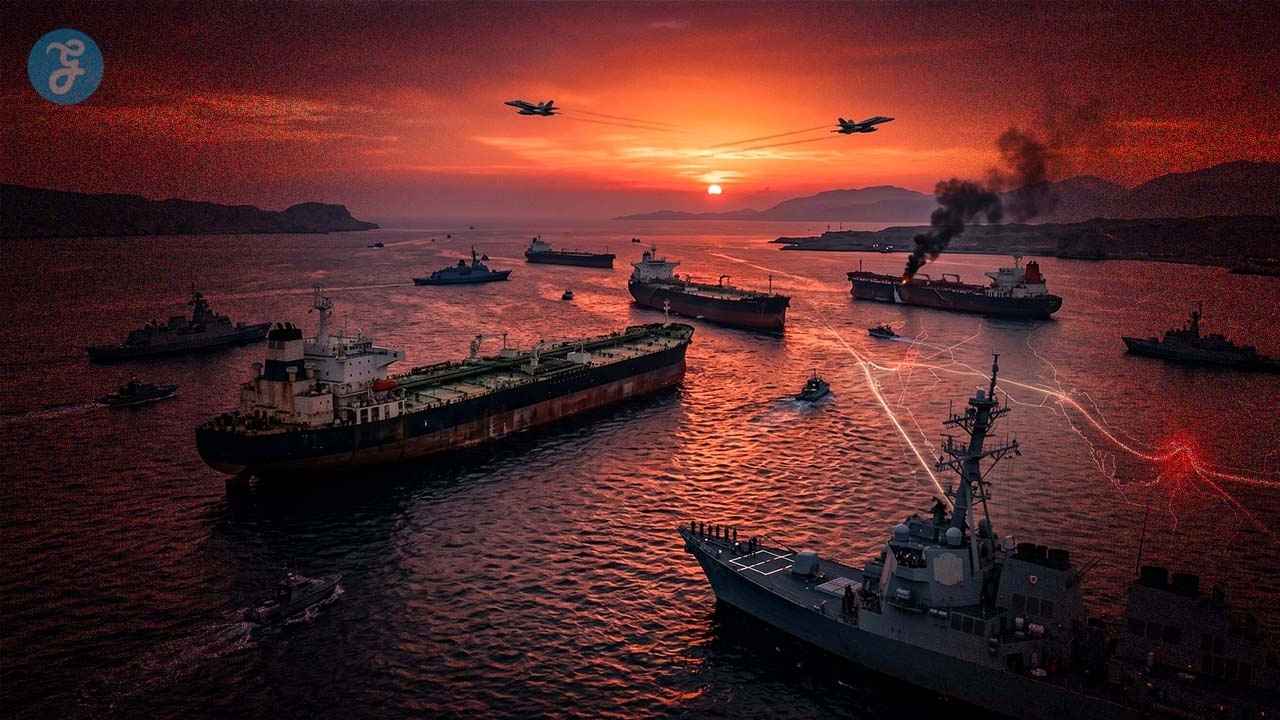
Strategic Maritime Closure and Military Escalation in the Strait of Hormuz
The Strait of Hormuz, a critical artery for global maritime trade, has transitioned into a state of operational paralysis following a series of conflicting administrative directives and military actions by Iranian authorities. As of April 23, 2026, the waterway remains effectively closed to standard commercial traffic, following a direct intervention by the Islamic Revolutionary Guard Corps (IRGC) that countermanded previous diplomatic assurances. The closure marks a significant escalation in the ongoing standoff between Tehran and Washington, complicating international efforts to stabilize shipping routes and maintain diplomatic channels.
The situation began to shift rapidly on Friday, April 20, when Iranian Foreign Minister Seyed Abbas Araghchi issued a public statement asserting that the Strait of Hormuz was "completely open" for the passage of commercial vessels. This diplomatic overture was seen as an attempt to de-escalate tensions and facilitate ongoing negotiations hosted in Pakistan. However, this stance was short-lived. By Saturday, April 21, Iran’s top military leadership rescinded the Foreign Minister’s statement, ordering the immediate closure of the Strait. Military officials cited "breaches of commitment by the United States" as the primary justification for the reversal, effectively overriding the civilian government's diplomatic positioning.
The transition from diplomatic openness to military enforcement culminated on Wednesday, April 22, when IRGC naval forces intercepted and attacked a container ship that reportedly ignored verbal warnings to alter its course. The IRGC characterized the strike as a "lawful enforcement of control" and warned of further "crushing blows" against any vessel that fails to adhere to newly established Iranian protocols. This kinetic action occurred on the same day that U.S. President Trump’s indefinite ceasefire extension was set to expire, further narrowing the window for a peaceful resolution to the maritime blockade.
Logistical Disruptions and the IRGC’s New Maritime Protocols
The enforcement of the closure has led to a dramatic thinning of vessel traffic, a trend that initially began on April 17. Current maritime intelligence suggests that any vessel attempting to transit the region must now undergo a rigorous coordination process with the IRGC. These protocols include mandatory pre-arrival checks and the submission of detailed cargo manifests to Iranian naval authorities. Without explicit clearance and coordination, shipping remains at a standstill, with industry experts warning that Iran is seeking to establish permanent, unilateral control over the waterway.
The following table outlines the current status of maritime activity and the impact on regional shipping as of late April 2026:
| Category | Status/Detail | Reported Impact |
|---|---|---|
| Strait Accessibility | Closed / Restricted | Minimal commercial transit without IRGC escort. |
| US Blockade Enforcement | Active (CENTCOM) | 31+ ships diverted from Iranian ports. |
| Daily Economic Loss (Iran) | Estimated $500 Million | Result of halted oil exports and port blockades. |
| Vessel Seizures/Strikes | MSC Francesca, Epaminondas | Confirmed IRGC boardings for territorial violations. |
| Protocol Requirement | IRGC Coordination | Mandatory pre-arrival checks for all vessels. |
The IRGC’s aggressive posture is not limited to the April 22 container ship attack. Reports have surfaced regarding the seizure of the MSC Francesca and the Epaminondas, both of which were detained for alleged violations of territorial waters. These seizures serve as a physical manifestation of Tehran’s "defiant" rhetoric, which has intensified in response to the U.S. naval blockade. The U.S. Central Command (CENTCOM) continues to enforce a strict blockade of Iranian ports, a move that has reportedly resulted in the diversion of dozens of ships and significant daily revenue losses for the Iranian state.
Diplomatic Stagnation and the Pakistan-Hosted Talks
The military escalation in the Strait has cast a long shadow over diplomatic efforts in Pakistan, where representatives had been attempting to negotiate a sustainable framework for regional security. The expiration of the U.S. ceasefire extension on April 22 has added a layer of urgency and complexity to these discussions. Negotiators are now faced with the dual challenge of addressing the U.S. port blockade and the IRGC’s unilateral control of the Strait of Hormuz.
Key diplomatic challenges currently include:
- Reconciling Conflicting Iranian Commands: The disconnect between the Iranian Foreign Ministry and the IRGC leadership has created uncertainty for international mediators, who are unsure which entity holds the final authority over maritime policy.
- The US Port Blockade: Tehran has made the lifting of the U.S. blockade a prerequisite for reopening the Strait, while Washington maintains that the blockade is a necessary response to Iranian regional activities.
- Ceasefire Expiration: The end of the official ceasefire period has increased the risk of further kinetic engagements in the Persian Gulf, as both sides move toward more confrontational stances.
- Third-Party Mediation: Pakistan’s role as a host is increasingly strained as the maritime conflict threatens to spill over into broader regional instability.
While Iranian officials have used social media and state-run news agencies to mock the U.S. administration’s efforts, the economic reality on the ground remains stark. With gas exports failing following Israeli strikes on strategic infrastructure and the inability to store oil due to the blockade, the Iranian economy is under immense pressure. This economic desperation is viewed by some analysts as the primary driver behind the IRGC's high-stakes maritime maneuvers.
Georgia Wildfires: State of Emergency and Containment Efforts
While the Middle East grapples with maritime conflict, the Southern United States is facing a severe environmental crisis. In Georgia, massive wildfires have swept through the region, prompting Governor Brian Kemp to declare a State of Emergency for 91 counties. The fires, fueled by persistent drought conditions and high winds, have caused widespread destruction and forced thousands of residents to evacuate their homes.
The most significant of these blazes, the Highway 82 fire, has consumed over 8,000 acres and remains only partially contained. Emergency services have reported the loss of at least 50 homes, with that number expected to rise as damage assessments continue in the 12 most heavily affected areas. The scale of the disaster has necessitated assistance from neighboring states, with firefighting crews from Florida and Texas arriving to bolster local efforts.
The following table summarizes the current impact of the Georgia wildfires as of April 23, 2026:
| Metric | Current Data | Primary Location/Context |
|---|---|---|
| Total Acreage Burned | 8,000+ Acres | Highway 82 Corridor (South Georgia) |
| Homes Destroyed | 50+ confirmed | Multiple rural and residential zones |
| Counties Under Emergency | 91 Counties | Statewide declaration by Gov. Kemp |
| Containment Level | Approximately 10% | Ongoing struggle due to drought conditions |
| Evacuation Status | 12+ Areas Ordered | South Georgia and rural Highway 82 vicinities |
The environmental impact of the fires has extended far beyond the immediate burn zones. Heavy smoke has drifted north, reaching the Atlanta metropolitan area and triggering air quality alerts for millions of residents. In South Georgia, the situation is described by local officials as "anxious and communal," with residents organizing aid for those who have lost property and wildlife rescuers working to save animals displaced by the rapidly moving flames.
Environmental and Human Impact in the Southern United States
The wildfires have been exacerbated by near-record dry spells, which have led to strict burn bans across the state. The rapid spread of the Highway 82 fire has highlighted the vulnerabilities of rural infrastructure in the face of extreme weather events. For many communities, the focus has shifted from containment to survival and resource management. Local charities and emergency management agencies are currently prioritizing the distribution of water, food, and temporary shelter for the displaced.
Key concerns for the state of Georgia include:
- Resource Depletion: With 91 counties under a state of emergency, state resources are being stretched thin, necessitating federal support and interstate cooperation.
- Air Quality: The smoke reaching Atlanta poses a health risk to vulnerable populations, including the elderly and those with respiratory conditions.
- Wildlife Loss: Large swathes of natural habitat have been destroyed, leading to significant wildlife mortality and the displacement of various species.
- Long-term Recovery: The destruction of 50+ homes represents a significant economic blow to rural communities, many of which lack the insurance coverage or infrastructure for rapid rebuilding.
While there have been no major developments in the last 24 hours regarding new fire starts, the existing blazes continue to burn with intensity. Firefighters are utilizing a combination of aerial water drops and ground-based fire lines to protect remaining structures, but the 10% containment figure for the Highway 82 fire suggests a long road ahead for recovery teams.
Conclusion: A Convergence of Domestic and International Crises
The date of April 23, 2026, serves as a focal point for two distinct but equally pressing crises. In the Strait of Hormuz, the transition from diplomatic rhetoric to military enforcement has created a maritime bottleneck that threatens the stability of global trade and regional security. The conflicting signals from Tehran’s civilian and military leadership have made the situation unpredictable, with the IRGC’s new protocols effectively placing the waterway under military administration.
Simultaneously, the state of Georgia is battling one of the most destructive wildfire seasons in recent memory. The destruction of homes and the displacement of thousands of citizens have created a domestic humanitarian challenge that requires sustained government intervention. As smoke settles over Atlanta and ships sit idle in the Gulf of Oman, the focus remains on the capacity of both domestic and international institutions to manage these complex, evolving emergencies.
The international community continues to monitor the Strait for any signs of a reopening, while residents in Georgia look toward the skies for rain that might aid the thousands of firefighters working to save their communities. In both instances, the coming days will be critical in determining whether these situations move toward resolution or further escalation.
Comments (0)
No comments yet. Be the first to share your thoughts!