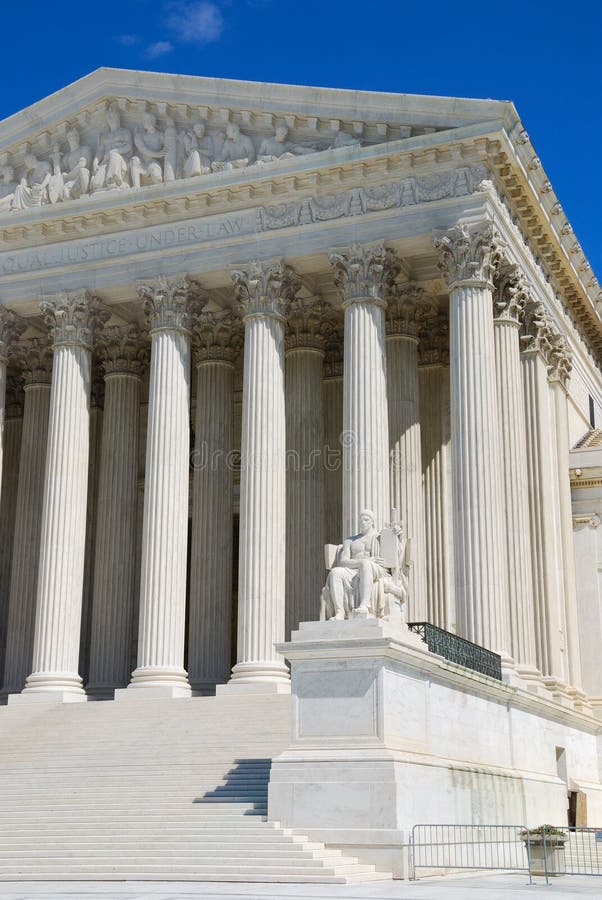
The Judicial Check on Executive Trade Power
In a landmark decision that reshapes the boundaries of executive authority and international trade, the United States Supreme Court ruled 6-3 on February 20, 2026, that the President cannot use the International Emergency Economic Powers Act (IEEPA) to unilaterally impose tariffs during peacetime. The case, Learning Resources, Inc. v. Trump, centered on the administration's 2025 strategy of using national emergency declarations to levy significant duties on imports from Canada, Mexico, and China. The ruling represents a significant pivot in American trade policy, signaling a return to more traditional legislative control over the nation’s economic borders and sending shockwaves through global markets.
The majority opinion, authored by Chief Justice John Roberts, clarified that while the IEEPA grants the executive branch broad powers to "investigate, block, regulate, and prohibit" certain economic transactions during a declared national emergency, the power to "regulate... importation" does not encompass the power to tax or impose duties. The Court held that these are core Article I powers reserved for Congress. The decision effectively nullifies several key Executive Orders issued throughout 2025, which had sought to address drug trafficking and trade imbalances through aggressive fiscal measures.
Legal Foundations and the 6-3 Split
The core of the legal dispute rested on the interpretation of 50 U.S.C. §1702(a)(1)(B). The administration argued that the language permitting the President to "regulate, direct and compel, nullify, void, prevent or prohibit... importation or exportation" was broad enough to encompass the imposition of tariffs. However, the Court rejected this expansive reading. The ruling noted that the IEEPA, enacted in 1977, was intended to provide a mechanism for freezing assets and blocking transactions with foreign adversaries—evolving from the Trading with the Enemy Act (TWEA)—not for restructuring the global trade landscape via price-based duties.
The 6-3 split saw an unusual alignment of the Court’s wings. Chief Justice Roberts was joined in the majority by the Court’s liberal wing—Justices Sotomayor, Kagan, and Jackson—as well as conservative Justices Gorsuch and Barrett. Together, they moved to protect institutional prerogatives against executive overreach. In contrast, Justices Thomas, Alito, and Kavanaugh dissented, arguing that the IEEPA’s text and historical practice provided the president with sweeping power to set costs for entry into the domestic market as a form of regulation.
The Impact on North American and Chinese Trade
The immediate consequence of the ruling is the suspension of several high-profile tariff regimes that had been the cornerstone of the administration’s "America First" economic strategy. These measures were primarily aimed at three of the United States' largest trading partners: Canada, Mexico, and China. Market analysts noted that the striking down of these duties reduced the effective U.S. tariff rate from 13.6% to 6.5%.
The following table outlines the specific measures that were challenged and subsequently invalidated by the Court’s decision:
| Action Type | Target Country/Region | Original Tariff Rate | Stated Policy Goal |
|---|---|---|---|
| Executive Orders 14193 & 14194 | Mexico & Canada | 25% | National emergency regarding illegal drug trafficking (linked to Proclamation 10886). |
| Executive Order 14195 | China | 10% (Raised to 20% on March 3, 2025) | Addressing trade imbalances and strategic competition. |
| Executive Orders 14193, 14194, 14195 | China, Mexico, Canada | Removal of $800 exemption | Closing "de minimis" loopholes for low-value e-commerce imports. |
With the Court's ruling, importers who have been paying these duties since early 2025 may now seek pathways for refunds. Customs and Border Protection (CBP) is expected to issue guidance in the coming days regarding the cessation of these duty collections and the processing of refunds for unliquidated and liquidated entries.
Geopolitical Implications and the Middle East Context
While the Learning Resources case focused on North American and Chinese trade, the geopolitical ripple effects are being felt globally. For the Middle East, the ruling introduces a period of strategic uncertainty regarding how the United States will exert economic pressure in the future. Analysts suggest that the neutralization of the IEEPA as a tariff-generating tool limits the "geoeconomic weapons" available to the White House to coerce allies or adversaries without direct Congressional approval.
In the Middle East, where regional stability is often tied to energy markets, the precedent limits the President's ability to suddenly impose energy-related tariffs or duties on petrochemicals as a response to regional escalations. If the executive branch cannot use tariffs as a rapid-response lever, the administration may have to rely more heavily on traditional sanctions—such as asset freezes and transaction bans—which serve different strategic purposes than trade duties.
The Administration’s Path Forward and Proposed Workarounds
While the administration has faced a significant legal setback, trade objectives remain a priority. Legal experts and analysts suggest several potential "workarounds" the administration might explore to re-impose tariffs through alternative legal frameworks not affected by the IEEPA-specific ruling:
- Section 232 of the Trade Expansion Act: This allows for tariffs based on national security concerns, though it requires a formal investigation by the Department of Commerce.
- Section 301 of the Trade Act of 1974: Often used against China, this allows for tariffs in response to "unfair trade practices."
- Legislative Action: The President could seek a new grant of authority from Congress, though passing sweeping trade legislation remains a significant political challenge.
Market Reactions and Economic Outlook
The reaction from the business community has been mixed. Retailers and manufacturers that rely on integrated supply chains across North America have largely welcomed the ruling. The 25% tariffs on Mexican and Canadian goods had placed significant pressure on the automotive and agricultural sectors, where components often cross borders multiple times during production.
The restoration of the $800 "de minimis" exemption—which had been removed by the February 2025 Executive Orders—is expected to have a visible impact on the e-commerce sector. Small businesses and consumers had seen prices rise for direct-to-consumer goods; the Court’s ruling effectively restores the exemption until such time as Congress chooses to modify the underlying statute.
The Constitutional Balance of Power
Beyond the immediate economic impact, Learning Resources, Inc. v. Trump is being hailed as a significant victory for the separation of powers. By ruling that the IEEPA does not contain an implicit power to tax, the Court has drawn a clear line regarding the delegation of Congressional authority.
This decision reinforces the idea that "emergencies" do not grant the executive branch a blank check to override the constitutional structure of the government. In the context of geopolitics, this means that U.S. foreign policy will need to be more collaborative between the branches of government. While this may slow the speed of American response to global events, proponents argue it ensures that major shifts in trade have the legislative backing necessary for long-term stability.
Conclusion: A New Era of Trade Diplomacy
As the dust settles on this ruling, the global community is recalibrating its expectations for U.S. trade policy. The 6-3 decision in Learning Resources serves as a reminder that the U.S. system of checks and balances remains active. For the Middle East and other regions, the ruling suggests that while the U.S. remains a dominant economic force, its methods of engagement will be subject to rigorous judicial scrutiny.
The coming months will likely see a flurry of activity as the administration decides whether to pursue the "workarounds" identified by legal experts or to engage in legislative negotiation. Meanwhile, America’s trading partners will be watching closely to see how the world’s largest economy adapts to this new legal reality. For now, the 25% tariffs on Canada and Mexico and the heightened duties on China are legally unenforceable, marking one of the most significant judicial interventions in trade policy in the modern era.
Comments (0)
No comments yet. Be the first to share your thoughts!