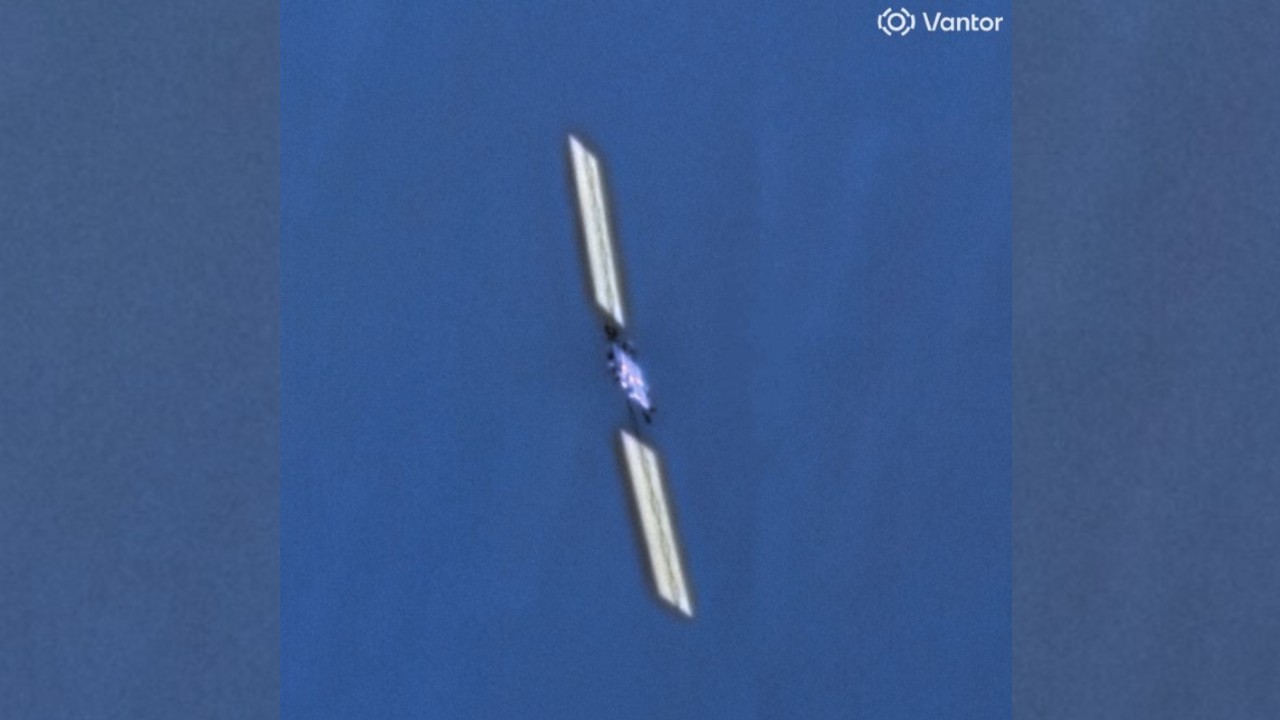
In a bold shift driven by the insatiable energy demands of artificial intelligence, the concept of space-based data centers is gaining unprecedented traction, with recent discussions highlighting their potential to harness unlimited solar power and eliminate terrestrial constraints, marking a transformative era for tech infrastructure.
As the AI industry grapples with escalating power needs, space-based data centers have emerged as a promising solution. Projections from the International Energy Agency (IEA) indicate that data centers could reach a global electricity consumption of 945 TWh by 2030, representing just under 3% of total global electricity consumption, with AI being the most significant driver and electricity demand from AI-optimized data centers expected to quadruple by 2030 . This underscores the urgency for innovative alternatives. Transitioning to space not only promises sustainability but also positions companies like SpaceX at the forefront of a potential infrastructure revolution.
Building on this momentum, key details reveal a clear path toward feasibility. Elon Musk predicts that space-based AI computing could become the lowest-cost option within 4-5 years (by approximately 2030), thanks to "free" solar energy and the ease of radiative cooling in space . This aligns with broader industry projections, suggesting that launch costs for such data centers could drop to under $200 per kilogram by the mid-2030s, making them cost-competitive with ground-based options . These advancements could enable operations at gigawatt scales, making space-based centers a viable competitor to traditional infrastructure. Furthermore, environmental benefits are a focal point; space-based data centers can achieve approximately 40% higher solar intensity than on Earth's surface and utilize passive cooling in the vacuum of space, significantly reducing the energy needed for cooling systems, which can account for up to 40% of the total energy use in terrestrial data centers .
Key Details
Diving deeper into the specifics, energy demand projections underscore the quadrupling of AI's power needs, positioning space as a strategic countermeasure . Elon Musk has articulated a vision where "AI compute is moving from Earth to space, potentially making traditional centers obsolete" . This reflects ongoing efforts by entities like SpaceX, with Musk stating that SpaceX will be involved in space-based data centers , and Starcloud Inc., which has successfully trained a large language model in space using an NVIDIA H100 GPU . These efforts aim to develop orbital infrastructure that could handle AI processing more efficiently, with cost reductions and energy efficiencies serving as key drivers for adoption.
Social Media & Public Reaction
Public sentiment surrounding space-based data centers is gaining significant interest, with discussions highlighting their innovative potential and benefits such as energy savings and technological advancement. While there is considerable enthusiasm, some skepticism exists, with Nvidia CEO Jensen Huang referring to space-based data centers as a "dream" for now, citing technical challenges such as radiation shielding, high-bandwidth connections, and robotic maintenance . This reflects a developing narrative that balances optimism with an acknowledgment of the engineering hurdles ahead.
Broader Context or Industry Impact
In the wider context, the rise of space-based data centers signals a profound evolution for the AI and energy sectors, positioning this development as a benchmark against terrestrial alternatives. Google, for instance, is exploring this frontier with "Project Suncatcher," which envisions constellations of solar-powered satellites in orbit functioning as a distributed AI data center, with prototypes planned for early 2027 . SpaceX's initiatives could further set a new standard for efficiency, potentially disrupting markets by offering scalable, low-cost infrastructure that addresses global energy demands . This shift not only mitigates environmental risks but also forecasts a future where AI innovation thrives without geographical limitations. Ultimately, if projections hold, the industry may witness a significant transition within the decade, fostering a more sustainable AI ecosystem that balances ambition with planetary resources.
Comments (0)
No comments yet. Be the first to share your thoughts!