President Trump Declares End to Gaza Conflict, Shifts Focus to Iranian Nuclear "Red Line"
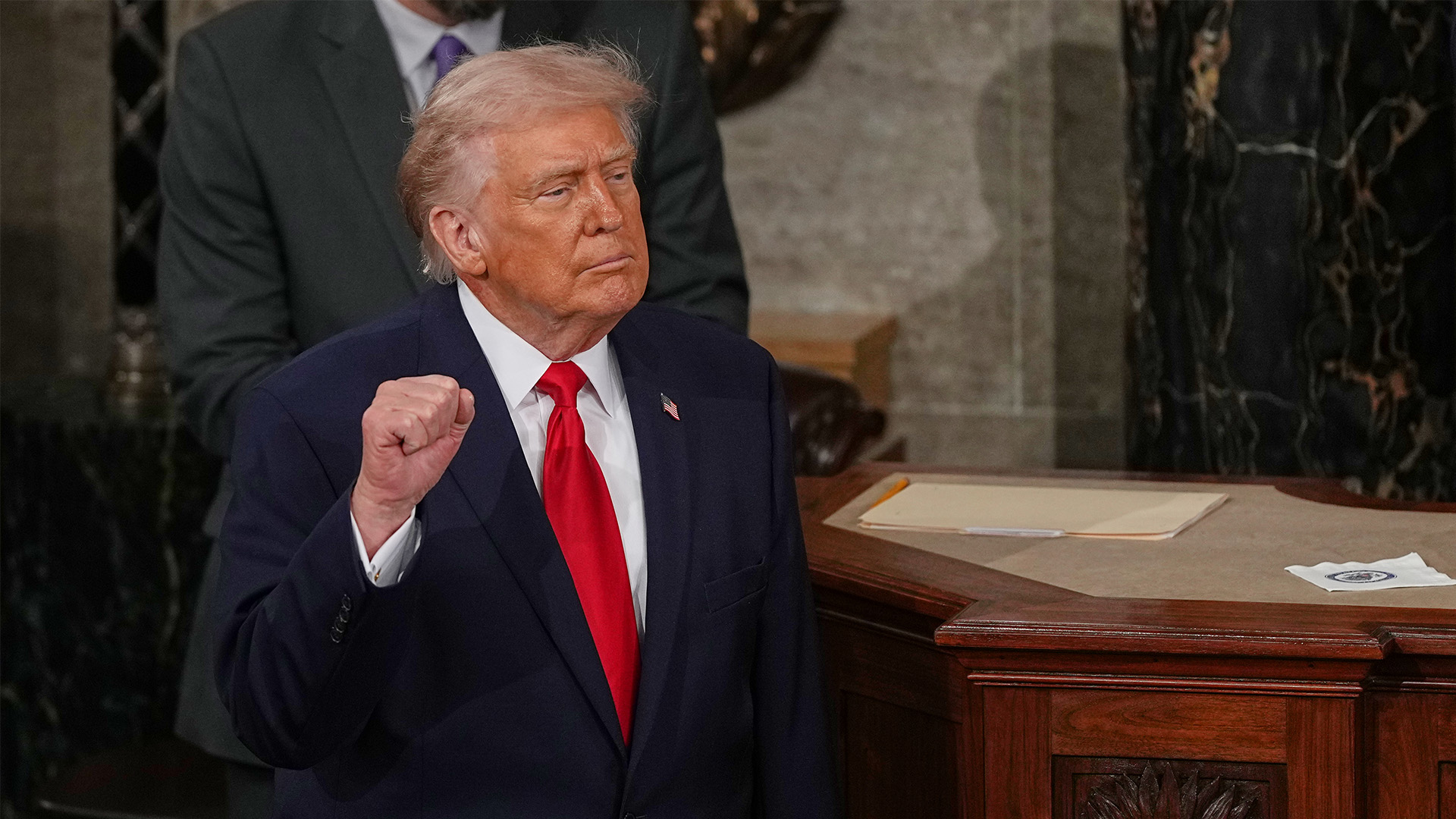
In a high-stakes State of the Union address delivered before a joint session of Congress, President Donald J. Trump declared a definitive end to the war in Gaza, asserting that his administration’s diplomatic interventions successfully secured the release of all remaining hostages and established a lasting ceasefire. Speaking from the House chamber on the evening of February 24, 2026, the President utilized the nationally televised platform to pivot from the resolution of the Israeli-Hamas conflict toward a burgeoning confrontation with the Islamic Republic of Iran. Trump warned that the United States is currently weighing direct military action against Tehran’s nuclear infrastructure, citing a breakdown in previous non-proliferation efforts and a renewed threat to regional stability.
The address, which lasted over 90 minutes, centered heavily on the "America First" foreign policy framework, specifically as it pertains to the Middle East. President Trump claimed that a ceasefire deal, which took force in October 2025, effectively terminated the two-year war initiated by Hamas’s October 7, 2023, invasion of Israel. He characterized the achievement as a "total victory for peace," emphasizing that the return of the final 20 hostages—both living and deceased—marked the closure of one of the most volatile chapters in modern diplomatic history. However, the triumphant tone regarding Gaza was sharply contrasted by a stern ultimatum directed at Iran, with the President revealing that the U.S. military posture in the region has been significantly heightened to prevent Tehran from achieving nuclear breakout capability.
The "October Truce": Claims of Total Hostage Recovery
A cornerstone of the President’s address was the detailed account of the ceasefire negotiations that concluded in late 2025. President Trump asserted that his administration’s "maximum pressure" tactics, combined with direct back-channel communications, led to the cessation of hostilities in the Gaza Strip. According to the President, the deal ensured the return of every individual held by Hamas since the 2023 attacks. "We got them back," Trump stated, referring to the final group of 20 hostages. "Every family, every soul, living or dead, has been accounted for and returned to their loved ones. This was a promise made, and a promise kept."
The President credited a specific trio of negotiators for brokering the truce, highlighting the roles of Steve Witkoff, Jared Kushner, and Secretary of State Marco Rubio. This diplomatic team reportedly engaged in months of shuttle diplomacy between regional capitals, including Doha, Cairo, and Jerusalem. The administration’s narrative suggests that the ceasefire was not merely a pause in fighting but a structural realignment of Gazan governance, though specific details regarding the "day after" administration of the territory remained sparse in the speech. The President’s remarks indicated that the cessation of the "two-year war" has allowed for a redistribution of U.S. diplomatic and military resources toward other regional threats.
Escalation with Iran: Nuclear Facilities and Military Readiness
While celebrating the peace in Gaza, President Trump shifted the discourse to what he described as the "existential threat" posed by Iran. In a startling disclosure, the President claimed that the United States had previously "obliterated" three critical Iranian nuclear facilities during his current term. While the specific dates and methods of these strikes were not detailed in the address, the President used the assertion to underscore his willingness to use kinetic force to prevent Iran from developing a nuclear weapon. "They want to start all over again," Trump said of Iran’s nuclear program. "They should know that our patience is not infinite, and our reach is absolute."
The President confirmed that he is currently weighing further military action as Iran continues to advance its ballistic missile program and support regional proxies. Despite the aggressive rhetoric, Trump noted that a diplomatic window remains narrowly open. He announced that Steve Witkoff and Jared Kushner are scheduled to meet with Iranian officials in Geneva in the coming days. The objective of these talks is reportedly to establish a new framework for Iranian compliance, though the President warned that the deployment of advanced F-22 Raptor squadrons to the region serves as a "clear signal" of U.S. readiness should negotiations fail.
Comparative Data: Middle East Diplomatic and Military Status (2025–2026)
The following table outlines the key metrics and status updates provided by the administration regarding the Middle East landscape as of February 2026:
| Category | Status as of Feb 2026 | Key Figures Involved | Reported Outcome |
|---|---|---|---|
| Gaza Ceasefire | Active (since Oct 2025) | Rubio, Witkoff, Kushner | End of two-year war |
| Hostage Status | 100% Accounted For | U.S. State Dept. | Final 20 returned (living/dead) |
| Iran Nuclear Program | Under Assessment | Witkoff, Kushner (Geneva) | 3 facilities "obliterated" |
| U.S. Military Presence | Surge Readiness | Pentagon / CENTCOM | F-22 deployment to Israel |
| Regional Proxies | Contained/Negotiating | Regional Partners | Focus on ballistic missile limits |
The "America First" Doctrine and the Israel Alliance
Throughout the State of the Union, President Trump sought to reconcile his "America First" isolationist tendencies with his staunch support for Israel. He rejected the narrative that the United States is fighting Israel’s wars, instead framing the alliance as a strategic partnership that preserves American interests by preventing a wider regional conflagration. "We are not the world's policeman," Trump remarked, "but we are the world's leader. By securing Israel, we secure the stability of the global economy and the safety of the American people."
This framing has sparked a polarized response across the political spectrum. Supporters within the "America First" movement have lauded the President’s ability to achieve a ceasefire without committing large-scale U.S. ground forces. They point to the F-22 deployments as a deterrent rather than an escalation. Conversely, critics of the administration’s "Israel First" optics have expressed concern that the President is prioritizing foreign aid and regional defense over domestic infrastructure and economic relief. Social media sentiment reflected this divide, with some users accusing the administration of turning the State of the Union into a "State of Israel" address, while others praised the "pure strength" displayed in the ultimatum to Tehran.
Diplomatic Road Ahead: The Geneva Summit
The upcoming meeting in Geneva between U.S. envoys and Iranian representatives is seen as a pivotal moment for the Trump administration’s second-term foreign policy. The agenda is expected to be broad, covering not only the nuclear program but also Iran’s support for Houthi rebels in Yemen and Hezbollah in Lebanon. Secretary of State Marco Rubio has signaled that the U.S. will demand "verifiable and permanent" dismantling of Iran’s enrichment capabilities in exchange for any potential sanctions relief.
However, the Pentagon has reportedly issued warnings regarding the potential for high casualties should a full-scale military conflict with Iran erupt. Internal reports suggest that while the "obliteration" of nuclear sites may delay Tehran's progress, a sustained campaign would require a significant commitment of naval and air assets. The President’s rhetoric in the State of the Union suggests he is betting on "peace through strength," hoping that the threat of overwhelming force will compel Iranian concessions at the negotiating table in Switzerland.
Legislative Reactions and National Security Oversight
Reaction on Capitol Hill was split largely along party lines. Republican leadership praised the President for his "decisive action" in Gaza and his "unwavering resolve" against Iran. Senatorial leaders emphasized that the return of the hostages is a historic achievement that justifies the administration’s unconventional diplomatic methods. "The President has proven that transactional diplomacy, backed by credible military force, can produce results that traditional statecraft could not," one senior GOP official stated following the address.
Democratic lawmakers, while welcoming the return of hostages and the cessation of violence in Gaza, raised questions regarding the lack of transparency surrounding the alleged strikes on Iranian nuclear facilities. Members of the House Foreign Affairs Committee have called for a classified briefing to verify the extent of the military actions described by the President. Additionally, concerns were raised about the humanitarian situation in Gaza and the long-term plan for reconstruction, which the President did not detail in his speech. "A ceasefire is the first step, but a lasting peace requires a plan for the millions of civilians caught in the crossfire," a leading Democratic representative noted.
Conclusion: A Defining Moment for the Trump Presidency
The 2026 State of the Union address will likely be remembered as the moment President Trump attempted to transition from a wartime leader to a regional architect. By declaring the Gaza war over and setting a hard deadline for Iran, the President has staked his foreign policy legacy on the stability of the Middle East. The coming weeks, particularly the outcomes of the Geneva talks and the continued deployment of U.S. air assets, will determine whether the "October Truce" is the start of a broader regional peace or merely a prelude to a more significant conflict with Iran.
As the nation processes the President’s remarks, the focus remains on the tangible results of his administration’s interventions. With the final hostages home and the Gaza front quiet for now, the administration’s "maximum pressure" strategy faces its ultimate test in the nuclear standoff with Tehran. For President Trump, the message to the world and to Congress was clear: the United States has reclaimed its role as the primary arbiter of Middle Eastern security, and it will use every tool at its disposal—diplomatic or military—to maintain that position.
- October 2025: Implementation of the Gaza ceasefire deal.
- February 2026: President Trump confirms all 100+ hostages accounted for.
- Late February 2026: Scheduled meeting in Geneva with Iranian officials.
- Ongoing: Deployment of F-22 Raptors to the Middle East as a deterrent.
As of February 25, 2026, the international community remains watchful. The claims made by the President during his address have set a new baseline for U.S. involvement in the region, one that prioritizes rapid results and high-stakes negotiations over traditional, long-term diplomatic processes.
Comments (0)
No comments yet. Be the first to share your thoughts!