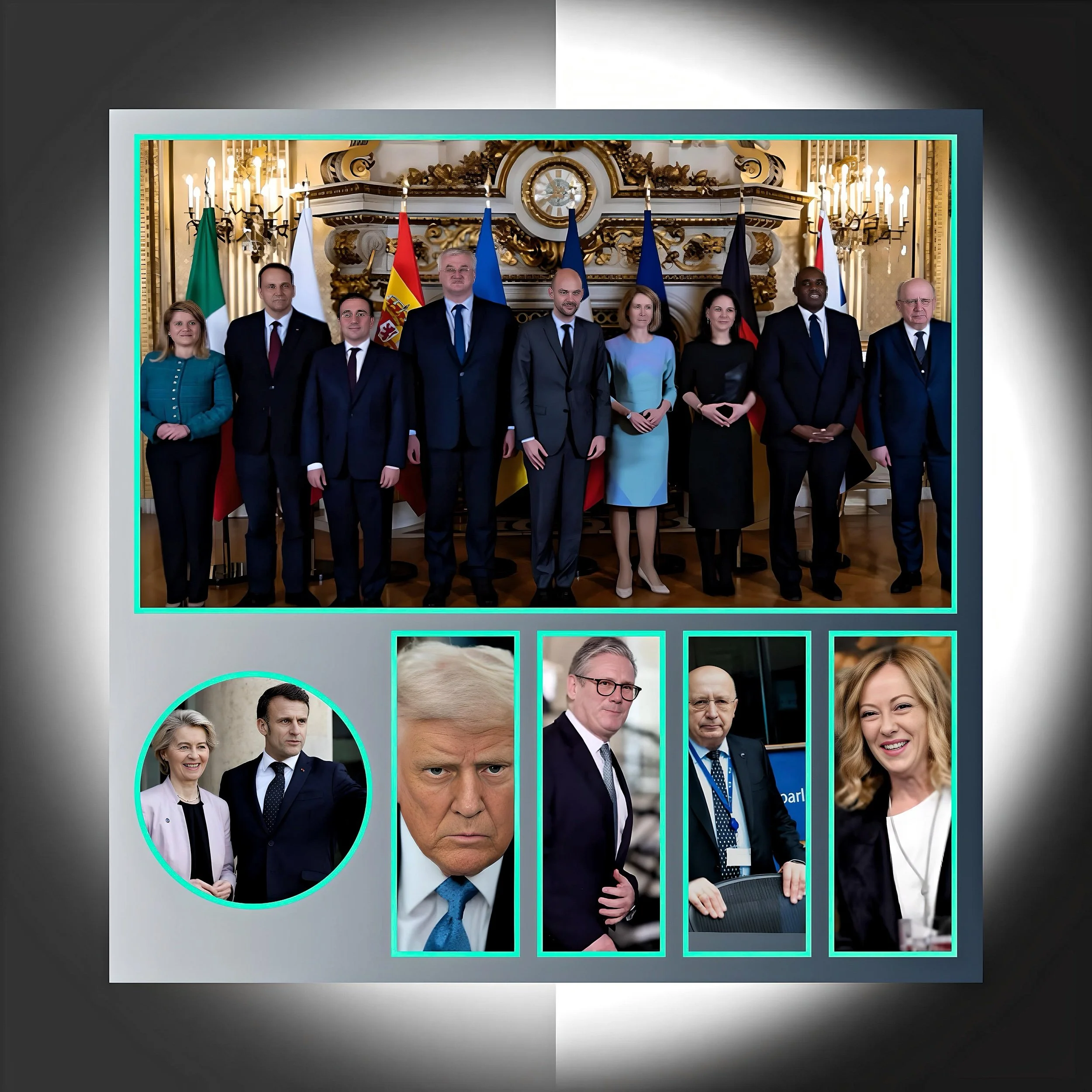
The dawn of 2026 has brought a series of unprecedented challenges to the international order, as world leaders grapple with a volatile mixture of territorial disputes, civil unrest, and the restructuring of security alliances. From the historic security declarations in Paris to the controversial revival of U.S. interests in Greenland, the global political landscape is currently defined by a heightened focus on accountability and the protection of public safety. As of January 8, 2026, the convergence of these events suggests a critical turning point in how sovereign states interact and how citizens demand transparency from their governing institutions.
A New Security Architecture for Ukraine
In a landmark diplomatic development in Paris, the leaders of Ukraine, France, and the United Kingdom have formalized a "declaration of intent" that could fundamentally alter the security landscape of Eastern Europe. President Volodymyr Zelenskyy, President Emmanuel Macron, and Prime Minister Keir Starmer convened on January 6, 2026, to establish a framework for a multinational force to be deployed in Ukraine following any future ceasefire with Russia. This agreement, signed during a summit of the "Coalition of the Willing," is committed to the long-term defense and reconstruction of the war-torn nation.
The declaration is more than a symbolic gesture; it outlines a comprehensive U.S.-led monitoring and verification mechanism designed to oversee any potential peace deal. Crucially, the partners have pledged a multi-nation deterrent force to be stationed within Ukraine, serving as a "tripwire" to prevent future Russian incursions. This framework aims to provide the binding security guarantees that Kyiv has long sought, moving beyond the informal assurances of previous years toward a structured, international commitment to public safety and territorial integrity.
However, the urgency of these negotiations was underscored by the ongoing threats to civilian life. The reality of strategic planning for the future and managing ongoing casualties in the present has intensified calls for immediate military accountability for those targeting non-combatants.
The Greenland Controversy: Sovereignty and the Military Option
In North America, a diplomatic firestorm has erupted following statements from the White House regarding the potential acquisition of Greenland. The administration of U.S. President Donald Trump has confirmed that it is actively discussing a "range of options" for bringing the island under American control, explicitly stating that the use of the U.S. military to facilitate this transition remains "always an option." This revival of the proposal to purchase or otherwise acquire the Danish territory has ignited a fierce debate over the limits of national ambition and the sanctity of international law.
Legal experts and international observers have expressed profound concern regarding the rhetoric of military force in the context of territorial acquisition. The principle of sovereignty, a cornerstone of the United Nations Charter, forbids the use of force against the territorial integrity or political independence of any state. By suggesting that military intervention is a viable path for the acquisition of Greenland, the U.S. administration has sparked questions about the future of international accountability mechanisms. Critics argue that such moves undermine the rules-based order and set a dangerous precedent for other powers seeking to redraw global maps.
The reaction from Copenhagen and Nuuk has been one of resolute rejection. Danish and Greenlandic officials have reiterated that Greenland is not for sale and that the island’s future is a matter of self-determination for its people. The controversy has mobilized civil society groups who are calling for a "sovereignty audit," demanding that global institutions hold powerful nations accountable for rhetoric that threatens the safety and political autonomy of smaller territories.
Middle East Flashpoints: Settlements and Sovereignty
The Middle East remains a focal point of geopolitical tension, with recent developments in the West Bank drawing international condemnation. Reports indicate that Israel has taken the final steps toward initiating construction on the E1 settlement project near Jerusalem. This project, long considered a "doomsday" scenario by human rights organizations and the international community, would effectively bisect the West Bank. By connecting Jerusalem to the Ma'ale Adumim settlement, the project threatens to sever the link between the northern and southern regions of a future Palestinian state, rendering a two-state solution geographically impossible.
The E1 plan is not merely a matter of urban development; it is a significant public safety concern. The restriction of Palestinian movement and the displacement of local communities are expected to heighten security tensions and lead to renewed cycles of violence. International observers are calling for diplomatic accountability, urging global powers to move beyond verbal condemnations and implement measures that ensure adherence to international law regarding occupied territories.
Iran: Protests and the Demand for Human Rights Accountability
In Iran, the domestic situation has reached a boiling point as state security forces continue to clash with protesters. Independent reports confirm that over two dozen individuals have been killed in recent demonstrations, sparking a wave of international outrage. The protests, driven by economic grievances and demands for greater political freedom, have become a test case for state-citizen accountability. The Iranian government’s use of lethal force has led to calls for an independent investigation into security force conduct and the prosecution of those responsible for civilian deaths.
The situation has taken on a geopolitical dimension as the United States issued threats of intervention, citing the need to protect human rights and ensure the safety of the Iranian people. In response, Maj. Gen. Amir Hatami, a senior Iranian military official, characterized the U.S. rhetoric as a direct threat to national security. Hatami warned that Iran "will not leave its continuation without a response," raising the specter of a broader regional conflict. The standoff illustrates the delicate balance between international intervention for human rights and the preservation of national sovereignty, with the safety of the Iranian public hanging in the balance.
Diplomacy on the Korean Peninsula
While tensions rise elsewhere, a significant diplomatic effort is underway in East Asia. South Korea is seeking to engage Chinese President Xi Jinping, requesting that Beijing act as a mediator to reduce tensions between North and South Korea. This initiative reflects a pragmatic approach to public safety, recognizing that the risk of miscalculation on the Korean Peninsula remains one of the greatest threats to regional and global stability.
By engaging China, South Korea is attempting to leverage great-power diplomacy to create a buffer against escalation. The goal is to open reliable channels for dialogue and establish a framework for de-escalation that involves all major stakeholders. This move is seen as an attempt to foster a new kind of regional accountability, where neighboring powers take shared responsibility for maintaining peace and preventing the outbreak of hostilities that would have catastrophic consequences for millions of civilians.
The 2026 Global Cooperation Barometer: A Framework for the Future
The broader context for these events is provided by the World Economic Forum’s 2026 Global Cooperation Barometer. The report, released earlier this week, emphasizes that global security, economic stability, and public health are inextricably linked to the effectiveness of international cooperation and accountability frameworks. The barometer notes that while technological and economic integration has increased, political cooperation is under severe strain.
The WEF report underscores a critical finding: public safety is no longer a localized concern but a global public good that requires collective action. Whether it is the regulation of emerging technologies like AI, the management of climate-related disasters, or the prevention of armed conflict, the report argues that "accountability is the glue that holds the international system together." Without transparent systems and tough enforcement of norms, the barometer warns of a "fragmented world" where the safety of the individual is sacrificed to the ambitions of the state.
The Public Mandate: Social Media and the Demand for Justice
Parallel to these high-level political shifts is a burgeoning grassroots movement demanding radical accountability. On social media platforms, hashtags such as #PoliticalAccountabilityDemands and #InstitutionalTransparencyPush have trended globally, reflecting a deep-seated public frustration with perceived impunity among the political elite. The sentiment is one of urgency; citizens are no longer satisfied with symbolic gestures or bureaucratic delays.
Public discourse in early 2026 is increasingly focused on the tangible outcomes of governance. There is a growing demand for the prosecution of corrupt officials, the recovery of misappropriated public funds, and the implementation of strict transparency measures in all levels of government. This "accountability mandate" is expected to be a defining theme of the upcoming 2026 election cycles in several major democracies. Voters are signaling that their support is contingent on a leader's commitment to integrity and the prioritization of public interest over political survival.
Furthermore, the debate over "personal responsibility" versus "systemic safety" has intensified. While some argue for a shift toward individual empowerment and self-reliance, public sentiment is complex, blending exasperation with safety net overuse and optimism for individual empowerment, while still demanding clear, transparent decision-making processes. The public is increasingly skeptical of "black box" governance, whether in the form of opaque algorithmic decision-making or closed-door diplomatic negotiations.
Conclusion: The Path Toward a Safer Global Order
As the events of January 2026 unfold, the themes of global politics, accountability, and public safety are more intertwined than ever. The security guarantees being forged in Paris, the sovereignty disputes in Greenland, and the domestic struggles in Iran all point to a world in search of a new equilibrium. The challenges are formidable, but the increasing demand for transparency and the commitment to international cooperation offer a potential path forward.
The coming months will be a test of the international community's ability to translate diplomatic declarations into meaningful action. Accountability cannot remain a rhetorical tool; it must be manifested in the enforcement of laws, the protection of the vulnerable, and the restraint of the powerful. In an era of profound uncertainty, the safety of the global public depends on the courage of leaders to choose cooperation over confrontation and integrity over impunity. As the 2026 Global Cooperation Barometer suggests, the future of our interconnected world depends on the strength of the frameworks we build today to ensure that no one is above the law and no one is left behind in the pursuit of security.
Comments (0)
No comments yet. Be the first to share your thoughts!